

Audio By Carbonatix
As Ghana joins the rest of the world to mark the 2025 World Day Against Child Labour, the Commission on Human Rights and Administrative Justice (CHRAJ) has issued a strong warning: the country’s child labour crisis is far from over.
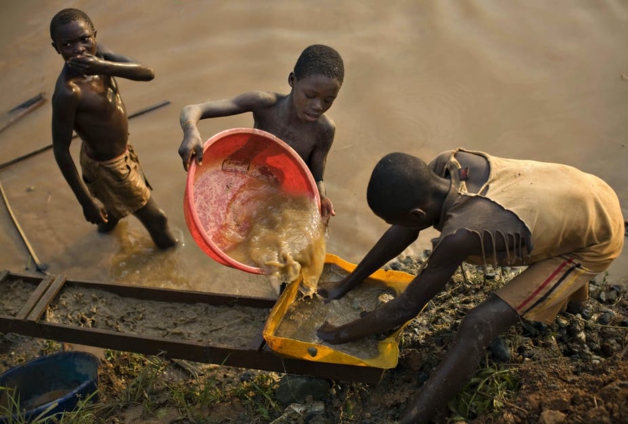
Despite existing laws and policies, CHRAJ says more than 1.1 million children aged 5 to 17 are currently engaged in child labour, and nearly 30% of them are working in hazardous conditions that put their health, safety, and moral development at risk.
This year’s global theme, “Progress is clear, but there’s more to do: Let’s speed up efforts,” serves as a reminder that child labour remains a serious human rights concern in Ghana and globally.
Sectors Most Affected
According to CHRAJ, many of these children are working in agriculture, domestic service, street vending, small-scale mining, and informal apprenticeships. These jobs often expose children to dangerous chemicals, long hours, physical abuse, and loss of access to education.
The statistics are grim:
500,000 working children are out of school,
68,500 have never attended school
389,000 have dropped out
Meanwhile, Ghana’s broader youth population is also feeling the impact. As of late 2023, nearly 2 million young people aged 15–35 were classified as Not in Education, Employment or Training (NEET), a reflection of deepening economic challenges and limited opportunities.
Laws Exist – But Enforcement is Lacking
Ghana has taken several legal and policy steps to combat child labour, including: Ratification of ILO Conventions 138 and 182, Passage of the Children’s Act (1998) and Labour Act (2003) of the Ghana Accelerated Action Plan Against Child Labour (2023–2027)
However, CHRAJ says these measures are being undermined by weak implementation. Child protection offices across the country are underfunded, understaffed, and lack proper training. Coordination between agencies is limited, and enforcement is often absent at the community level. Additionally, poverty and harmful cultural norms continue to push families to rely on child labour as a means of survival.
What Needs to Be Done
To reverse the trend, CHRAJ is calling for urgent and coordinated national action. Key recommendations include:
Updating national child labour data through regular surveys, developing a digital monitoring system to improve case tracking and coordination, resourcing local Social Welfare offices to detect and respond to cases, expanding social protection programmes like LEAP, linked to school attendance and strengthening law enforcement to ensure child exploiters face legal consequences.
The Global Context
The International Labour Organisation (ILO) and UNICEF estimate that 160 million children worldwide were involved in child labour as of 2020, 79 million in hazardous work. Sub-Saharan Africa has the highest prevalence, with over 86 million children affected.
CHRAJ says that without bold action, Ghana risks missing SDG Target 8.7, which calls for the elimination of all forms of child labour by 2025.
Bottom Line:
While Ghana has made some progress, the reality on the ground shows that far too many children are still trapped in dangerous, exploitative work. CHRAJ’s message is clear: It’s time to back laws with action, and speed up efforts to protect every child’s right to a safe, educated, and dignified future.
Read also: CHRAJ joins global effort to commemorate 2025 World Day against child labour
Latest Stories
-
Parliamentary Sports Committee to ‘interrogate’ Black Stars struggles with Ministry, GFA invitations
31 seconds -
Asutifi North Police arrest 7 in crackdown on suspected drug activities
11 minutes -
Attijariwafa Bank: What to know about the Moroccan Group taking over SG Ghana
15 minutes -
University Librarians Ghana honours past leaders for distinguished service
21 minutes -
Seychelles President leads high-level dialogue on Africa’s digital future at FALS Global Conversations in New York
22 minutes -
24-hour economy requires faster justice for commercial cases – Chief of Staff
29 minutes -
Five Agric Colleges receive digital tools to drive climate-smart farming
33 minutes -
GPL 2026/27: Kotoko face Karela test as Hamza Obeng takes temporary charge
53 minutes -
Morocco strike late to overcome 10-man Black Starlets
1 hour -
Nyaho-Tamakloe calls on Kurt Okraku to resign amid Black Stars struggles
1 hour -
Societe Generale Group agrees to sell Ghana subsidiary to Attijariwafa Bank
1 hour -
Accra: Fire breaks out in North Industrial Area at Avenor
2 hours -
Measure food systems progress not only by productivity but also ability to deliver healthy diets – AGRA
2 hours -
Black Stars: Seven years of decline while hashtagging love
2 hours -
Today’s front pages: Thursday, October 1, 2026
2 hours