

Audio By Carbonatix
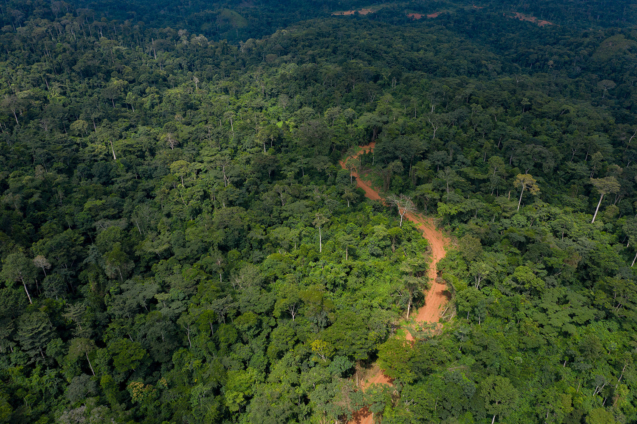
Over 260 environmental organisations from across the world have petitioned the Chinese Ministry of Commerce not to include the Atewa Forest mining project and other similar projects that directly impact local environments, communities, and livelihoods when disbursing funds under its Covid-19 financial support.
The petition, copied to over ten Chinese institutions, noted that due to pre-existing risks and controversies about the mining in Atewa Forest, which were apparent long before the onset of the pandemic, supporting Ghana under their Covid-19 support was dangerous.
They say if mining in the forest was pursued, it will harm and or destroy forest, marine, desert, river, or other increasingly fragile and remaining intact ecosystems, and the people who depend upon them.
In the petition to the Chinese authorities, A Rocha Ghana and the over 260 organisations identified 60 projects as "high-risk projects" that must not be allowed to proceed.
The planned bauxite mining in Atewa Forest being pursued by the Ghana Integrated Aluminium Development Corporation was listed among these high-risk projects.
The letter states that the Covid-19 pandemic lays bare the fact that international cooperation and transparency are crucial to ensure and maintain a healthy planet.
"The Covid-19 has painfully highlighted how climate change and biodiversity loss hamper humanity’s ability to effectively combat pandemics, and it is clear that preemptively protecting the natural world plays a critical role in controlling future outbreaks," the organisations said in the petiton.
They said for a project to pass the test for implementation, environmental and social issues such as local community consultations must be adhered to according to Free, Prior, Informed Consent (FPIC) standards, per the 169 International Labor Organisation Convention and the United Nations Declaration on the Rights of Indigenous Peoples.
"Environmental impact assessments are robust, credible, comprehensive, transparent, assess full range of available alternatives, and account for cumulative impacts and project developers and financiers institute robust, accessible, and clear channels of communication with all relevant local stakeholders.
"Among the issues are also that all relevant project information, such as pre-feasibility assessments, environmental impact assessments, project information, and other relevant information, should be disclosed (in the appropriate local language) to affected communities and stakeholders and allow for public feedback and participation starting from the earliest planning phases to allow for better inclusive decision-making," the organisations stated.
According to the petitioners, projects must also comply with international norms and best practices, including existing Chinese green finance policies such as the Green Credit Guidelines; projects should not negatively impact internationally (i.e. those protected by international conventions such as World Heritage, Ramsar, etc.) or national protected areas, key biodiversity areas, and old-growth or primary forests and projects should not block free-flowing rivers, biological corridors, or migratory routes of animals listed by conventions on migratory species (i.e. Bonn Convention).
Furthermore, the projects should not contribute to the extinction of threatened species (i.e., per the IUCN Red List); projects should not trigger or exacerbate political, ethnic, labor, religious, intra-community, or resource-sharing domestic or transboundary conflicts and projects should not result in mass or involuntary displacement of local or indigenous communities, and should not encroach on cultural and religious sites.
A Rocha Ghana and several NGOs in Ghana and across the world, believe that mining Bauxite in Atewa Forest is not eligible for the Chinese Covid-19 financial support and can only be eligible if all concerns related to design and implementation are appropriately and effectively addressed to the satisfaction of local communities and stakeholders.
"The Atewa Forest bauxite mining will not contribute to a healthy recovery in the global economy, and may even intensify the environmental drivers – such as biodiversity loss, climate change, habitat destruction, loss of primary forests, disruption of free-flowing rivers – which increase the likelihood of recurring global pandemics in the future," the organisations said in the petition.
The environmental NGOs are asking the Ghana government to exclude Atewa Forest from bauxite mining to secure crucial water provision, biodiversity protection and climate mitigation.
Latest Stories
-
NDC Deputy National Organizer Aspirant Hamza Umar targets grassroots mobilisation
33 minutes -
Villarreal fight back to beat Napoli and end losing run
3 hours -
Tresoldi nets hat-trick as Club Brugge win Inter thriller
3 hours -
PSG’s Luis Enrique hopes Man City avoid sanctions
3 hours -
Lisandro Martinez issues scathing attack on Man Utd board – has he made things worse?
3 hours -
Saka responds to Arteta’s challenge with ‘huge impact’
3 hours -
Viking hold Bayern in thriller as Kane breaks Messi record
3 hours -
Gordon scores as Barcelona beats Galatasaray
4 hours -
Bumble bought for $1.3bn in ‘bet on the future of humanity’
4 hours -
Imagination Africa, Mentors Chess Academy to host second African Genius Chess Championship at Ghud Park
4 hours -
Paradigm Initiative steps up calls over digital rights, internet freedom in Africa
4 hours -
Saudi man charged with planting ‘sophisticated’ recording device in OpenAI office
4 hours -
Ghana wins UN Human Rights Council seat as calls grow for action against atrocities
4 hours -
Royal Mail losing 400 postal workers a week, says union
4 hours -
Techiman South MP ends decades of water struggle in Asutia
5 hours