

Audio By Carbonatix
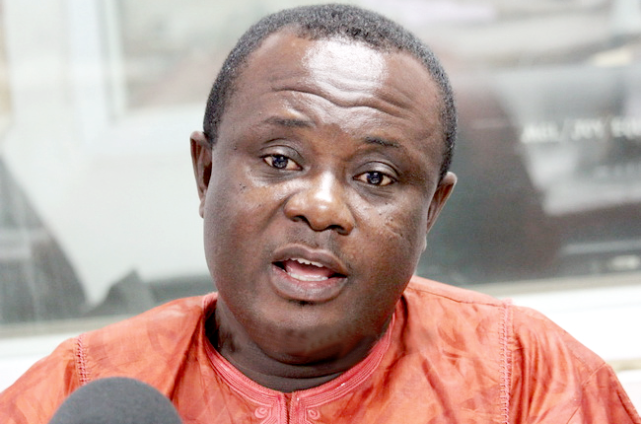
The immediate past Chairman of the Appointments Committee has stated that there is no strict rule dictating how questions should be framed during parliamentary vetting processes.
Joseph Osei Owusu speaking on Joy News’ Upfront on Thursday, January 16, shared insights from his tenure and offered perspectives on the current chairperson’s approach.
“There is no rule about how a question should be,” he said, addressing recent debates about the style and conduct of the Appointments Committee.
The immediate past First Deputy Speaker of Parliament reflecting on his own time as chair, acknowledged that his approach was shaped by his legal training.
“Probably from my experience as a lawyer, I make sure that the question is straight to the point. I don’t like going through the bush before you come to the main road.”
The former chairman clarified that he always focused on ensuring adherence to the Constitution and nominees' qualifications.
“Our duty is to ensure that the person qualifies in accordance with the Constitution and that he can do the work he has been nominated to do.”
Joe Osei Owusu, however, expressed surprise at the demeanour of the current chairman, Bernard Ahiafo, in some instances.
“I was a bit surprised to see how hard-faced the chairman of the committee was addressing one of the members of the committee,” he noted. “That is not my style. My style is different. We are all colleagues.”
While some have criticized his tenure as rigid, Mr Osei Owusu defended his insistence on structure and brevity.
“I believe strongly in the rules. I believe strongly in law and order,” he said. He also cautioned against allowing lengthy commentary to dominate proceedings.
“This will allow people to run five minutes of commentary and ask a one-minute question. In the end, they answer the question before they ask it. Those are the kinds of things I try to avoid.”
Responding to suggestions that his rigid application of rules could serve as a model for Bernard Ahiafor, the former Bekwai MP acknowledged the importance of discipline but noted that individual styles differ.
“If he [Ahiafor] is doing that, I think he is within his right to do so.”
Mr Joe Osei Owusu admitted he had not followed the current vetting proceedings in detail but acknowledged that different leadership styles could evoke varying public perceptions.
“I can’t say whether that is fair or not, but I’ve seen, in a particular case, somebody forwarded to me after that my friend chairman was needlessly raising his voice and showing a tendency to show machoism.”
He concluded by reiterating that the essence of the vetting process should remain focused on evaluating nominees’ qualifications and suitability for their roles, irrespective of the chairperson’s style.
Latest Stories
-
ICC London rules in favor of Ghana against Tullow over $400m tax charge
10 minutes -
We are disappointed in ICC’s ruling over our corporate income tax assessment in Ghana – Tullow Oil
20 minutes -
Cost of building inflation for August 2026 increases to 4.6% – GSS
21 minutes -
Today’s front pages: Wednesday, September 30, 2026
52 minutes -
Bawumia highlights agricultural, compulsory insurance reforms in IBAG engagement
53 minutes -
Ghana will secure Tullow tax revenues while protecting Jubilee, TEN investments – Ato Forson
1 hour -
Ghana wins $393m Tullow tax arbitration as tribunal upholds GRA assessment
1 hour -
Gender Minister assures women’s group of action on Affirmative Action, Development Bank
2 hours -
Over 2,000 teachers in Dormaa comply with strike – GNAT Secretary
2 hours -
Food Buffer Stock seeks stronger liquidity buffer despite record profit
2 hours -
LPG investments key to achieving 50% access target by 2030 – Energy Minister
2 hours -
Jinapor: New LPG terminal strengthens Ghana’s energy security
2 hours -
Agbodza directs road agencies to fast-track design approvals to prevent project delays
2 hours -
Housing Minister urges stakeholders to prioritise quality education in Banda District
2 hours -
Government redeems pledge to complete abandoned projects – Kofi Buah
2 hours