

Audio By Carbonatix
Civil Society Organisations (CSOs) in education have called for enhanced funding as part of reforms to the Students Loan Scheme (SLS).
They argued that increased funding would improve disbursement and position the Scheme to offer pre-admission loans among others.
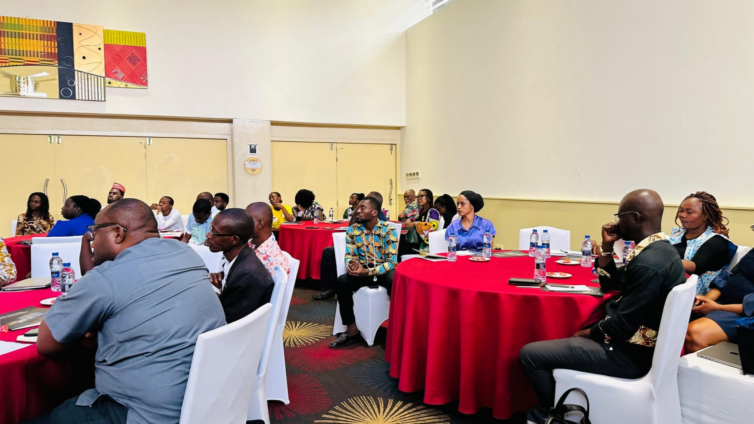
The stakeholders made the call at a thematic forum on education in Accra as a preparatory step towards the Government’s planned National Summit on Transforming Ghana’s Education System.
Organized by STAR-Ghana Foundation under its Inclusive Election and Accountability in Ghana Project (Phase III), the Thematic Forum on Education focused on strengthening civil society’s role in monitoring education policies and reforms.
It also emphasized leveraging evidence-based advocacy to improve education service delivery while enhancing partnerships for effective policy implementation.
The day’s forum brought together stakeholders in the education sector to discuss strategies for monitoring government’s commitments and driving accountability in education service delivery.
STAR-Ghana has already held similar engagements in Northern Ghana, bringing together civil society partners to discuss priority areas in basic, secondary, and tertiary education.
The Foundation, along with other advocacy groups such as Eduwatch, has identified major bottlenecks in the sector, including challenges with the Free Senior High School policy.
The Students Loan Scheme, designed to assist needy students in financing their tertiary education, lacks adequate fund allocation and disbursement.
The CSOs said the challenge of funding had neutralized the impact of the guarantor-free system introduced by the previous NPP Government.
Against a commitment of GH¢160 million and a fund availability of GH¢53 million, the Students Loan Scheme was only able to disburse half of its 2022/23 commitments.
The stakeholders further stated that there was also a cohort of needy tertiary candidates who were unable to honour their admissions due to financial challenges.

According to Africa Education Watch, in the 2020/21 academic year, out of 190,395 public tertiary applications for bachelor’s degree programmes, 61 per cent, representing 118,000, were admitted, with only 74,970, representing 39 per cent, honouring their admissions.
The CSOs indicated that the Students Loan Trust Fund heavily relied on its 65 per cent recovery rate to operate, along with GH₵5 million annually from the Communication Service Tax and a maximum of 10 per cent from GETFUND as required by law.
They further suggested that if the allocation to the scheme was not increased consistent with demand and if its financing was not re-engineered to make funds available at the beginning of the academic year, it would be difficult to increase the proportion of senior high school graduates progressing to tertiary education.
Raymond Danso, Portfolio Manager, Right to Services, STAR-Ghana Foundation, emphasized the need for a unified civil society approach in addressing challenges in Ghana’s education sector ahead of the upcoming National Education Forum to be organized by the Government.
“This forum allows us to prioritize the key issues we need to present at the National Education Forum, including past challenges, previously proposed solutions that did not work and new alternatives,” he stated.
Mr. Danso further expressed optimism about the Government’s willingness to engage with CSOs and the public in shaping educational policies. He stressed that discussions from the CSO forum around critical areas such as education financing, infrastructure development, and teacher deployment should be at the centre of discussions at the national forum.
A key outcome of the CSO forum, he added, would be the introduction of a tracking tool to monitor the Government’s commitments to the education sector, particularly concerning manifesto promises.
“Previous efforts by individual CSOs have been fragmented, making accountability and reform efforts difficult. This tool will ensure a coordinated approach in monitoring progress,” he added. Mr. Danso stressed that both duty-bearers and citizens had roles to play in ensuring quality education service delivery.
While expressing optimism about the forthcoming National Education Forum, he urged stakeholders to ensure that recommendations from such dialogues lead to actionable outcomes rather than being shelved.
“We cannot continue to expect new results if we don’t take the right decisions and commit to practical solutions,” Mr. Danso emphasized.
Latest Stories
-
Power restoration fault suspected in Kumasi Central Market fire
2 hours -
The 7-foot giant of Ngleshie Amanfro: Seven-foot Ghanaian Ephraim Saawa dreams of joining the national basketball team
2 hours -
Government promises support for Kumasi Central Market fire victims
2 hours -
Vibes The Movie: Big Ghun’s Ghanaian film earns five nominations at 2026 REFFA
3 hours -
MamaCare CEO warns unresolved conflicts among health workers could undermine maternal and neonatal care
3 hours -
Health professionals urged to translate medical knowledge into practice to save mothers
4 hours -
Conflicts among care providers linked to maternal, neonatal deaths – Expert
5 hours -
GIS marks 10th TIME conference, champions improved teaching practices
5 hours -
BRICS Or Balance? What Ghana’s bid really means
6 hours -
GPRTU wants full TRAFFITECH-GH implementation to start in 2027
6 hours -
Mahama announces plans to import electric wheelchairs for PWDs
6 hours -
KGL U17 Colts 2026: Western beat Prempeh Elite Academy to set up final final with Greater Accra Region
6 hours -
Late Solanke strike salvages 10-man Spurs draw at Man United
7 hours -
Gender Ministry to monitor welfare of Nana Akua Addo’s children amid domestic violence case
7 hours -
Benedict Okyere Yeboah: Ghana’s football problem goes beyond sacking a coach
7 hours