

Audio By Carbonatix
The Prampram Traditional Council has advised natives of the traditional area to actively participate in this year’s Lalue Kpledomi festival, as they strive for economic growth and prosperity.
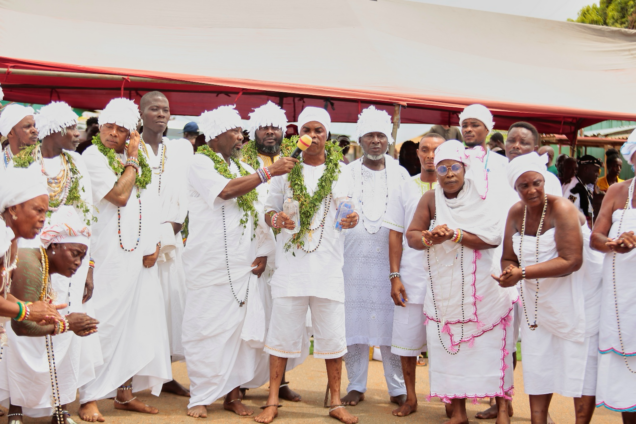
On Monday, under the leadership of Nene Tetteh Wakah III, as well as members of the council including divisional chiefs, elders, priests and priestesses, the symbolic visit to the ancestral forest was performed in the presence of a large gathering of the public, near the forecourt of the Prampram District Assembly.
The event which was streamed live on the Prampram-based YouTube channel PramcitiTV and watched around the world, is an integral part of the annual festival.

Speaking in an interview, Nii Ayiku Obleh IV or Numlor Kpanyor, a prominent figure and Counsellor in the traditional area, expressed his excitement about this year’s festival.
He said enormous progress has been made towards building everlasting peace among once-disputed parties, and that will again be reflected in how the people embrace the celebration.
Prampram has had its fair share of troubles which have spiralled into unfortunate violent incidents. But the past few years, and after strenuous efforts to speak to the various factions, have witnessed stability in the area, which has somewhat inured to the benefit of the growth and success of the festival for the past couple of years.

The outcome of such symbolic visits in the past had been low profile, partly because of the misunderstandings.
Some elders attributed the lowkey to the ancestors' unhappiness with the lack of unity and withheld their blessings. There is an expectation this year will be heavily participated.
Several cultural rites continue to be performed as part of the rites towards the festival. There is an existing ban on noisemaking which started on April 5.
It is expected to be lifted on May 20, and per custom, there should be no loud music or any form of noise within a certain period.
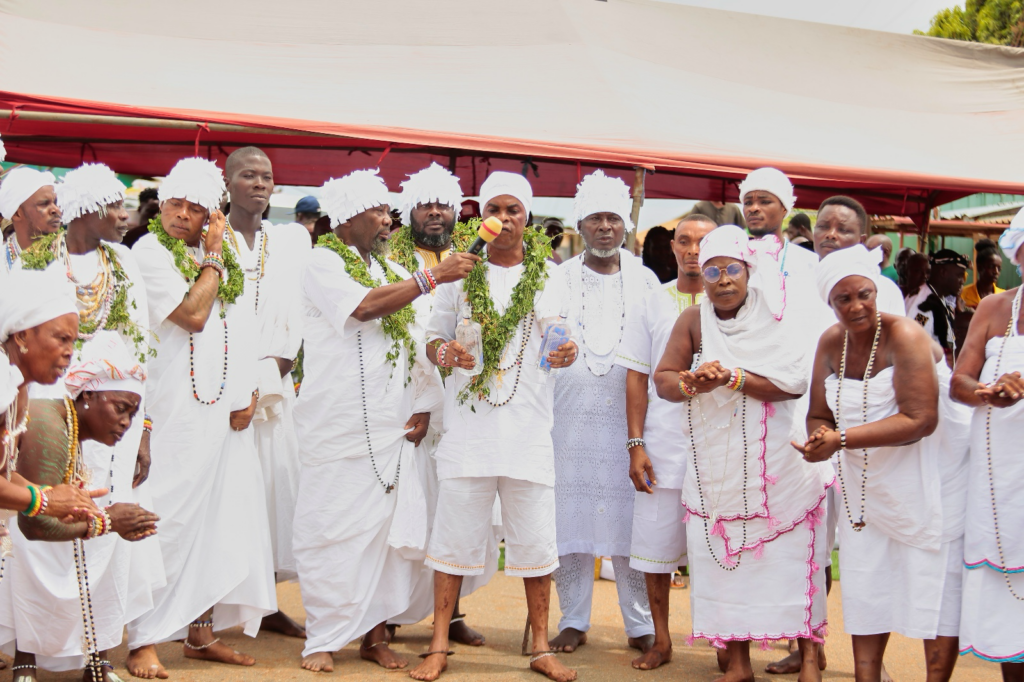
The essence, cultural activists explain, is to help with the appropriate performance of the rites and customs associated with the Lalue Kpledomi festival.
Nii Ayiku Obleh IV, clad in an all-white outfit, said the “Huemiyami” or visit to the ancestral forest is an opportunity for them to pray for the town, and seek the blessings of God for the town.
“We pray for the good of the land; for our fishermen, farmers, teachers, drivers, and any other professional to flourish in whatever they do,” he said.
“We also pray for those who are desperately seeking to have children to not only be blessed with them but have the patience and wisdom to raise the children appropriately,” he said.

The colourful ceremony was also witnessed by the traditional queen mother Naa Osabu Abbey I, Asafoatsemeyi and Asafoanyemi, divisional chiefs from the traditional area and members of the general public.
Latest Stories
-
NPP will negotiate with popular non-politicians to secure winnable candidates – Miracles Aboagye
35 seconds -
Only 5% of Ghanaians can afford housing without support – Gov’t
39 seconds -
Nigeria launches rescue after military plane crashes with 32 aboard
7 minutes -
GES digitalisation already exists; restore discontinued platforms – Adutwum spokesperson
7 minutes -
Police launch manhunt for 7 after deadly Bunkprugu violence
10 minutes -
GTEC directs UDS to immediately cease unauthorised mode of delivering accredited LLB programme
13 minutes -
We must address the role of boys in impregnating young girls, not just blame girls – Kobby Kyei
15 minutes -
Mahama grants presidential pardon to 863 convicted persons
26 minutes -
Tema Central MP assaulted my driver – Ebi Bright alleges
41 minutes -
Gbande’s arrest directive confirms NPP’s claims of selective justice – Miracles Aboagye
53 minutes -
US to announce $150 million for Alaska power lines as Vance campaigns in Senate battleground
54 minutes -
Two CHPS compounds, educational facilities under construction in Keta – MP
56 minutes -
Not every difficult season means you’re in toxic love – Counsellor Adofoli explains
59 minutes -
Badminton: Ghana wins bronze, two silver medals at All Africa U-19 Champs
1 hour -
Black Star Experience announces national choral music contest to discover new Ghanaian talent
1 hour