

Audio By Carbonatix
Fafali was a 22-year-old expectant mother in a rural area in the Volta Region, excitedly preparing for her first child.
However, in her third trimester, she began experiencing pounding headaches, swelling in her hands and feet, and occasional blurred vision.
Her mother fed her paracetamol and some home remedies for relief, but none of that worked. Fafali assumed it was a normal part of the pregnancy journey and decided not seek medical attention.
But it took a worse turn.
One evening, Fafali suddenly developed severe abdominal pain and collapsed into a seizure. Her panicked husband and family rushed her to the hospital.
By the time they arrived, her blood pressure was dangerously high and her organs were failing. Despite the frantic efforts of the medical team, Fafali’s baby could not be saved. The family was left devastated, struggling with the painful reality that timely medical attention could have made the difference.
Pregnancy is often described as a beautiful journey for women but for some this beautiful journey is threatened by a silent but dangerous condition — preeclampsia. This condition is characterized by a dangerous increase in blood pressure and organ damage. It can lead to life threatening complications If left untreated.
Left untreated, preeclampsia can lead to serious, even fatal complications for both the mother and child.
Preeclampsia usually begins after 20 weeks of pregnancy in women whose blood pressure had previously been in the normal or standard range.
When this happens early delivery of the baby is often recommended and this also depends on how far gone the woman is in pregnancy and how severe the preeclampsia is.
Credit: Preeclampsia Foundation
Although the exact cause is unknown, it is thought to be related to placental blood vessel development.
According to the world health organization, preeclampsia affects 2–8% pregnancies worldwide and there are about 46,000 maternal deaths due to this condition coupled with about 500,000 fetal or newborn deaths per year.
Africa and Asia records approximately 10% maternal deaths due to preeclampsia and eclampsia.
In Ghana, research shows that the prevalence of preeclampsia is estimated to be between 6.55% and 7.3%, making it one of the leading causes of maternal and neonatal deaths.
The research notes that knowledge on the rates of postpartum readmission and its risk factors in women with preexisting preeclampsia is none existent.
Who is at risk
Although healthcare providers aren’t entirely sure why some people develop this condition, they have put together some factors that puts a woman at risk for preeclampsia. This risk factors are classified as high or moderate.
High risk factors include:
-History of diabetes, high blood pressure or kidney disease
-Expecting twins, triplets or more
-Autoimmune conditions like LUPUS
-Preeclampsia past pregnancy
-Moderate risk for preeclampsia also includes:
-Obesity
-Being older than 35
-Family history of preeclampsia
-Complications in previous pregnancy
-Markers for preeclampsia include:
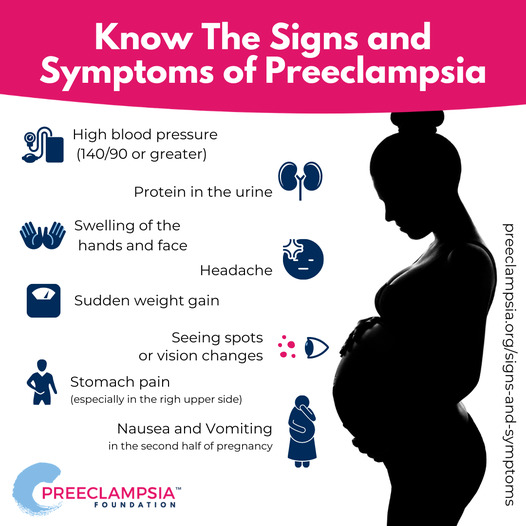
-High blood pressure (140/90mmHg or higher) after 20 weeks of pregnancy.
-Protein in urine
-Signs of organ damage especially liver and kidney
-Symptoms of preeclampsia includes:
-High blood pressure
-Decreased level of platelets in blood
-Increased liver enzymes that indicate liver problems
-Severe headaches
-Changes in vision including, temporary vision loss, blurred vision or light sensitivity
-Shortness of breath which is caused by fluid in the lungs
Even though weight gain and edema are typical during pregnancy, sudden edema and weight gain particularly in the face and hands may be a sign of preeclampsia.
What are the complication?
If left untreated, this condition can be potentially fatal to both mother and child.
The complications include: seizures
-Eclampsia
-Coma
-Stroke
-Preeclampsia can also cause damages to the fetus and most common complications are:
-Premature birth
-Low birth weight
-Placental abruption
Fafali’s story is a painful reminder that preeclampsia is not just “normal pregnancy discomfort.” Early recognition and prompt medical care can mean the difference between life and death for both mother and baby.
-
The author is a Laboratory scientist and a health communicator.
Latest Stories
-
Chef Abbys: Feeding 50,000 people, putting food security on Ghana’s agenda
3 minutes -
Ho set to host Republic Bank–JoyNews Habitat Fair as multiple firms prepare to showcase housing solutions
11 minutes -
NPP demands public inquiry into alleged $600,000 World Cup visa fraud, wants Sports Minister, GTA CEO summoned
18 minutes -
I want my brand to be bigger than just music – Yaw Wazinga
21 minutes -
Houthi missile attack on Yemeni presidential palace kills two, minister says
22 minutes -
I hoped to win an award; I worked hard – 2026 Best Graduating Law Student
32 minutes -
Fraudsters increasingly target bank customers instead of banking systems – Fraud detection expert
32 minutes -
44 teacher sexual abuse cases tracked since 2015; school heads feature in 40% of recent cases — JoyNews Research
35 minutes -
Unchecked imports and the Middle East crisis threaten Ghana’s fragile food inflation anchor
54 minutes -
Ecobank Junior Saver Big Pitch to reward 10 winners with GH¢2,000 each
58 minutes -
AMA demolishes unauthorised pigsty obstructing Agbogbloshie waste evacuation exercise
58 minutes -
I was filled with disbelief – Akosua Achia Sarpong Esq. shares her first reaction
59 minutes -
Snake Village: A look at Volta Region’s hidden snake village and its tourism potential (Video)
1 hour -
Election Watch Ghana calls for constitutional reforms to strengthen Electoral Commission independence
1 hour -
NACOC, Postal and Courier Services Regulatory Commission intensify efforts to curb drug trafficking
1 hour