

Audio By Carbonatix
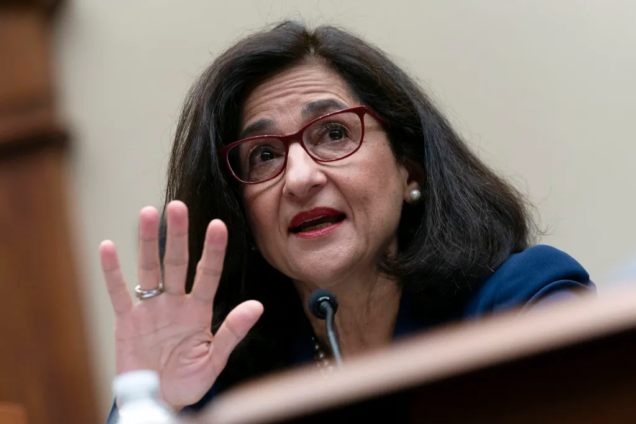
Columbia University President Minouche Shafik resigned effective immediately, the head of the prestigious New York university announced in a message to the university community on Wednesday.
Columbia’s upper Manhattan campus was at the center of a protest movement connected to the Israel-Hamas war that swept college campuses nationwide with thousands arrested and end-of-year graduation ceremonies disrupted. In her statement, she acknowledged those protests factored into her decision.
“This period has taken a considerable toll on my family, as it has for others in the community,” Shafik wrote. “Over the summer, I have been able to reflect and have decided that my moving on at this point would best enable Columbia to traverse the challenges ahead.”
In addition to the protests, the school in July removed three deans, who have since resigned, after officials said they exchanged disparaging texts during a campus discussion about Jewish life and antisemitism.
Shafik said in a July 8 letter to the school community that the messages were unprofessional and “disturbingly touched on ancient antisemitic tropes.”
Shafik said in her letter that she will return to the United Kingdom to lead an effort by the foreign secretary’s office reviewing the government’s approach to international development and how to improve capability.
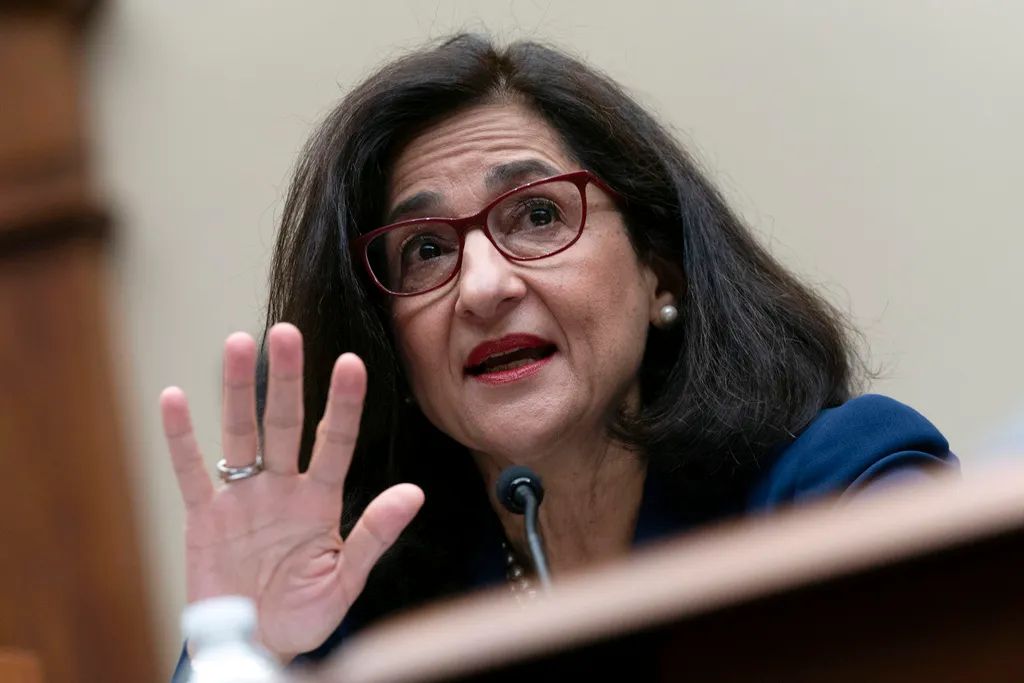
“I am very pleased and appreciative that this will afford me the opportunity to return to work on fighting global poverty and promoting sustainable development, areas of lifelong interest to me,” she wrote. “It also enables me to return to the House of Lords to reengage with the important legislative agenda put forth by the new UK government.”
Shafik was named president of the university last year and was the first woman to take on the role, and she was one of several women newly appointed to take the reins at Ivy League institutions.
She had previously led the London School of Economics and before that worked at the World Bank, where she rose through the ranks to become the bank’s youngest-ever vice president.
Shafik also worked at the United Kingdom’s Department for International Development, followed by stints at the International Monetary Fund and the Bank of England.
She earned her master’s degree at the London School of Economics and earned a doctorate at Oxford University.
At the time of Shafik’s appointment, Columbia Board of Trustees chair Jonathan Lavine described her as a leader who deeply understood “the academy and the world beyond it.”
“What set Minouche apart as a candidate,” Lavine had said in a statement, “is her unshakable confidence in the vital role institutions of higher education can and must play in solving the world’s most complex problems.”
Latest Stories
-
Chef Abbys: Feeding 50,000 people, putting food security on Ghana’s agenda
3 minutes -
Ho set to host Republic Bank–JoyNews Habitat Fair as multiple firms prepare to showcase housing solutions
10 minutes -
NPP demands public inquiry into alleged $600,000 World Cup visa fraud, wants Sports Minister, GTA CEO summoned
17 minutes -
I want my brand to be bigger than just music – Yaw Wazinga
21 minutes -
Houthi missile attack on Yemeni presidential palace kills two, minister says
21 minutes -
I hoped to win an award; I worked hard – 2026 Best Graduating Law Student
31 minutes -
Fraudsters increasingly target bank customers instead of banking systems – Fraud detection expert
32 minutes -
44 teacher sexual abuse cases tracked since 2015; school heads feature in 40% of recent cases — JoyNews Research
35 minutes -
Unchecked imports and the Middle East crisis threaten Ghana’s fragile food inflation anchor
53 minutes -
Ecobank Junior Saver Big Pitch to reward 10 winners with GH¢2,000 each
58 minutes -
AMA demolishes unauthorised pigsty obstructing Agbogbloshie waste evacuation exercise
58 minutes -
I was filled with disbelief – Akosua Achia Sarpong Esq. shares her first reaction
59 minutes -
Snake Village: A look at Volta Region’s hidden snake village and its tourism potential (Video)
1 hour -
Election Watch Ghana calls for constitutional reforms to strengthen Electoral Commission independence
1 hour -
NACOC, Postal and Courier Services Regulatory Commission intensify efforts to curb drug trafficking
1 hour