

Audio By Carbonatix
The good book says that for every briber there is a bribee. Bribery, unlike alikoto, is usually a game for at least two.
Somebody gives. Somebody takes.
Somebody offers. Somebody accepts.
Somebody promises. Somebody demands.
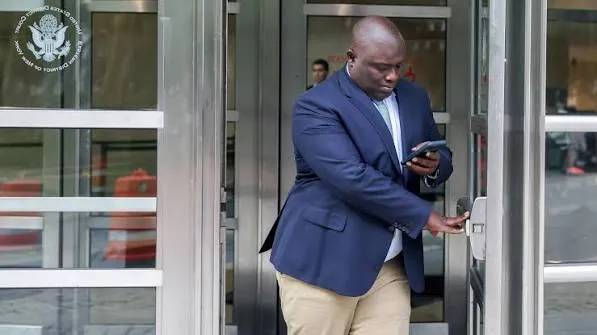
Which brings us to the curious case of Asante Kwaku Berko, the former banker recently convicted by a federal jury in Brooklyn of violating the U.S. Foreign Corrupt Practices Act (FCPA) and related offences arising from more than $1 million in bribes paid to Ghanaian government officials in connection with a power-plant project. The verdict followed a nine-day trial.
What lessons can Ghana learn from the Berko affair?
1. For every briber, there is usually a bribee
This sounds obvious, but our conversations about corruption sometimes forget it. When a public official takes a bribe, we rightly condemn the official. But somebody paid it. The person who deliberately offers money to corrupt a public decision is not an innocent victim of corruption. He is one of its authors.
The giver and the taker are partners in the corrupt transaction. A serious anti-corruption system must therefore have eyes for both hands.
Read Also: Former TOR MD and Goldman Sachs investment banker convicted of foreign bribery, money laundering
2. This story did not start with Thursday’s conviction
Berko was appointed Managing Director of the Tema Oil Refinery (TOR) in January 2020 but resigned in April, shortly after U.S. authorities announced allegations arising from the power project.
The U.S. Securities and Exchange Commission separately accused him of helping funnel millions of dollars through an intermediary to facilitate bribes to Ghanaian officials, including alleged payments that he personally made. In June 2021, Berko settled the SEC civil case without admitting or denying the allegations, agreeing to disgorge $275,000 plus $54,163.92 in prejudgment interest and to an injunction against future FCPA violations.
So this has been a long-running matter. What began as U.S. civil allegations in 2020 has now culminated, years later, in a criminal jury conviction.
That history reminds us that corruption files may grow old, but they do not necessarily die.
3. The FCPA historically focused principally on the hand that gives
The U.S. Foreign Corrupt Practices Act (FCPA), enacted in 1977, principally attacks the supply side of foreign corruption.
That law says: do not go abroad handing out “holy rain” to foreign public officials to obtain or retain business.
You cannot pay the bribe yourself. You cannot promise it. You cannot authorise it. And you cannot simply route it through Brother Kofi, Sister Akos, Uncle Consultant or Honourable Middleman and pretend your hands are clean.
That is essentially how Berko found himself in a Brooklyn courtroom.
4. For many years, this produced an interesting asymmetry
Imagine Mr Otua, doing business in the USA, pays $500,000 to Honourable Ogyegyefuo, a Ghanaian official. Mr Otua could potentially be prosecuted under the FCPA for paying the bribe.
But Honourable Ogyegyefuo, the Ghanaian official, generally could not be prosecuted under the FCPA merely for receiving that same bribe.
Same envelope. Two hands. But Only One FCPA defendant.
That did not necessarily make Honourable Ogyegyefuo safe. Other American laws, including money-laundering laws, might apply depending on the facts. And Ghana's laws could certainly apply.
But the FCPA itself principally targeted the supply side.
5. America has now decided to watch both hands
Enter the Foreign Extortion Prevention Act, or FEPA. FEPA reaches the demand side. In qualifying circumstances, foreign officials who corruptly demand, seek, receive, accept, or agree to receive or accept bribes can themselves face U.S. prosecution.
So the basic American framework can now be remembered this way:
FCPA: Don’t bribe the foreign official.
FEPA: Foreign official, don’t ask for or take the bribe.
Two hands. Two sets of prohibitions.
The lesson? Let the bribee beware. In a qualifying case, America can now come for the receiving hand too.
6. But FEPA cannot simply be transported backwards to 2015
This is important in discussing the Ghanaian officials allegedly involved in the Berko transactions. The criminal scheme charged against Berko ran from approximately December 2014 through March 2017.
FEPA came much later. Criminal laws cannot simply be applied retrospectively to make yesterday’s conduct punishable under a statute that did not exist yesterday.
So Berko’s conviction does not mean that the Ghanaian officials can now automatically be prosecuted under FEPA for receiving those alleged payments.
Nor does it necessarily mean that they face no possible U.S. exposure. Depending on the evidence concerning particular individuals, the movement and concealment of money and other conduct, other offences may become relevant.
But that is America’s problem. Our problem is Ghana.
7. Ghana must also learn to watch both hands
Suppose a foreign company wants a government contract in Ghana. Its executive comes to Accra and pays a Ghanaian official $1 million to influence the award.
Who has corrupted Ghana?
The official who took the money? Certainly.
But what about the person who deliberately supplied the $1 million? He too participated in corrupting Ghanaian public administration.
Our laws and enforcement practices should therefore make it unmistakably clear that where the evidence permits, Ghana can pursue both the foreign briber and the Ghanaian bribee.
The foreign briber should not be able to say: “But I am not Ghanaian.”
If you deliberately corrupt the exercise of Ghanaian public power, Ghana should have something to say about it. ORAL should track you wherever you may be and, where the evidence permits, bring you onto the J1 highway.
8. Ghana’s anti-bribery law should also travel with Ghanaians abroad
Now reverse the example. Suppose a Ghanaian company goes to Country Z and pays $2 million to a minister to obtain a mining concession.
Should we shrug and say “That is Country Z’s corruption problem”?
No. If we object when foreigners corrupt Ghanaian officials, we must equally object when Ghanaians corrupt foreign officials.
We should therefore examine whether our laws provide sufficiently clear and effective jurisdiction over foreign bribery committed by Ghanaian citizens and companies abroad.
The principle should be simple:
Don’t bribe our officials.
Don’t let our officials take bribes.
And don’t leave Ghana to bribe somebody else’s officials.
Three sentences. One anti-corruption policy.
9. Special lesson for Ghanaians working abroad
A Ghanaian professional may work for a bank in New York, an energy company in London or an investment firm in Dubai. This is excellent.
He understands Ghana. He knows the institutions. He knows the people. He knows whom to call. He knows how things move.
Those connections can be enormously valuable. Indeed, that knowledge and access are among the great contributions diaspora professionals can bring to Ghana.
But those connections must never become the bridge over which a foreign company’s bribe travels into Ghana.
Working abroad does not give anyone a licence to return home bearing holy rain. The message to our diaspora professionals should therefore be simple:
Use your connections to bring investment home. Don’t use them to bring bribes home.
10. Follow the money
Modern corruption investigations cannot end with “Who handed the envelope to whom?”
Money moves through companies, consultants, bank accounts, relatives, intermediaries and jurisdictions.
Effective anti-corruption enforcement therefore requires bribery laws to work alongside money-laundering laws, beneficial-ownership disclosure, proceeds-of-crime legislation, corporate liability and asset recovery.
Sometimes the envelope disappears. The bank transfer does not.
Read Also: Former TOR MD conviction: Ghana, US working to pursue others over $1m bribery scheme – Deputy AG
11. Corruption can be local in effect but international in evidence
A corrupt decision may be taken in Accra. But the relevant emails may sit on a server abroad.
The money may pass through a foreign bank.
The intermediary may live in another country.
And the corporate records may eventually end up with investigators in New York.
We therefore cannot fight modern corruption with an exclusively domestic investigative mindset.
Indeed, Berko’s indictment alleged that money moved through correspondent banks in New York on its way to Ghana.
When another jurisdiction spends years investigating a transaction involving Ghana and gathers bank records, emails, testimony and corporate documents, our authorities should immediately be asking:
What evidence did you obtain, and what does it establish under Ghanaian law? We need not reinvent every wheel.
12. Then there is the fascinating number: nine days
That is how long Berko’s trial itself lasted. We must be careful here. The entire case did not begin and end in nine days. Berko was extradited to the United States in July 2024, and investigations and proceedings preceded the trial.
But once the trial began, it was a trial.
Nine days for witnesses, documents tendered, examination, cross-examinations. The prosecution made its case. The defence answered. The jury deliberated. Verdict.
That should at least cause us to look at ourselves. Why must some Ghanaian criminal trials be measured not in days or months but in years?
Can we use stronger pretrial case management?
Can uncontested matters be agreed before trial?
Can evidentiary disputes be resolved earlier?
Can complex trials, once commenced, proceed on consecutive or near-consecutive days instead of disappearing into a calendar of adjournments?
Speed is not justice if it sacrifices fairness. But delay does not become justice merely because it moves slowly.
The lesson from Brooklyn is not that every corruption trial must take nine days. It is that a complex corruption trial need not automatically take nine years.
Justice must be careful. Justice must be fair. But justice must also move.
Above all, justice must not go on Long Vacation!
13. Ultimately, laws on the books are not enough
Berko’s conviction should cause us to ask some uncomfortable questions. Do our laws adequately cover both sides of bribery?
Can we effectively pursue foreigners who bribe Ghanaian officials?
Can we pursue Ghanaian citizens and companies that bribe foreign officials?
Can we deal effectively with intermediaries who facilitate bribery?
Can we trace, freeze and recover the proceeds?
Do we systematically obtain evidence uncovered by foreign investigations involving Ghana?
Can our courts try complex corruption cases fairly and within a reasonable time?
And, most importantly, when credible evidence arrives, do we actually enforce the laws we already have?
Because beautiful statutes do not frighten corrupt people.
Enforcement does.
The Berko affair therefore leaves us with a simple Sunday lesson.
Corruption has two hands.
One gives.
One takes.
A serious anti-corruption system watches both.
If a foreign company bribes a Ghanaian official, go after the foreign briber and the local bribee.
If a Ghanaian company bribes a foreign official, let our law follow the Ghanaian briber abroad.
If a Ghanaian professional abroad uses his connections at home to facilitate bribery, neither his foreign employment nor his local connections should provide sanctuary.
And when the evidence is ready, try the case fairly, carefully and expeditiously.
For every briber, there is a bribee.
Where the evidence permits, both should have a date with ORAL on the J1 Highway.
Latest Stories
-
Power restoration fault suspected in Kumasi Central Market fire
2 hours -
The 7-foot giant of Ngleshie Amanfro: Seven-foot Ghanaian Ephraim Saawa dreams of joining the national basketball team
3 hours -
Government promises support for Kumasi Central Market fire victims
3 hours -
Vibes The Movie: Big Ghun’s Ghanaian film earns five nominations at 2026 REFFA
3 hours -
MamaCare CEO warns unresolved conflicts among health workers could undermine maternal and neonatal care
4 hours -
Health professionals urged to translate medical knowledge into practice to save mothers
4 hours -
Conflicts among care providers linked to maternal, neonatal deaths – Expert
6 hours -
GIS marks 10th TIME conference, champions improved teaching practices
6 hours -
BRICS Or Balance? What Ghana’s bid really means
6 hours -
GPRTU wants full TRAFFITECH-GH implementation to start in 2027
6 hours -
Mahama announces plans to import electric wheelchairs for PWDs
7 hours -
KGL U17 Colts 2026: Western beat Prempeh Elite Academy to set up final final with Greater Accra Region
7 hours -
Late Solanke strike salvages 10-man Spurs draw at Man United
7 hours -
Gender Ministry to monitor welfare of Nana Akua Addo’s children amid domestic violence case
7 hours -
Benedict Okyere Yeboah: Ghana’s football problem goes beyond sacking a coach
7 hours