

Audio By Carbonatix
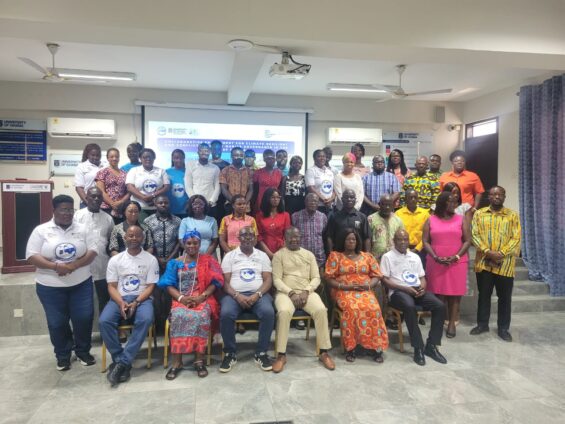
A new regional initiative aimed at addressing the rapid decline in fish stocks has been launched at the University of Ghana, bringing together fishers, scientists, regulators and community leaders.
The Fisheries Without Borders (FWB) project, unveiled alongside a policy dialogue, highlighted growing concerns about the sustainability of coastal livelihoods and what stakeholders described as inadequate policy responses by governments.
Funded by Rockefeller Philanthropy Advisors through the Blue Convergence Fund, the project is led by the Federal University of Technology Akure (FUTA) in Nigeria and will operate across Ghana, Nigeria and Benin from 2026 to 2027.
In Ghana, the University of Ghana’s Department of Marine and Fisheries Sciences and the Wildlife and Human Resource Organisation are serving as implementing partners. Organisers indicated that the initiative could be expanded across West Africa if the initial phase proves successful.
At the heart of the project is the challenge of managing fish stocks that move freely across national boundaries, while policies and enforcement systems remain largely fragmented.
Ghana’s country lead, Prof F.K.E. Nunoo, underscored the scale of the problem, noting a sharp decline in marine fish production.
“There were times we got 900,000 tonnes from marine fisheries. Now we are at 400,000 and it is still going down,” he said.
The Ghana engagement follows similar stakeholder dialogues in Benin and Nigeria, forming part of a broader effort to gather local insights to inform policy development.
Project lead Dr Toyosi, speaking virtually, said the initiative is designed to improve marine ecosystems, strengthen climate resilience in coastal communities, and support the development of more responsive policy frameworks.
Participants at the event also called for stronger inclusion of women in fisheries governance, advocating mandatory representation in decision-making bodies. They further highlighted the need for improved access to cold storage and fish processing facilities, supported by affordable financing.
The importance of documenting traditional ecological knowledge, particularly from older women in fishing communities, was also emphasised as a largely underutilised resource.
Representatives from the Environmental Protection Authority pointed to Ghana’s new EPA Act as evidence of enhanced legal backing for climate action, while the Fisheries Commission and the Fisheries Committee for the West Central Gulf of Guinea (FCWC), representing six countries, endorsed the project’s regional approach.
The initiative is expected to contribute to more coordinated management of marine resources and support long-term sustainability across the sub-region.
Latest Stories
-
Inflation rises to 5.2% in September 2026 as costs in Services sector still high
4 minutes -
US death row inmate Christa Pike awake and speaking after failed execution, lawyers say
15 minutes -
California pair charged with abusing at least 14 surrogate-born children
16 minutes -
France halts use of stun grenades after boy’s hand blown off in student protests
16 minutes -
CIKoD trains Agriculture Extension Officers on agro-ecological farming in Upper East
32 minutes -
THE LAW 101: Trial in Absentia -the law exists, but where are the rules?
39 minutes -
Ghanaian football fan proposes major penalty rule change to IFAB
44 minutes -
Community 25 residents demand urgent action over prolonged water crisis
49 minutes -
Nearly GH¢6m spent to fix Kpong-Tema transmission lines to improve water supply – GWL
56 minutes -
Dr Olukoya-backed MFM rules Nigerian women’s basketball
58 minutes -
THE LAW 101: Before you fly that drone
1 hour -
Wa West DCE, MP hand over and commission health, education, and hospitality projects
1 hour -
Drone ownership does not give unrestricted right to fly anywhere – Anyenini
1 hour -
GFA confirms two-legged format for FA Cup final
1 hour -
GWL assures of efforts to improve water supply in Tema, Ashaiman amid shortages
1 hour