

Audio By Carbonatix
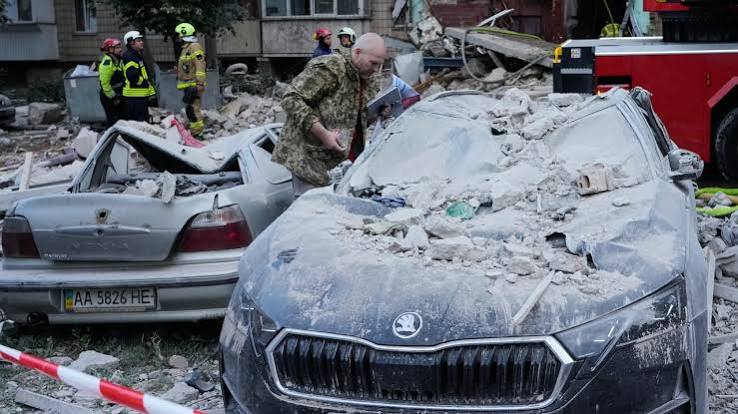
A massive Russian aerial offensive has killed at least 18 people and wounded dozens more, exposing critical gaps in Ukraine’s air defences. The Monday morning attack resulted in 12 deaths within the capital, Kyiv, while an additional six fatalities were reported in the surrounding region by its head, Mykola Kalashnyk. Emergency teams are currently searching through the rubble of residential high-rises where survivors are feared trapped. Zelenskyy noted that 64 people have been rescued, including two children. This bombardment follows a separate strike on Thursday that claimed 31 lives, making it the deadliest period for the capital this year.
Air Defence Vulnerabilities and Interceptor Deficit
The intensity of the latest Russian strikes highlights a critical shortage of air defence capabilities. Official reports indicate that all 29 ballistic missiles launched by Moscow successfully struck their intended targets. President Volodymyr Zelenskyy blamed the breach directly on an insufficient supply of Patriot interceptor missiles. In a statement following the attack, Zelenskyy urged international partners to take decisive action at the upcoming NATO summit in Ankara, Turkey. "As long as Patriot missiles remain in our allies’ stockpiles, Russia is only encouraged to keep ‘vanquishing’ residential buildings. The United States and Europe have enough strength to stop this terror," he said.
Air Force spokesman Yurii Ihnat emphasised the technical difficulty of the current environment. "To intercept ballistics, we need the means for interception," Ihnat stated during a national television broadcast. "Russians are certainly using the fact that there is a serious deficit of interceptor missiles now, in Ukraine and the world." Defence Minister Mykhailo Fedorov noted that the scale of current Russian ballistic missile usage outpaces global production, further straining Ukraine's ability to defend its skies.
Devastation in Residential Districts
The strikes caused widespread damage across more than 10 locations in Kyiv, impacting areas where civilians live and sleep. Tymur Tkachenko, head of Kyiv’s City Military Administration, highlighted the human cost of the assault. "These are residential buildings. Places where people slept and lived their ordinary lives," Tkachenko said in a post on Telegram. In the Podilskyi district, a residential building partially collapsed, while in the Darnytsia district, multiple high-rises sustained heavy damage. In the suburb of Vyshneve, approximately 600 residents were evacuated due to the risk of unexploded munitions.
Witnesses described the chaos of the early morning attacks. Khrystyna Piatetska, a 20-year-old resident of the Darnytsia district, described fleeing her home after a second blast shattered her windows. "When we were leaving the building, bodies were lying there," Piatetska recounted. "When we got downstairs, cars started exploding, and we came out from under the rubble straight into the fire." Another resident, 61-year-old Halina Ivanivna, described waking to the sound of the first impact before her apartment building began to collapse. "Everything was falling down," she said, as emergency crews worked through smoke and water to evacuate the structure.
Strategic Objectives and Regional Fallout
Russia’s Defence Ministry claimed the attack targeted weapons production facilities, including sites for drones, sea drones, armoured vehicles, and missile repair, as well as energy infrastructure. These claims have not been independently verified. Moscow described the offensive as retaliation for recent Ukrainian long-range strikes that have pressured Russian fuel supplies. While Ukraine has gained an edge through innovative drone technology, analysts note that Russia is currently exploiting the global strain on Patriot interceptor supplies.
Diplomatic Pressure at NATO Summit
As world leaders, including President Donald Trump, prepare for the NATO summit in Ankara, the international community faces increased pressure to reinforce Ukraine's air defense grid. European Commission President Ursula von der Leyen condemned the "blindly attacked civilians from the air" and promised that Europe would "keep increasing the pressure until Russia ends the bloodshed."
The violence remains widespread. In Russian-occupied Crimea, energy providers reported a peninsula-wide blackout due to an "external impact." Additionally, Russian regional governor Mikhail Yavrayev reported that a Ukrainian drone strike ignited a fire at an oil refinery in the Yaroslavl region, wounding two people. The Russian Defence Ministry claimed its air defences neutralised 519 Ukrainian drones during the same period.
Amidst the ongoing destruction, the path toward a diplomatic resolution remains precarious. The upcoming summit in Ankara serves as a critical juncture for both the future of Western military support and the immediate survival of Ukraine’s urban centres. As the conflict intensifies, the necessity for a balanced, sustainable strategy that addresses both humanitarian needs and security requirements remains the central challenge for global leaders.
Latest Stories
-
Court premises too volatile for Baffour Awuah’s attempted arrest by EOCO – Inusah Fuseini
5 minutes -
Drug bust: Under no circumstances will NACOC leadership be compromised – Twum-Barimah
6 minutes -
EOCO’s attempted arrest of Baffour Awuah was flawed beyond saving – Law Lecturer
6 minutes -
Genuine Ghanaian exporters may face heightened foreign inspections over drug busts – Lawyer
6 minutes -
Stakeholders demand action against foreign-led illegal mining in Ahafo Region
2 hours -
Ghana handed tricky draw at 2026 Amputee World Cup
2 hours -
2024 Nyankpala election violence: Youth group petitions authorities over slow probe
2 hours -
Ghana, UNICEF strengthen partnership to advance child protection
2 hours -
Day Two of 3rd Republic Bank-JoyNews Habitat Fair ends with great homeownership offers and financing solutions
2 hours -
Guinness Ghana DJ Awards 2026 Pub Fest celebrates Ghana’s DJ culture as Accra turns up the energy
3 hours -
10th woman found dead in South Africa’s string of killings
3 hours -
French Embassy trains Ghana Police CTU in counter-terrorism operations
3 hours -
UPSA uncovers mass results manipulation involving 178 students, over 500 results compromised
4 hours -
ECG announces planned power outages in parts of Tema from Sept. 29 to October 1
4 hours -
Sylvester Mensah urges Latenu FM to promote trade, export opportunities in Ga
4 hours