

Audio By Carbonatix
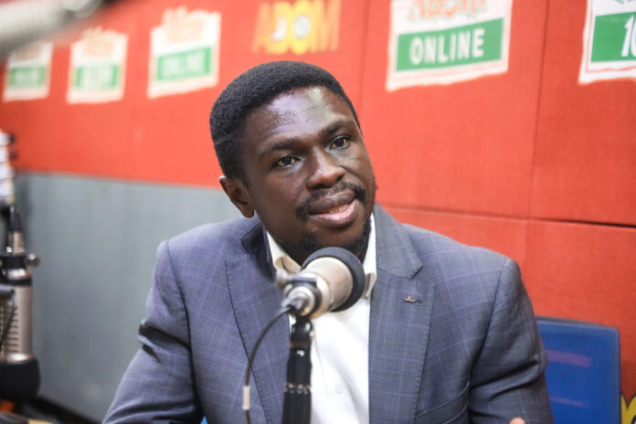
Investigative journalist Manasseh Azure Awuni says comments made by the Office of the Special Prosecutor (OSP)’s Director of Strategy, Research and Communications, Samuel Appiah Darko, amount to an indictment of the OSP’s own handling of the AB Adjei corruption case.
Mr Darko had responded to a Facebook post on December 2, 2025, insisting that “it is a fact that since the investigative journalist published his work, the trial is only now beginning.”
But Manasseh says that the claim is false.
He explained that he had already testified during the first trial of the case and had been cross-examined from December 2022 to April 2024, so “the trial could not only be starting in December 2024.”
He stressed that the trial began in 2022.
Mr Darko further argued that “investigative journalists provide a spark. What they uncover is not, in itself, evidence. Criminal investigators must scrutinise the material, build on it, corroborate it, obtain original documents, and ultimately convert information into admissible evidence.”
He also wrote that “investigators [at the OSP] had initially relied on the journalist’s findings to proceed to court, but once the case was reviewed, it was found to be hollow and lacking strong evidentiary support.
It was, therefore, re-investigated, with parallel financial inquiries and authentication of documents to address the deficiencies identified by the prosecutor.”
Manasseh questioned that explanation, noting that the charge sheet was signed by the Special Prosecutor, Kissi Agyebeng, so “one wonders why Sammy Darko said it was the investigators who proceeded to court, and the prosecutors later reviewed the case.”
He said the real indictment lies in the reading of Mr Darko’s own words. He pointed out that Mr Darko first dismissed investigative journalism as merely a “spark” but then claimed the OSP relied solely on the journalist’s work to go to court.
He said it was troubling that the OSP spent two years prosecuting the case “before realising that it was hollow.”
Manasseh also raised concerns about omissions in the OSP’s filings.
He said it was telling that the OSP claimed to rely only on the journalist’s findings but still left out the main evidence — the audio-visual documentary — when submitting material to the court.
Latest Stories
-
Renewed flood intervention at Mallam Junction raises hopes among residents, businesses
33 minutes -
St Augustine’s College retain National Investment Quiz title after nail biting grand finale
42 minutes -
Education infrastructure investment will drive Banda’s development – Ahmed Ibrahim
49 minutes -
Teacher unions strike: Gov’t presents fresh proposals as talks end inconclusively
2 hours -
51,000 teachers’ promotion arrears to be validated for October payment – Education Minister
2 hours -
Kwabena Boamah appointed Board Chair for Impact Investing Ghana
2 hours -
Striking teacher unions to meet Fair Wages and Salaries Commission on October 6
2 hours -
EOCO working with AG to arraign Nana Baffour Awuah before weekend court
2 hours -
Duraplast reassures customers after fire, announces October 5 reopening
3 hours -
Call off strike, gov’t will not renege on promotion arrears pledge – Haruna Iddrisu appeals to teacher unions
3 hours -
Committee set up to validate teachers eligible for 20% deprived-area allowance – Education Minister
3 hours -
Five-member committee to search for new Black Stars coach after Sports Ministry-GFA meeting
3 hours -
Pinktober: Breast cancer survival exceeds 90% when detected early – Breast Society of Ghana
3 hours -
TCDA to adopt Upper West’s MATCO mango farm as northern prototype, issues warning against felling shea trees
4 hours -
‘Fear delegates’ tag: Afoko touts genuineness among delegates ahead of NPP delegates conference
4 hours