

Audio By Carbonatix
The news that Saudi Arabia will allow its first alcohol shop has citizens and foreigners alike mulling one question: is this a minor policy tweak, or a major upheaval?
Sources familiar with preparations for the store disclosed details of the plan on Wednesday, as a document circulated indicating just how carefully leaders of the teetotal Gulf kingdom will manage its operations.
Located in the capital’s Diplomatic Quarter, the store will be accessible only to non-Muslim diplomats, meaning that for the vast majority of Saudi Arabia’s 32 million people, nothing will change for now.
Additionally, purchasing quotas will be enforced. Access to the store will be restricted to those who register via an application. And customers will be asked to keep their phones in a “special mobile pouch” while they browse for beer, wine and spirits.
Still, some Riyadh residents told AFP they saw the development as the first step towards wider availability of alcohol, which would be a dramatic break from the nationwide prohibition that has been in place since 1952.
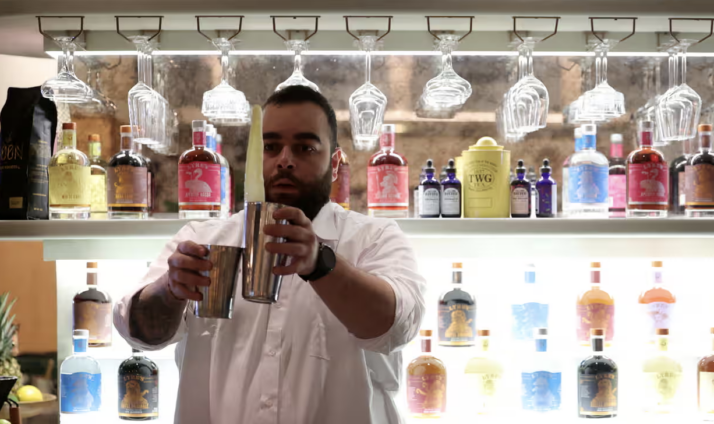
“This country keeps on surprising us,” said a Lebanese businessman dining on Wednesday night at LPM, a French restaurant in Riyadh known for its lengthy list of non-alcoholic wine and cocktails mixed behind an 18-metre (60-ft) long marble-top bar.
“It is a country that is developing, that is growing and that is attracting a lot of talent and a lot of investments. So yes, of course, there’s going to be much more.”
Yet like other diners at LPM, the businessman declined to be named, highlighting the sensitivity surrounding anything related to alcohol – which is banned in Islam – in the country that is home to the Muslim holy places of Mecca and Medina.
At another table, tucking into an order of hazelnut tiramisu, two Saudi men in their 30s said they worried about what the sale of alcohol would mean for the kingdom’s identity.
“It’s not who we are,” one of the men said.
“It’s not that I have, like, some kind of judgment towards people who drink. No, absolutely not. But having something that is out there affects the culture and the community.”
He added: “Let’s say if I have a younger sibling, if alcohol is out there, there is a possibility that he will become an alcoholic.”
His friend chimed in to say that he would prefer that people continue to go abroad to drink, as many do currently.
“It’s just scary that they’re allowing such things into [the country]. Any individual that wants to try alcohol, it’s literally an hour by plane away,” he said.
“Everybody travels here. It’s easily accessible. But what I want to say is that in this jurisdiction, I’m not happy that it’s allowed.”
Under his Vision 2030 reform agenda, Saudi Arabia’s de facto ruler, crown prince Mohammed bin Salman, is trying to turn the world’s biggest crude exporter into a business, sports and tourism hub that can prosper in an eventual post-oil era.
That requires luring more foreigners, and permitting alcohol “in stages” could play a role in that, said Kristin Diwan, of the Arab Gulf States Institute in Washington.
“This is one more step in normalising government sanction of alcohol in defined settings,” she said.
The government’s Center for International Communication said on Wednesday the new policy’s goal was “to counter the illicit trade of alcohol goods and products received by diplomatic missions”.
That was an apparent reference to the thriving local hidden market, where bottles of whisky frequently go for hundreds of dollars.
Framing the news this way “is likely intended to send a subtle message that change may be on the way, but that the process will be incremental and tightly controlled”, said Kristian Ulrichsen, fellow for the Middle East at Rice University’s Baker Institute for Public Policy.
For their part, restaurant industry insiders were unsure whether business would be affected in the immediate term.
“For the food and beverage industry, this doesn’t make a direct impact,” one manager said, though he added that if it alters how the outside world sees Saudi Arabia, “this could attract footfall towards the kingdom”, meaning more customers.
If access to alcohol in Saudi Arabia eventually expands beyond what sources described on Wednesday, those with the most to lose include vendors of mocktails and other non-alcoholic beverages, which are increasingly fashionable.
“It’s not a good thing for me. I’ll lose my business,” Evans Kahindi, brand manager for Blended by Lyre’s, a non-alcoholic spirits company, said with a laugh.
“There has always been speculation about having the real alcohol here … But to be honest, it’s with the government, we don’t know yet and I cannot speculate on anything.”
Latest Stories
-
At least 30 feared dead in crush at Haitian tourist site
56 minutes -
Four arrested over murder of Scottish businessman in Kenya
1 hour -
New Mainoo deal closer, says Man Utd boss Carrick
1 hour -
Sinner beats Alcaraz to return to world top spot
1 hour -
An inappropriate joke nearly ended his career. Now he’s back with more humour
2 hours -
GPL 2025/26: Dreams FC stage stunning comeback to hammer Eleven Wonders
3 hours -
Livestream: The Probe examines Kumasi’s looming water crisis
3 hours -
MTN Ghana gears up to lead Africa’s AI revolution
3 hours -
Philanthropist Alhaji FuZak donates Da’wah bus to Ambariya Sunni community
3 hours -
GUTA calls for suspension of Publican AI system over trade disruptions
3 hours -
TTAG raises alarm over proposed recruitment of 7,000 teachers, demands national posting roadmap
4 hours -
Civilians feared killed after reports of air strike on Nigerian market
4 hours -
Bishop Simon Kofi Appiah installed as new Jasikan Diocese Bishop
4 hours -
Trump’s Strait of Hormuz blockade threat raises risks and leaves predicaments unchanged
4 hours -
US Court backs extradition of former MASLOC CEO Sedina Tamakloe-Attionu to Ghana
4 hours