

Audio By Carbonatix
You cannot build a sustainable food system on farms that do not know whether they are profitable. Zero Hunger starts with Zero Financial Blindness on the farm.
The Global Promise and the Ground-Level Gap
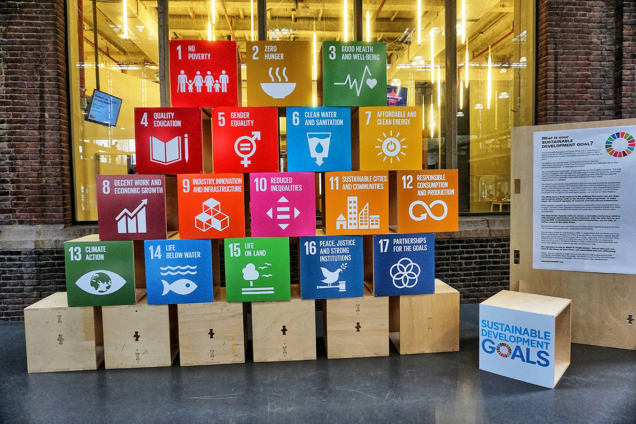
SDG 2- Zero Hunger: is one of the most ambitious commitments in the history of international development. Its five targets address food availability, the elimination of malnutrition, the doubling of smallholder productivity and income, sustainable food production systems, and agricultural investment. Governments, multilateral institutions, and development banks have mobilized billions of dollars toward seeds, irrigation infrastructure, extension services, and land access.
And yet, farms are still failing. Quietly. Consistently. Across the African continent and the broader developing world.
Not because of poor seeds. Not because of inadequate rainfall. Not because of insufficient land. But because the farmers running them cannot read a profit and loss statement, do not know their cost of production per kilogram, and have no system for managing cash flow across growing seasons.
Farm Financial Management, the systematic application of accounting, budgeting, cost analysis, and financial reporting to farm operations is conspicuously absent from SDG 2. This is not a minor oversight. It is a structural gap that undermines every other target the framework seeks to achieve.
The Numbers That Expose the Gap
The data is unambiguous. Consider the following:
- According to the Food and Agriculture Organisation (FAO), over 500 million smallholder farms globally produce approximately 70 percent of the world's food yet the overwhelming majority operate without any formal financial management system.
- In Sub-Saharan Africa, fewer than 15 percent of smallholder farmers have ever prepared a farm income statement or cost of production report.
- Research across West Africa consistently shows that farms with basic financial management literacy generate 23-31 percent higher net margins than comparable farms without it same crops, same inputs, same markets.
- In Ghana, post-harvest losses account for 20-30 percent of total farm output annually. A significant proportion of these losses are not caused by storage failures but by poor cash flow planning that forces farmers into premature sales at severely depressed market prices.
- A farmer who does not know their break-even price per kilogram will consistently underprice their produce, feeding the market while starving their own business.
What a Sixth Target Would Look Like
Embedding Farm Financial Management as a core pillar of SDG 2 would require policymakers, development banks, and NGOs to pursue five specific interventions:
- Cost of Production Literacy. Every farmer should know their true cost per kilogram before they price a single unit of produce. This is not a sophisticated concept, it is the minimum threshold of financial awareness needed to operate a sustainable agricultural enterprise.
- Cash Flow Planning. Seasonal income gaps, delayed institutional payments, and input procurement cycles create liquidity pressure that destroys otherwise profitable farms. Financial management training must address this directly.
- Break-Even Analysis. Understanding the minimum yield and price required to sustain the farm is a survival tool, not a luxury. Farmers who know their breakeven point make fundamentally better decisions under market pressure.
- Financial Reporting. Basic income statements and cost reports are the gateway to formal credit, institutional buyers, and investor confidence. Without them, smallholder farmers remain permanently outside the formal agricultural finance system.
- Profitability Tracking by Crop and Season. Knowing which crop, which season, and which market channel generates real profit, rather than simply revenue, is the foundation of every strategic farm management decision.
A Practitioner's Perspective from the Greenhouse
In controlled-environment agriculture -greenhouse farming, the financial management imperative is even more acute. Capital investment is higher. Input costs are more intensive. Market expectations are more exacting. And the margin for financial error is significantly narrower than in open-field production.
With over seven(7) years' experience , managing a multi-crop operation — tomatoes, bell peppers, and cucumbers in our cluster structures has demonstrated firsthand what financial management literacy unlocks: variance analysis that identifies cost overruns two cycles before they become crises; activity-based costing that reveals which crop is carrying the operation and which is consuming its margins; and financial reporting that builds the institutional confidence necessary to secure supply contracts with hotels, schools, and large-scale buyers.
These are not outcomes of additional investment. They are outcomes of financial literacy applied to existing resources. The farm did not change. The accounting did.
A Call to the Development Community
With five years remaining to the 2030 deadline, the SDG 2 framework requires honest evaluation. The targets that exist are necessary. They are not sufficient.
NGOs designing agricultural programs must integrate financial management training as a core module, not an appendix. Development banks financing smallholder farm expansion must require and support basic financial reporting as a condition of lending. Policymakers drafting post 2030 successor frameworks must ensure that farm financial management literacy is a measurable indicator, tracked with the same rigour as yield rates and caloric availability.
The world's smallholder farmers are not failing because they lack the will to succeed. They are failing because they are operating sophisticated biological and commercial enterprises without the most basic financial tools to manage them.
Farm Financial Management should have been a core pillar of SDG 2 from the beginning, not as a donor workshop topic, but as a measurable global target with accountability structures to match. It is not too late to correct that omission in the frameworks that follow.

About the Author
Kelvin Essuman Quansah is Enterprise Development Manager at Agri Impact Limited. He has extensive experience in greenhouse farm management, managerial accounting, strategic planning, and agribusiness development. He has led financial reporting, cost analysis, and performance management across multiple greenhouse facilities growing tomatoes, bell peppers, cucumbers, and habanero for wholesale, institutional, and hospitality markets. He also has banking and credit union management experience.
Latest Stories
-
T-bills auction: Government exceeds target marginally; yield on 91-day bill remains unchanged
2 hours -
GPL 2026/27: 10-man Aduana hand Kotoko defeat in Kumasi
2 hours -
GPL 2026/27: Medeama ease past Basake Holy Stars
3 hours -
Appiah Adomako writes: Why DVLA must stop treating every expired licence holder as delinquent
3 hours -
Localization must transfer decision-making power, not just project responsibilities
3 hours -
Modernising Ghana’s traditional markets through the 24-Hour Economy markets initiative
3 hours -
New economy will boost local production and create jobs – Finance Minister
3 hours -
Real-Time VAT on cross-border digital services – not a new tax and does not violate double taxation principle
4 hours -
Digitalisation, AI key to Ghana’s tourism transformation – GHATOF
4 hours -
Stronger GTA-private sector partnership needed to grow tourism – GHATOF
4 hours -
Amazon eyes Ghana for broadband expansion after talks with Mahama
5 hours -
National Investment Quiz 2026: Six schools qualify for quarter-finals
5 hours -
‘Do not let Russia pay for its madness with lives of your people’ – Zelensky to Ghana, 46 other countries
5 hours -
6,079 promotion cases fully processed and paid – CAGD says amid nationwide teachers’ strike
6 hours -
Teacher unions to meet government Monday over nationwide strike
6 hours