

Audio By Carbonatix
Leadership has long been debated through two contrasting ideas: should a leader command fear to maintain authority, or should a leader inspire love and respect through humility and connection with the people? The question is not simply about whether a leader is popular or powerful, but about the kind of relationship a leader builds with citizens and institutions.
The Italian political philosopher Niccolò Machiavelli famously argued in my his book “The Prince” that if a leader cannot be both feared and loved, it is safer to be feared because fear can guarantee obedience.
However, he also acknowledged that excessive fear can create resentment. In modern democratic societies, where leaders depend on public trust rather than absolute authority, many argue that being respected and loved is more sustainable than ruling through fear.

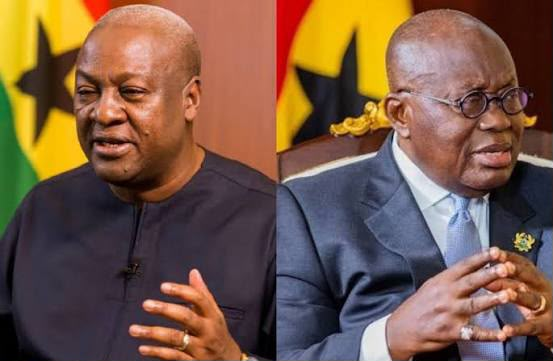
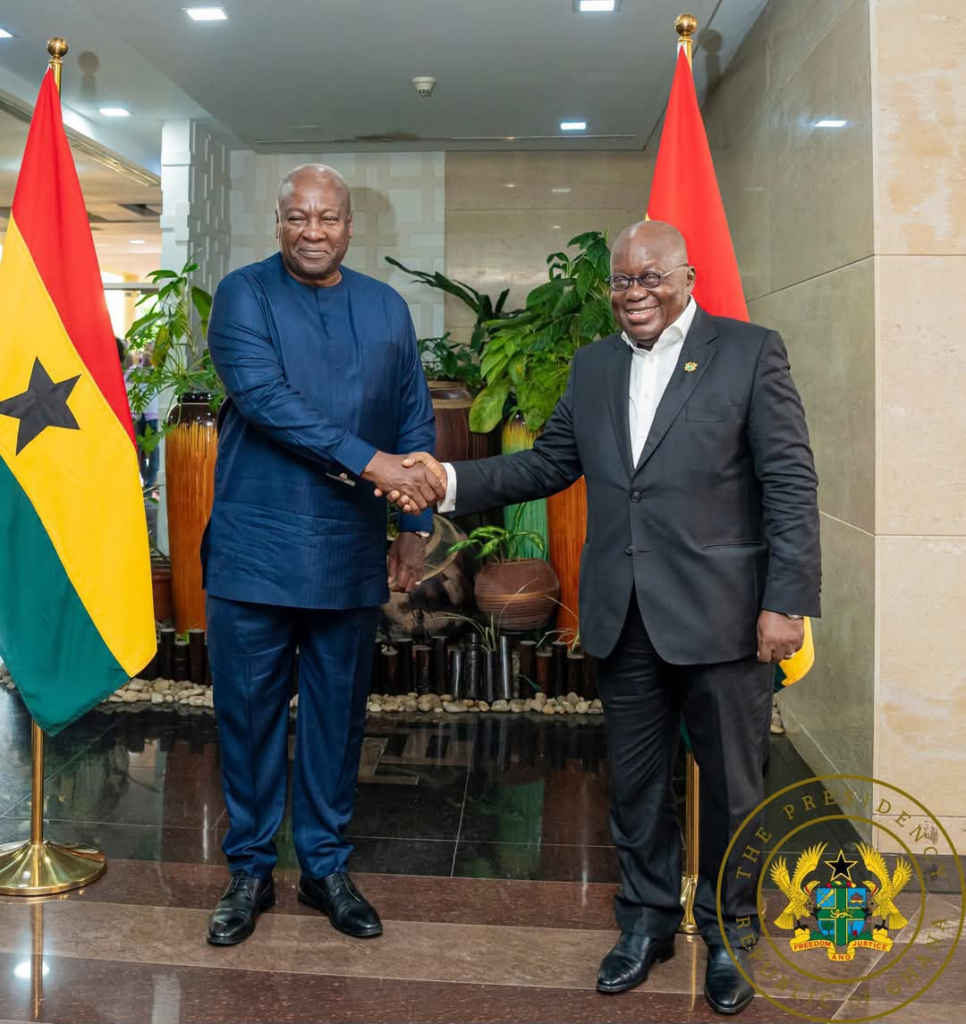
Ghana’s recent political history provides an interesting case study through the leadership approaches of the current president of the Republic of Ghana, John Dramani Mahama, and his immediate predecessor, Nana Addo Dankwa Akufo-Addo who served as the 5th President of the 4th Republic of Ghana. Both leaders have had different public perceptions regarding their leadership styles, communication approaches and relationship with citizens.
Since returning to the presidency after he won the 2024 presidential election and sworn into office on January 7, 2025, President John Dramani Mahama has been widely described by supporters and some members of the public as a humble, accessible and listening leader.
His public engagements have often been characterised by a willingness to interact directly with ordinary citizens, acknowledge public concerns and present himself as someone who understands the daily struggles of Ghanaians.

For many Ghanaians, this approach represents a departure from the perception that political leaders often become distant once they attain power. A leader who listens creates the impression that citizens are not merely voters during elections but active participants in governance.
This perception has been strong enough that some supporters and commentators have even raised discussions about the possibility of extending his leadership term beyond the constitutionally allowed two-term limit. Although Ghana’s Constitution limits presidents to two terms, such conversations reflect the level of personal connection some citizens feel with leaders they perceive as approachable and responsive.
However, popularity and humility alone cannot define successful leadership. A leader must also demonstrate competence, make difficult decisions and deliver measurable results. A leader who is loved but unable to address national challenges may eventually lose public confidence. Therefore, while approachability is an important quality, it must be matched with effective governance.
Former president Nana Akufo-Addo’s presidency on the other hand was marked by significant policy initiatives, including the introduction of free senior high school education, infrastructure projects and other government programmes.
His supporters often described him as a decisive leader with a clear vision who was willing to pursue ambitious reforms despite opposition.
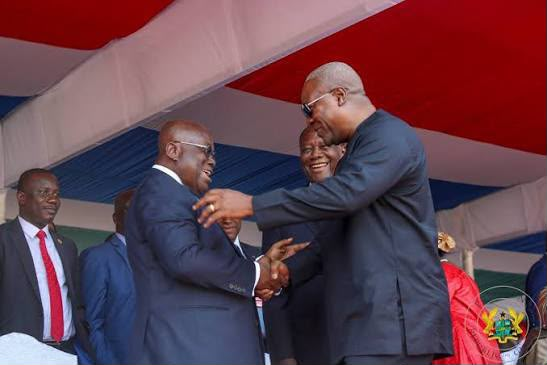
However, particularly during the latter part of his administration, some sections of the public developed a perception that he had become less receptive to criticism and increasingly distant from ordinary citizens.
Critics argued that his leadership style appeared more authoritative and less consultative to the point of some section of the public labeling him as the “pharaoh of our time” and the term “Yentie Obiaa”.
One example frequently cited by critics was an incident involving traditional leaders at a public event, where the president instructed chiefs to stand and greet him. To some observers, the incident reinforced concerns about a perceived lack of sensitivity toward traditional authority and public display or arrogance.
Supporters, however, argued that such moments should be understood within the context of protocol and presidential authority rather than interpreted as arrogance.
The broader criticism was not necessarily about one isolated incident but about a growing perception among some citizens that the administration was becoming less responsive to public concerns, especially during economic difficulties and periods of increased public dissatisfaction.
Fear, Respect and the Exercise of Power
The contrast between these two leadership styles raises a fundamental question: is a leader more effective when people admire them or when they fear them?
Fear can create discipline and ensure that institutions function under strong direction. Leaders must sometimes make unpopular decisions and cannot govern solely based on public approval. A leader who constantly seeks popularity may avoid necessary reforms because they fear criticism.
However, leadership based primarily on fear risks creating distance between leaders and citizens. When people feel ignored or disrespected, trust in institutions can decline. In a democracy, where legitimacy comes from public confidence, leaders must maintain a relationship built on respect and accountability.
The most effective leaders often combine both approaches. They are loved because they listen, show humility and demonstrate empathy, but they are also respected because they are firm, decisive and capable of making difficult choices.
A Balanced Assessment
The comparison between Mahama and Akufo-Addo highlights two different perceptions of presidential leadership. Mahama’s current public image is largely built around humility, accessibility and communication with citizens. This has strengthened his connection with many Ghanaians who value a leader who appears willing to listen.
Akufo-Addo, on the other hand, projected a more assertive and authority-driven style, focusing strongly on his vision and policy agenda. While this approach produced notable achievements, critics argue that the perceived decline in openness and responsiveness affected public trust toward the end of his tenure.
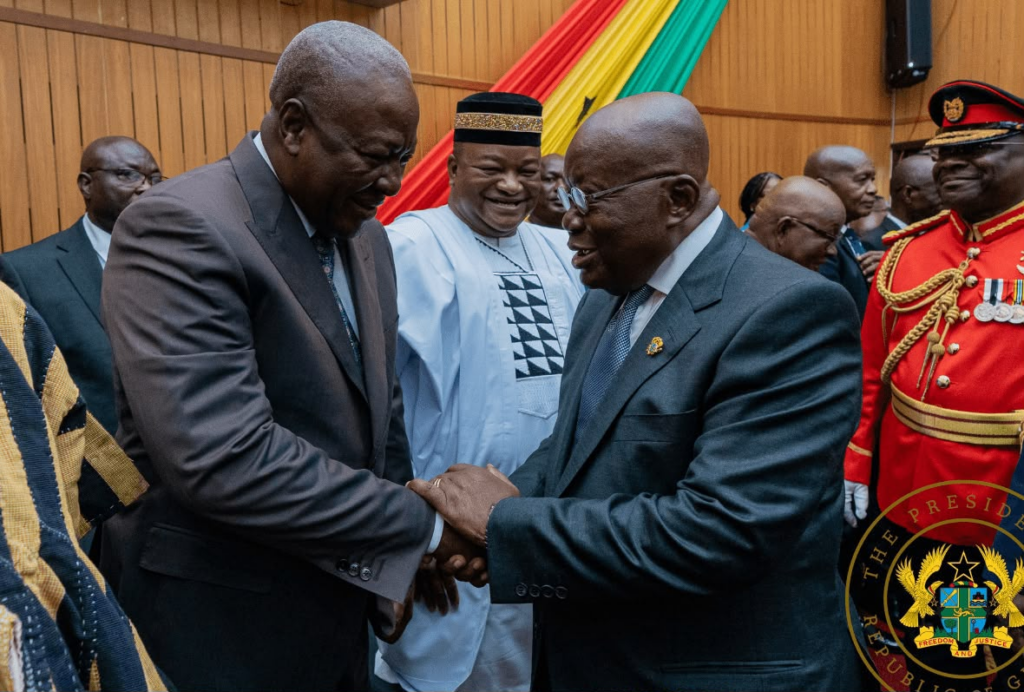
Ultimately, a good leader should neither seek to be feared nor focus only on being loved. The ideal leader should earn respect. Respect is built when citizens see a leader who is humble enough to listen, courageous enough to act and accountable enough to accept criticism.
For Ghana and other democracies, the lesson is clear: leadership is not only about occupying power but about how that power is exercised. A leader who combines humility with competence, and compassion with firmness, is more likely to leave behind a lasting legacy.
Latest Stories
-
Total revenue & grants stood at GH¢144.5bn in July 2026, slightly below target – BoG
13 minutes -
Ghana Sports Fund urges sports federations to submit credible proposals and measurable targets
16 minutes -
Musk says US government may be behind slowdown of Ukraine drone speeds
34 minutes -
Picking Chief Justices nearing retirement could give Mahama immense power – Bentil
44 minutes -
Netflix to shed 1,000 jobs in steepest cuts since 2022
1 hour -
Burnham had two hospitality dinners with Man City chairman, deleted records show
1 hour -
Semenyo ‘froze’ after alleged racist abuse, court told
1 hour -
‘Shameless’ – Mourinho critical of Vinicius Jr ban timing
2 hours -
Loyalty can outweigh competence in Chief Justice selection – Bentil
2 hours -
Man City suffer as PSG masterclass sets up Champions League win
2 hours -
Customer Service Africa CEO urges business leaders to observe staff and customer interactions
2 hours -
On night of mayhem for Liverpool, Barcola arrives in style
2 hours -
Muzic Mensah finds healing and renewed love in new single ‘WayƐ Late’
2 hours -
FIFA to offer extra £2.6bn for football development
3 hours -
Government backing is no EPA permit – Authority warns GoldBod, ministries
3 hours