

Audio By Carbonatix
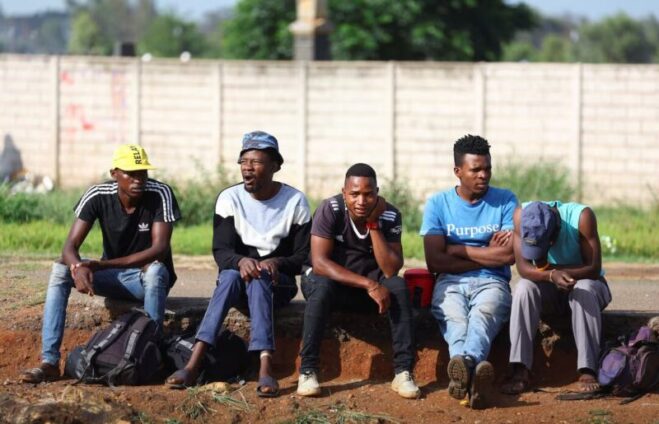
South Africa's unemployment rate fell in the three months after the formation of a coalition government that has boosted business confidence and led to hopes for more progress on economic reform, data showed on Tuesday.
The official unemployment rate fell to 32.1% in the third quarter of 2024, from 33.5% in the second quarter the first time the official rate had fallen in a year, Statistics South Africa figures showed.
The coalition government was formed in June after the African National Congress lost its parliamentary majority for the first time in 30 years, pushing it into a broad alliance with the market-friendly Democratic Alliance and other smaller parties.
Investor optimism over the coalition fuelled a rally in the country's rand currency and local-currency debt.
The decline in joblessness in the latest three-month period was driven by rising employment in six of the 10 industries tracked by the statistics agency: community and social services, construction, trade, agriculture, mining and utilities.
There were job losses in transport, manufacturing, private households and finance.
However, South Africa still has one of the highest unemployment rates in the world, and Black South Africans continue to experience the worst unemployment levels relative to the country's other racial groups.
Statistician-General Risenga Maluleke told a press conference that the long-term unemployment rate had risen more than 10 percentage points in the last decade, rooted in a mismatch between people's skills and the jobs on offer.
Under an expanded definition of unemployment, which includes those discouraged from seeking work, 41.9% of the labour force was jobless in the third quarter, down from 42.6% in the second.
Latest Stories
-
Cryptocurrency regulation: BoG, SEC must collaborate closely to align risk assessments – IMF
24 minutes -
Congo’s Ebola outbreak has killed more than 4,000, government data shows
35 minutes -
Ethiopian rebel forces withdraw from Tigray regional capital
43 minutes -
All set for 7th Ghana Credit Excellence Awards 2026 on October 10
46 minutes -
Why pastors may not be seen – or heard – preaching on buses for much longer
54 minutes -
Oil slips as Middle East crude exports rise, G7 to release stocks
1 hour -
France to step up Ebola funding in Congo amid resurgence fears, minister says
1 hour -
Djokovic beats Zverev to reach China Open semis
1 hour -
Brazil election goes to run-off as right-wing Flávio Bolsonaro wins first round
2 hours -
Modric ‘ashamed’ of Croatia’s ‘catastrophic night’
2 hours -
Klopp’s mixed start continues as Germany held
2 hours -
The job interview question you don’t have to answer
2 hours -
Trump unveils ‘Super Intelligence Force’ to oversee AI policy
2 hours -
Zirkzee gives Netherlands win as van Dijk joins 100 club
2 hours -
Haaland injury worry as Norway lose in Portugal
3 hours