

Audio By Carbonatix
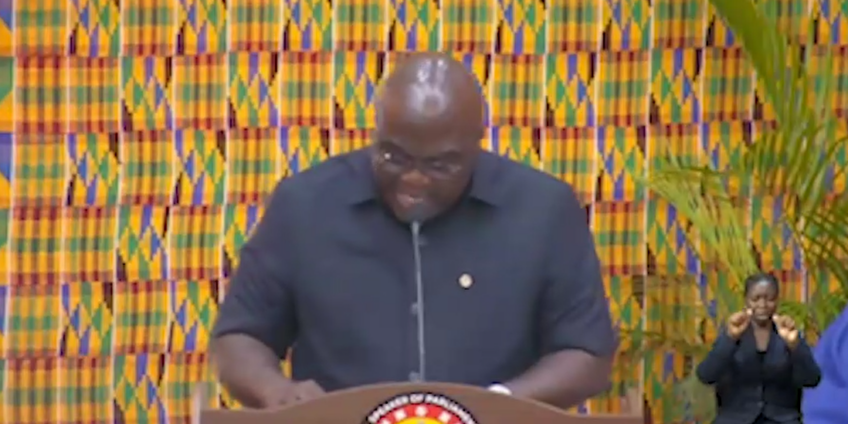
The Chief of Staff, Julius Debrah, has urged African leaders to redefine sovereignty beyond political rhetoric, arguing that citizens ultimately judge their governments by tangible improvements in living conditions rather than speeches or declarations.
Speaking at the African Parliaments’ Family, Sovereignty and Values Conference, he said true sovereignty must be reflected in a country’s ability to meet the basic needs of its people and deliver essential public services.
“A sovereign nation must be capable of feeding its people, educating its children, protecting its vulnerable, creating opportunities for its youth, and financing its own development priorities,” he said.
He stressed that across the continent, citizens do not evaluate sovereignty based on political statements but on everyday realities.
“Across Africa, our citizens do not judge sovereignty by the speeches we make. They judge it by whether the lights stay on, whether jobs are available, whether schools educate, whether hospitals heal, and whether the government keeps their promises,” he stated.
According to him, the most important measure of sovereignty is a government’s ability to solve the practical problems facing its population.
“The ultimate expression of sovereignty is the capacity of a nation to solve the problems of its people,” he added.
He further argued that discussions on cultural sovereignty must be matched with equal attention to economic sovereignty, warning that values and identity cannot be sustained without strong economic foundations.
“That is why discussions about cultural sovereignty must be accompanied by discussions about economic sovereignty,” he said.
The Chief of Staff called for stronger domestic production, support for African businesses, expansion of regional trade, and the creation of development pathways rooted in local realities.
“We must build economies capable of supporting the social systems we seek to protect,” he noted, adding that sustainable sovereignty depends on strengthening internal economic capacity across African states.
The conference, held in Accra, has brought together parliamentary leaders from across Africa to deliberate on sovereignty, family values and the continent’s socio-political direction.
Latest Stories
-
Unity is what we need, Shatta Wale has reminded us
1 minute -
Ghana Medical Trust Fund has exceeded expectations in first year – Health Minister
7 minutes -
One-Week Observation for Mrs Janet Gyasi Boakye
20 minutes -
Before the bulldozers arrive: What the state owes workers in the informal economy
20 minutes -
NIA extends Ghana Card registration for children in North East and Upper East
24 minutes -
Volta Team wins NPA 2026 Welfare Week Quiz championship
26 minutes -
Maxwell Klu turns birthday into relief mission for Hohoe flood victims
28 minutes -
NDC congratulates NPP, calls for national interest to rise above party politics
30 minutes -
NPP’s new executives will not alter our 2028 preparations – Tanko-Computer
1 hour -
Tema East MP urges men to take active role in breast cancer awareness
1 hour -
Hawa Koomson vows to bring experience and maturity to NPP women’s wing
2 hours -
Opare Addo cautions NDC against adopting NPP’s aggressive politics
2 hours -
NPP has 35 months to prepare for 2028 after early reorganisation – Political strategist
2 hours -
All six passengers presumed dead after plane went missing off US coast
2 hours -
Teachers’ promotion arrears to be paid by Oct. 30 – Education Minister
2 hours