


Audio By Carbonatix
It was the image that made Titanic's wreck instantly recognisable - the ship's bow looming out of the darkness of the Atlantic depths.
But a new expedition has revealed the effects of slow decay, with a large section of railing now on the sea floor.
The loss of the railing - immortalised by Jack and Rose in the famous movie scene - was discovered during a series of dives by underwater robots this summer. The images they captured show how the wreck is changing after more than 100 years beneath the waves.
The ship sank in April 1912 after hitting an iceberg, resulting in the loss of 1,500 lives.
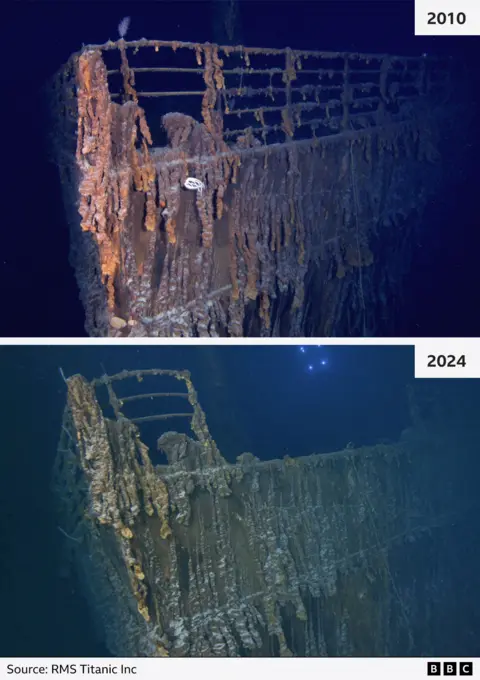
“The bow of Titanic is just iconic - you have all these moments in pop culture - and that's what you think of when you think of the shipwreck. And it doesn't look like that anymore,” said Tomasina Ray, director of collections at RMS Titanic Inc, the company that carried out the expedition.
“It's just another reminder of the deterioration that's happening every day. People ask all the time: ‘How long is Titanic going to be there?’ We just don't know but we're watching it in real time.”
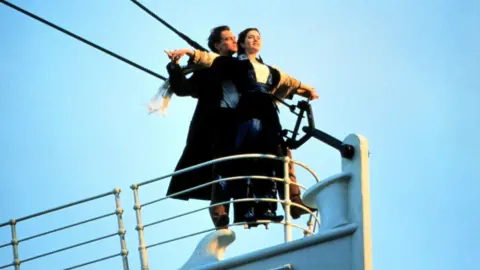
The team believes the section of railing, which is about 4.5m (14.7ft) long, fell off at some point in the last two years.
Images and a digital scan from an 2022 expedition carried out by deep-sea mapping company Magellan and documentary makers Atlantic Productions show that the railing is still attached - though it is starting to buckle.
"At some point the metal gave way and it fell away," said Tomasina Ray.
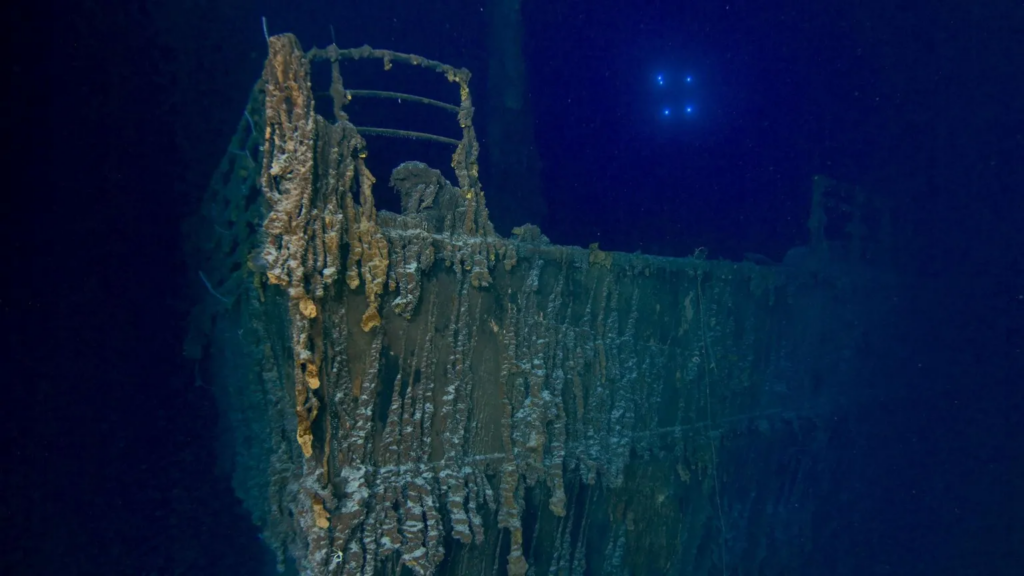
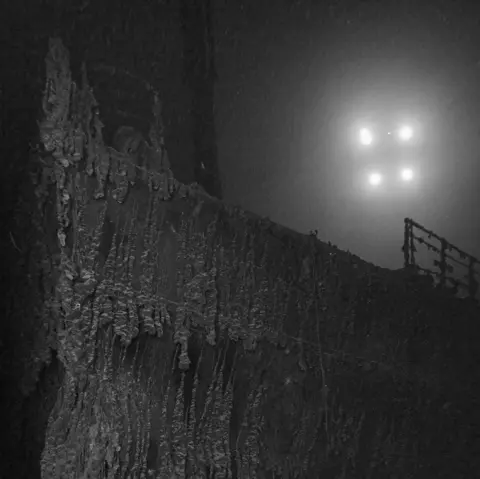
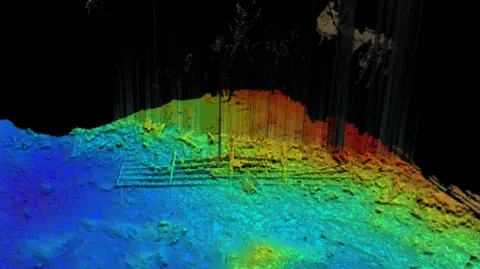
It is not the only part of the ship, which lies 3,800m down, that is being lost to the sea. The metal structure is being eaten away by microbes, creating stalactites of rust called rusticles.
Previous expeditions have found that parts of the Titanic are collapsing. Dives led by explorer Victor Vescovo in 2019 showed that the starboard side of the officer’s quarters were collapsing, destroying staterooms and obliterating features like the captain’s bathtub from view.
This summer’s RMS Titanic Inc expedition took place over July and August.
Two remotely operated vehicles (ROVs) captured more than two million images and 24 hours of high-definition footage of both the wreck, which split apart as it sank with the bow and stern lying about 800m apart and the debris field surrounding it.
The company is now carefully reviewing the footage to catalogue the finds and will eventually create a highly detailed digital 3D scan of the entire wreck site.
More images from the dives will be revealed over the coming months.
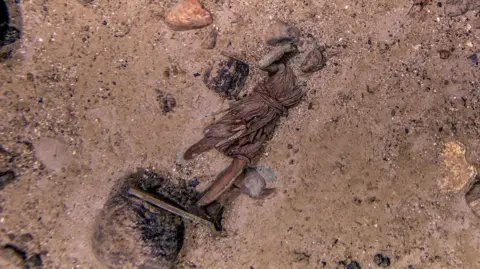
The team has also announced another discovery of an artefact they were hoping to find even though it was against all the odds.
In 1986 a bronze statue called the Diana of Versailles was spotted and photographed by Robert Ballard, who had found the wreck of the Titanic a year earlier.
But its location was not known and the 60cm-tall figure was not documented again. Now, though, it has been discovered lying face up in the sediment in the debris field.
"It was like finding a needle in a haystack, and to rediscover her this year was momentous," said James Penca, Titanic researcher and presenter of the Witness Titanic podcast.
The statue was once on display for Titanic’s first-class passengers.
"The first-class lounge was the most beautiful, and unbelievably detailed, room on the ship. And the centrepiece of that room was the Diana of Versailles," he said.
"But unfortunately, when Titanic split in two during the sinking, the lounge got ripped open. And in the chaos and the destruction, Diana got ripped off her mantle and she landed in the darkness of the debris field."
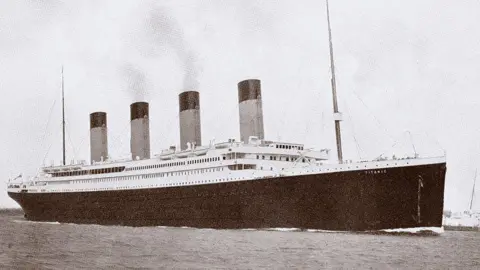
RMS Titanic Inc has the salvage rights to Titanic, and is the only company legally allowed to remove items from the wreck site.
Over the years, the company has retrieved thousands of items from the debris field, a selection of which are put on display around the world.
They plan to return next year to recover more - and the Diana statue is one of the items they would like to bring back to the surface.
But some believe the wreck is a grave site that should be left untouched.
"This rediscovery of the Diana statue is the perfect argument against leaving Titanic alone," Mr Penca said in response.
"This was a piece of art that was meant to be viewed and appreciated. And now that beautiful piece of art is on the ocean floor... in pitch black darkness where she has been for 112 years.
"To bring Diana back so people can see her with their own eyes - the value in that, to spark a love of history, of diving, of conservation, of shipwrecks, of sculpture, I could never leave that on the ocean floor."
Latest Stories
-
Police blur the line between invitations and arrests – Reindorf Twumasi Ankrah
37 seconds -
Turning invitations into arrests is making citizens reluctant to assist police – Twumasi Ankrah
34 minutes -
The Traffitech-GH SMS spot-fine system: The good, the sad, and the funny – Bright Simons writes
46 minutes -
Hawa Koomson pledges experienced and mature leadership of NPP women’s wing
2 hours -
Young woman found dead at Kasoa Peace Town
2 hours -
Playback: The Law examined lawful arrest in Ghana
3 hours -
Mahama urges African governments to treat healthcare as an investment, not budget cost
3 hours -
Bawumia congratulates John Boadu and new NPP executives, pledges support ahead of 2028
3 hours -
Aksa Energy delegation pays courtesy call on GRA Commissioner-General
3 hours -
‘No talent should be left out’ – Bawumia pledges inclusive NPP campaign for 2028
4 hours -
Prof. Mike Oquaye recounts how he blocked the Special Prosecutor’s attempt to arrest Bawku Central MP
4 hours -
Make health sovereignty a priority for Africa – Mahama
4 hours -
Dorimon Naa, Wa West DCE lead massive clean-up exercise; threaten sanctions against recalcitrant residents
4 hours -
Photos from Adom FM Y2K Jam
4 hours -
Praye Tiatia steals the show at Adom FM Y2K Jam [Watch]
4 hours