


Audio By Carbonatix
Somali money transfer companies moved more than $3.7 million in cash between suspected weapons traffickers in recent years, including to a Yemeni under U.S. sanctions for alleged militant links, according to a report seen by Reuters.
The findings by a Geneva-based research group, the Global Initiative Against Transnational Organized Crime, could further complicate attempts by Somali transfer companies to retain access to international banking services.
Though they provide a lifeline to millions in the anarchic Horn of Africa nation, few banks will do business with them because of the risk of falling foul of international transparency and anti-money laundering regulations.
Asked about the report, the Central Bank of Somalia, which regulates money transfer firms, said it was unaware of the transfers but would investigate and was in general making progress in countering terrorism financing.
Contacted by Reuters, the four companies each said they did their best to comply with global “know your customer” norms despite Somalia having no national identity card. The firms also said they maintained databases of internationally-sanctioned individuals.
The Global Initiative analysed nearly six years of transaction records from the city of Bossasso, matching them with mobile phone records provided by security sources and database searches.
The report identified 176 transactions from the last six years that it said appeared to be linked to suspected weapons dealers in Somalia and Yemen. Nearly two-thirds were over the $10,000 threshold that should trigger an automatic report to regulatory authorities.
They include two transfers totaling nearly $40,000 to numbers linked to Sayf Abdulrab Salem al-Hayashi after the U.S. Treasury sanctioned him in 2017 for allegedly providing weapons and financial support to al Qaeda in the Arabian Peninsula and Islamic State in Yemen, the report said.
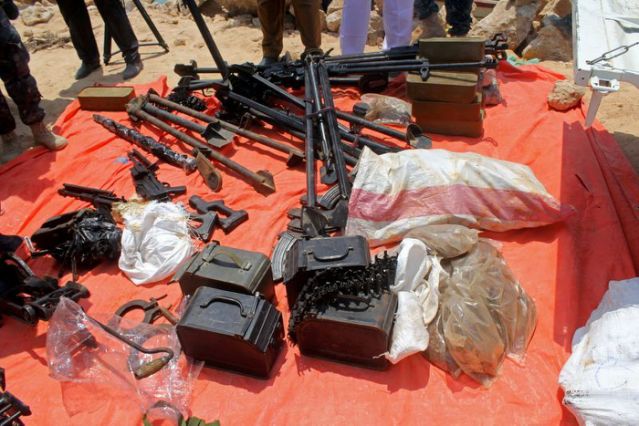
Al Hayashi could not be reached for comment.
Somalia-based Amal Express and Iftin Express handled the transactions, which used different combinations of his name and nickname, the report said.
Amal Express said a transfer slip shown in the report and allegedly linked to al Hayashi was a forgery. Iftin Express declined to comment on individual transactions.
MULTIPLE IDENTITIES
The report did not find any instances where the other two companies, Dahabshiil and Taaj, made transfers to any sanctioned individuals. But it noted instances where individuals were able to make transfers with them using multiple names and numbers, a violation of Somali law.
One man used 24 names between the four companies, the report said.
All four companies said they did not allow customers to use multiple identities or phone numbers. Dahabshiil also said it has stopped doing transfers between Somalia and Yemen.
The companies did not say whether the six men named in the report are in their databases.
Apart from al Hayashi - the only one under U.S. sanctions - three others whose names appear in the suspect transactions were identified as suspected arms dealers in public reports by the United Nations panel of experts on Somalia.
Two were flagged - one as a proxy for al Hayashi, and one as an arms trafficker - in a confidential annex to a 2018 report by the same panel.
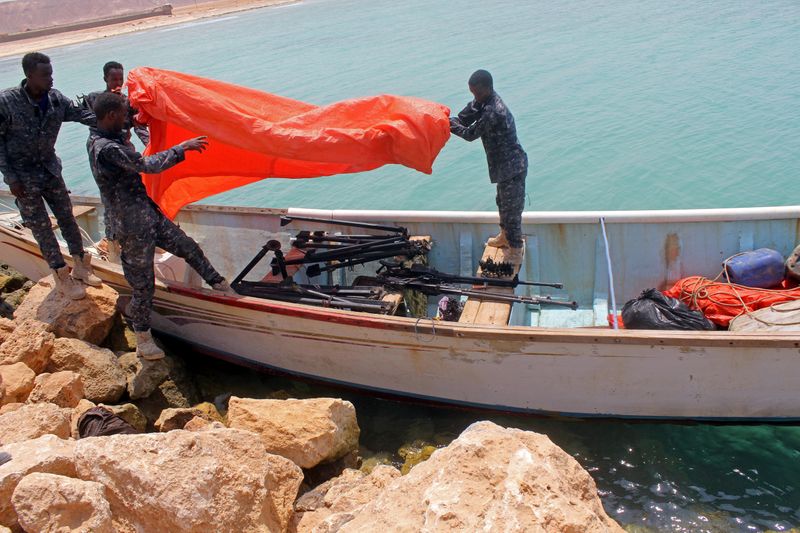
Few Somalis have bank accounts. Money transfer companies - often known as hawalas - are vital to economic activity and delivering humanitarian aid.
Cutting companies off from banking is not the answer, said the report’s author, Jay Bahadur, former head of the U.N. panel of experts. “Excluding companies from international banking services will punish families that rely on them and drive financial flows underground,” he said.
But he said companies must ensure their agents follow anti-money laundering laws and Somali authorities must improve enforcement.
“Financial regulatory bodies in Somalia are understaffed, under-resourced, and aren’t trusted by domestic financial institutions,” he told Reuters. “They receive limited reporting data and aren’t able to take much action with what they do receive.”
Abdirahman M. Abdullahi, governor of Somalia’s central bank, said cooperation was improving. Somalia is working with the World Bank on developing a national identity card, he told Reuters.
He said arrests have been made for breaking anti-money laundering and terrorism financing law, citing the case of a trader convicted in August of running an unregistered bank.
The Financial Reporting Center, a Somali government watchdog, did not respond to requests for comment.
Latest Stories
-
Padel for Parkinson’s cycling event promotes awareness at University of Ghana
1 minute -
GPL 2025/26:Samuel Tetteh brace fires Nations FC past Basake Holy Stars
10 minutes -
Ghana’s oil trade position close to net neutral in near term – Fitch
32 minutes -
IMANI Africa President urges greater awareness and support for Parkinson’s Disease patients
42 minutes -
T-bills: Government records 29% undersubscription; interest rates continue to surge
44 minutes -
Perceptions of Judicial partisanship ‘unfortunate’ – Justice Adjei-Frimpong urges greater public engagement to build trust
47 minutes -
Ghana to honour Christina Hammock Koch for historic Artemis II mission
2 hours -
Supreme Court appointments require more than 15 years’ experience – Justice Adjei-Frimpong
2 hours -
Fire destroys 3-bedroom house at Bogyawe
2 hours -
Why the Supreme Court is a “policy court” – Justice Richard Adjei-Frimpong breaks it down
3 hours -
Playback: The Law discussed Supreme Court @150
4 hours -
MTN Momo staff walk to promote wellness and fitness
4 hours -
Assafuah: Sedina Attionu’s return from Nevada will test government’s commitment to accountability
4 hours -
How GRA’s Modified Taxation Scheme is boosting revenue compliance & SMEs competitiveness
4 hours -
Stonebwoy Can Do It: A call to unite behind 2026 BHIM Fest
5 hours