

Audio By Carbonatix
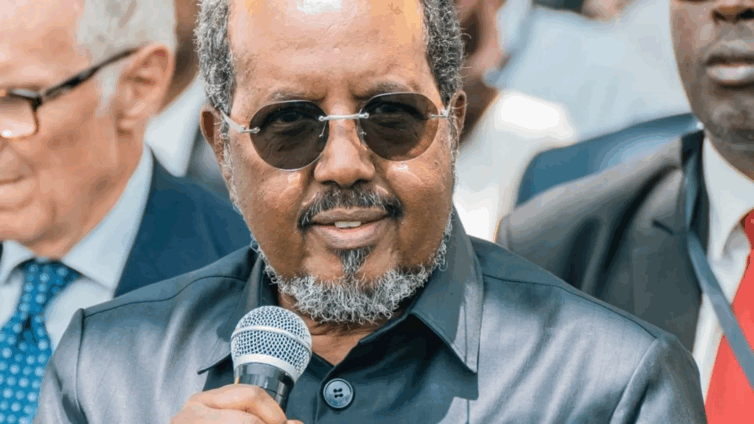
Police in Somalia have arrested four TikTokers for allegedly insulting President Hassan Sheikh Mohamud in a dance video.
In the post, several young men are seen dancing to a remix of a campaign song originally used during the president's election bid in 2022, but with the lyrics altered to include derogatory language.
In a statement, the police said the suspects were in custody and would be formally charged. They have not commented since their arrest.
Several social media influencers have been arrested and jailed in the past for spreading clan-based insults, incitement or "immoral" content on platforms like TikTok - but this is the first case involving a top politician.
In August last year, seven TikTokers were sentenced to six months in prison by a court in the capital, Mogadishu, for provoking civil unrest and spreading immorality.
The authorities said the behaviour in the recent video - the original of which has been deleted but it still being widely shared on TikTok and other social media platforms - constituted a criminal offence under Somali law.
Police spokesman Gen Abdifatah Aden warned the public that anyone engaging in similar acts that disrespected national institutions or leaders would "face the full force of the law".
The arrests have reignited public debate over the role of social media in Somalia, particularly TikTok, which has been at the centre of controversy in the past.
Some have expressed their support for the young men, while others have defended the arrests, saying freedom of expression should not extend to such levels, particularly in a country still grappling with fragile governance.
TikTok is a popular platform in Somalia and within the large diaspora - especially among the youth, who use it for political commentary and satire.
Many people also use it for business as well as a source of entertainment.
In 2023, the government considered banning the platform altogether, citing concerns over national security, the spread of misinformation and the erosion of social and moral values.
The ban was not implemented at the time because of strong public opposition, but officials warned that the platform was increasingly being used to spread harmful content, including extremist propaganda and defamatory material.
Latest Stories
-
Total expenditure as of July 2026 amounted to GH¢147.07bn, 16% below target – BoG
37 minutes -
Total revenue & grants stood at GH¢144.5bn in July 2026, slightly below target – BoG
53 minutes -
Ghana Sports Fund urges sports federations to submit credible proposals and measurable targets
57 minutes -
Sally Rooney books withdrawn in UK over Palestine Action support
1 hour -
Musk says US government may be behind slowdown of Ukraine drone speeds
1 hour -
Picking Chief Justices nearing retirement could give Mahama immense power – Bentil
1 hour -
Netflix to shed 1,000 jobs in steepest cuts since 2022
2 hours -
Burnham had two hospitality dinners with Man City chairman, deleted records show
2 hours -
Semenyo ‘froze’ after alleged racist abuse, court told
2 hours -
‘Shameless’ – Mourinho critical of Vinicius Jr ban timing
2 hours -
Loyalty can outweigh competence in Chief Justice selection – Bentil
2 hours -
Man City suffer as PSG masterclass sets up Champions League win
3 hours -
Customer Service Africa CEO urges business leaders to observe staff and customer interactions
3 hours -
On night of mayhem for Liverpool, Barcola arrives in style
3 hours -
Muzic Mensah finds healing and renewed love in new single ‘WayƐ Late’
3 hours