

Audio By Carbonatix
A member of the House of Lords in the United Kingdom, Lord Paul Boateng, has highlighted the importance of addressing water and sanitation issues to meet the Sustainable Development Goals (SDGs).
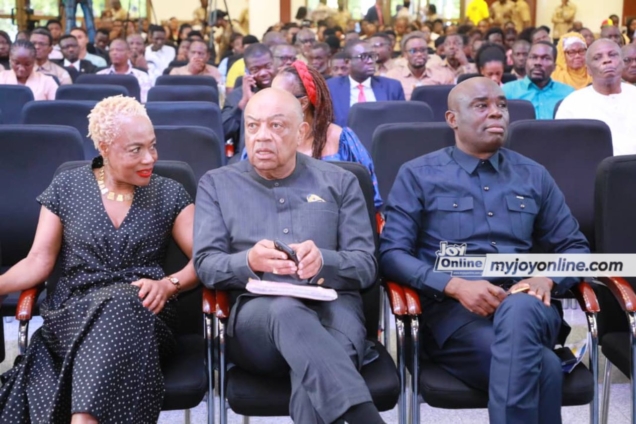
Delivering the keynote speech at the 2024 UPSA Annual Leadership Lecture, Lord Boateng emphasised that providing clean water and sanitation directly contributes to meeting multiple SDGs.

He also highlighted the fundamental role of water and sanitation in human biology and the significant impact these elements have on health and well-being.
“We are made up largely of water. That is the nature of human biology and the human condition. The disposal of bodily waste is an intensely personal activity that throws up practical challenges and has very real consequences for health and well-being.

“In delivering clean water and sanitation and a sustainable city, we help with SDG 3 which is good health and wellbeing,” he said on Tuesday.
He further noted the link between sanitation and girl-child education.

According to him, the unavailability of sanitary facilities in schools can hinder girls' attendance, particularly during menstruation.
“In delivering clean water and sanitation we help SDG 5 which is Gender Equality because there is no way we can be serious about girls education unless each and every school has safe and decent sanitary for girls.
“This is because if you don’t have that, girls during their period are not going to come to school. And girls’ education will suffer,” he stressed.

Lord Boateng continued, “If we are serious about girls’ education and we’re serious about quality education and SDGs 4 and 5, we need to take water and sanitation seriously.”
His admonishment comes amidst the devastating effects of illegal mining on the country's water bodies.
Already, the Ghana Water Company Limited (GWCL) has warned that the country may have to import large quantities of water if the country’s major water bodies are continuously polluted through illegal mining activities.
GWCL notes that the impact of illegal mining on the country’s major water bodies has increased operational cost, as it has to increase the quantity of chemicals used in the treatment of water for production, due largely to high turbidity levels.
Meanwhile, government continues to tout its achievement of ensuring greater access to safe drinking water and toilet facilities for millions of Ghanaians.
Latest Stories
-
WIWIK launches new leadership development pathway for Ghanaian university students
15 minutes -
Public basic schools resume today after strike suspension
22 minutes -
Environment Minister calls for transparency in Ghana’s GMO adoption
29 minutes -
Ghana risks 10% to 100% tariffs on exports to US under Trump’s threats as it moves to join BRICS
44 minutes -
US imposes sanctions on ICC hours after former judge wins Nobel Peace Prize
2 hours -
South Africa withdraws asylum directive after anti-migrant violence
2 hours -
Moroccan king says migration cooperation model with Spain hit limit
2 hours -
Libya’s military seizes narcotics after firefight with smugglers
2 hours -
At least 139 migrants dead, including some children, after boat from Djibouti to Yemen capsizes, UN agency says
3 hours -
“US Embassy introduced TRIBE Culture Fest to NSA, GTA” – Kofi Adams
3 hours -
“NSA did not tell us of any embassy arrangement” – Kofi Adams
3 hours -
Kumasi records third commercial fire in three days
4 hours -
Trump faces growing backlash over plans to import diesel from Russia
5 hours -
AI is less regulated than milk, says Microsoft president
5 hours -
Boots sold in £7bn deal to Canadian billionaire family
5 hours