

Audio By Carbonatix
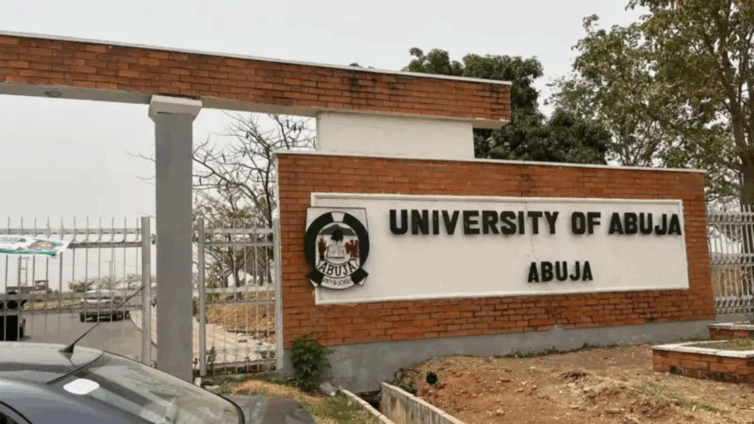
Lecturers at public universities in Nigeria have begun a two-week strike over pay and funding.
The industrial action comes just weeks after universities resumed for a new academic year.
Announcing the decision, the leader of the Academic Staff Union of Universities (ASUU), Professor Chris Piwuna, described the decision as "inevitable" due to what he said was government failures.
The government has urged lecturers to reconsider the strike, stressing that constructive dialogue remains the best way to resolve the crisis.
The government added that striking lecturers can expect not to be paid under the country's "No Work, No Pay" labour law.
In a statement, it said it had made a comprehensive offer to the union addressing key issues such as working conditions, institutional governance and staff welfare.
The government added that it was still awaiting ASUU's official response.
Nigeria's university lecturers have a long history of industrial action over issues of funding, salaries, and welfare.
ASUU's disputes with successive governments date back to the 1980s.
Agreements reached in 1992, 2009 and 2013 have often gone unfulfilled, prompting repeated strikes.
The last major one in 2022 lasted for eight months, disrupting the academic calendar and affecting millions of students nationwide.
It took an industrial court to stop the strike and force the teachers to go back to the classrooms.
Observers say these recurring strikes reflect deeper structural challenges in Nigeria's higher education sector - including chronic underfunding, politicised management and a persistent lack of trust between the government and university unions.
Latest Stories
-
GAPTE must stick to advertised times for the contra-flow system – Local Minister
1 minute -
Mahama links recent Hohoe flooding to extreme weather linked to climate change
2 minutes -
President Mahama directs MMDCEs to hold bi-annual Accountability Series
6 minutes -
Ghana Christian International High School, North York Academy deepen Ghana-Canada educational partnership
10 minutes -
GNAT, NAGRAT, PTTA-GH tell teachers in Volta and Oti to stay out of classrooms
32 minutes -
Salaga North MP calls for immediate implementation of NADMO fund
39 minutes -
La Dade-Kotopon MP protests Pleasure Beach demolition, says authorities were not informed
39 minutes -
Diplomatic Seeds and Cultural Roots: Russia’s Growing Soft Power Footprint in West Africa
42 minutes -
Anthony Karbo dismisses claims of Bawumia-backed candidates in NPP executive elections
42 minutes -
Kurt must go
47 minutes -
St Augustine’s, Mfantsipim, Prempeh and Corpus Christi battle for 2026 Investment Quiz crown
49 minutes -
Nepal avalanche kills at least 15 expedition workers
50 minutes -
Photos: Mahama tours Mercy Ships hospital, commends life-changing medical mission
51 minutes -
‘Government has no knowledge’ – La MP questions Labadi Beach demolition
54 minutes -
President Mahama tours flood-hit Hohoe communities, presents relief items
55 minutes