

Audio By Carbonatix
Michael Tetteh, Ghana's only professional glassblower, clenched his teeth as he gripped a red-hot ball of molten glass, his burned and blistered hands bare against the steaming stack of wet newspaper he used to protect them.
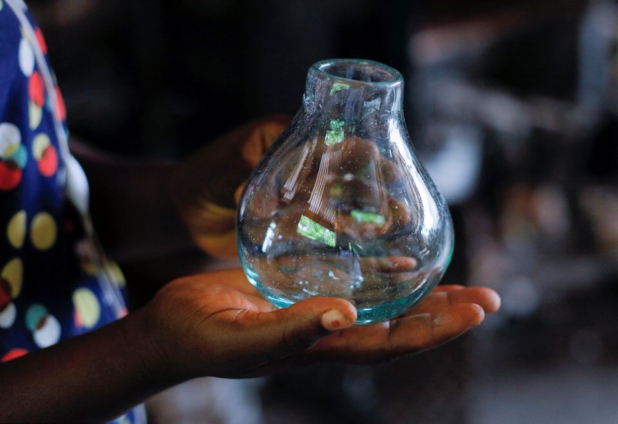
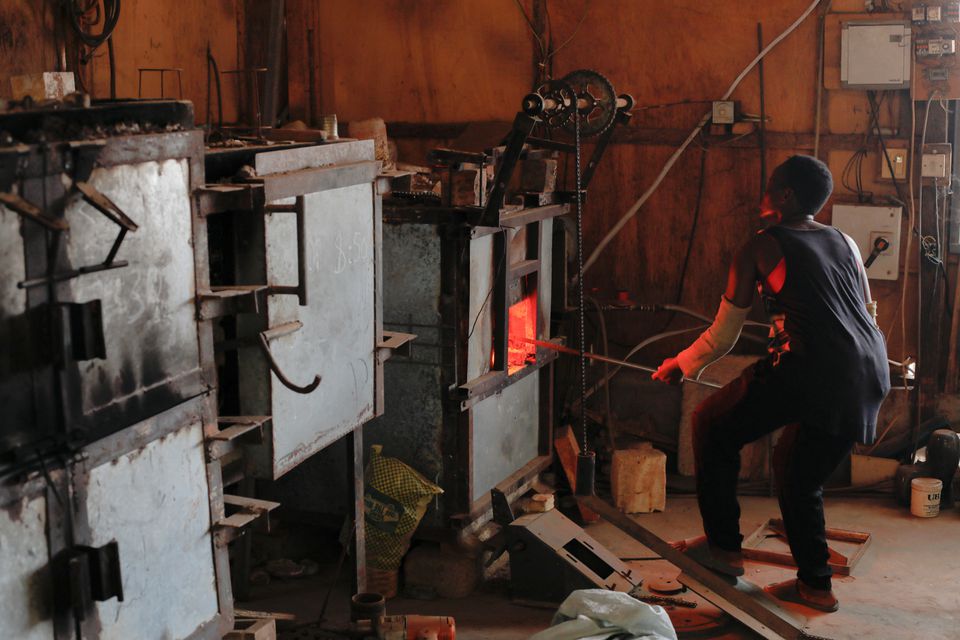
The 44-year-old toiled in the heat of scrap-metal kilns burning at nearly 1,500 celsius (2,700 Fahrenheit), pregnant with melted windowpanes, TV screens, and soda bottles he would soon transform into elaborate vases swirling with psychedelic colour.
Some become red vases with streaks of black, other green pitchers and some clear, everyday bottles.
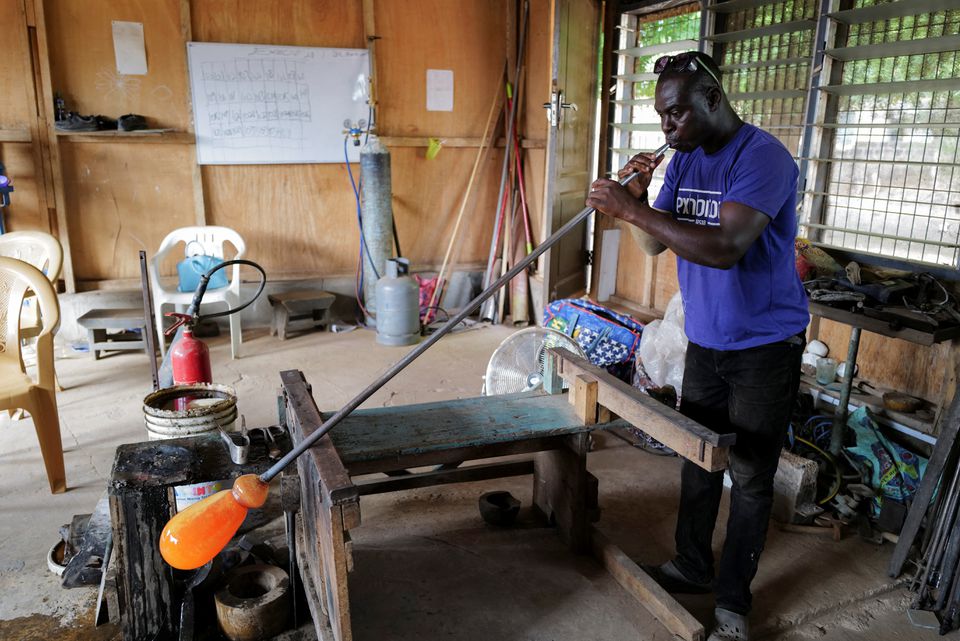
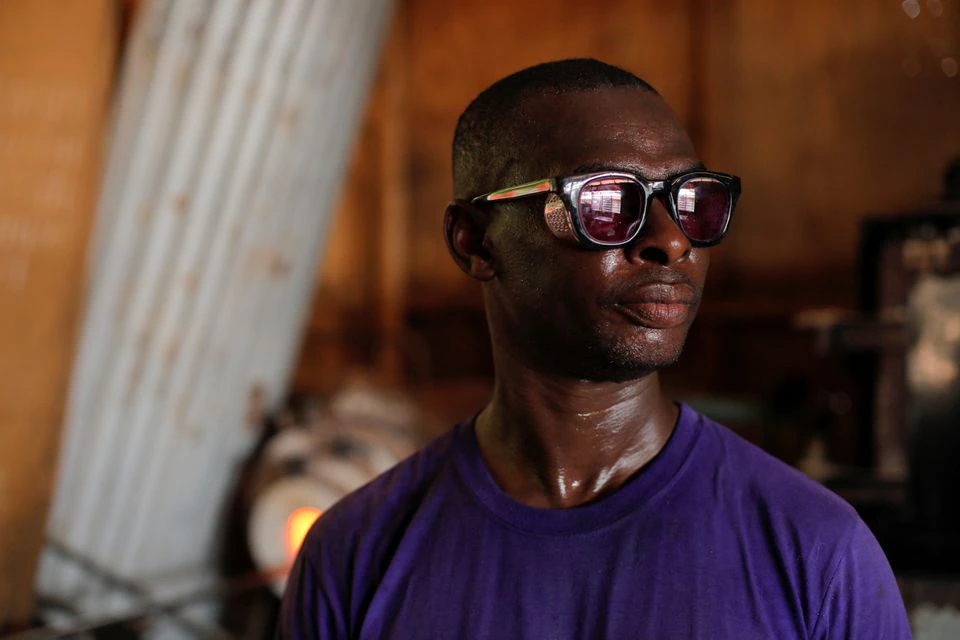
"Glass... is my passion, my heart," he said. "It's like life. It takes you on a journey from one (stage) to another."
Tetteh's strict use of recycled materials, which he collects from scrap yards and landfills in the capital Accra, is part of a stated mission to reduce Ghana's glass waste and what he considers wasteful imports.
He envisions a Ghana free of foreign glass, having channelled its glass bead-making tradition into a modern, multi-faceted industry.
According to the Observatory for Economic Complexity, Ghana imports around $300 million in glass and ceramic products each year. More than 80% of that comes from China, the world's top glass exporter.
While some private companies recycle their glass, Tetteh says the majority of Ghana's glass waste ends up either in landfills or scattered throughout the nation's streets, posing a safety hazard.
"We don't have a (glass waste) collection process, and we don't want broken glass flowing around like that," he said. "If we use recycled (materials), we can make money."
Hailing from the town of Odumase-Krobo, the epicentre of Ghana's traditional glass bead culture, Tetteh discovered glassblowing in 2012 after spending several months in France and the Netherlands learning the craft with other Ghanaian bead-makers.
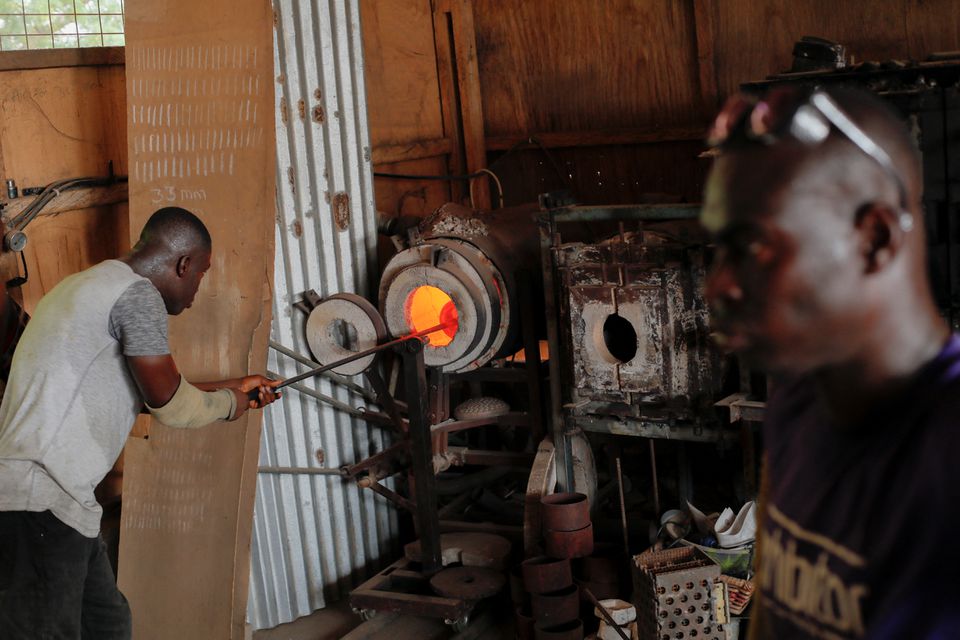
He was alone in his desire to continue upon returning home and set a goal to establish a proper hot shop in Odumase-Krobo.
Undeterred by lack of finance, he built furnaces from scrap metal and clay using online tutorials. He fine-tuned his abilities by watching YouTube videos of famous glass artists like America's Dale Chihuly.
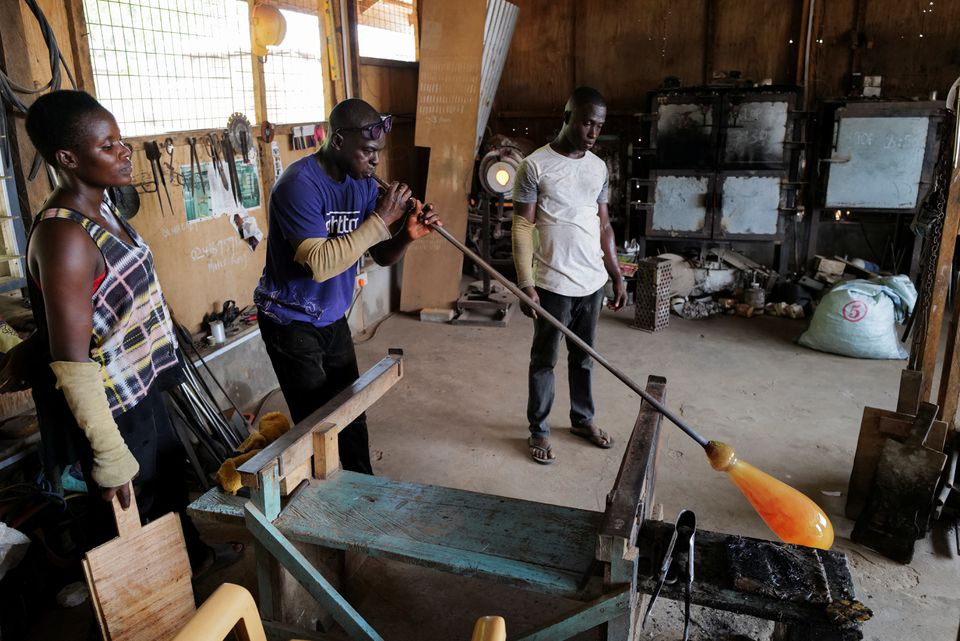
He has since hired several young assistants from Odumase-Krobo, who he is training and hopes will one day run their own workshops. Their work can be found in boutique shops in Ghana and Ivory Coast, and has appeared in European and American art galleries.
"My heart (wants) to train young Ghanaians, both men and women, so they can learn this job," he said. "We will not have to go to other countries like China to buy what we want for Ghana."
Latest Stories
-
Mahama cuts sod for Sentuo Group’s Airport Garden City project, over 3,000 jobs anticipated
2 minutes -
Most Ghanaians who fault double-track back new schools, 38.4% reject borrowing – IEA poll
12 minutes -
Sentuo Airport Garden City project will help bridge Ghana’s housing deficit – Housing Minister
21 minutes -
NSA distances itself from $623,000 World Cup visa allegations
22 minutes -
Offinso Traditional Council seeks support to fight unemployment and underdevelopment
26 minutes -
54.3% Ghanaians support gov’t borrowing to build more SHS infrastructure – IEA survey
43 minutes -
NDC orders members to halt premature parliamentary campaigns or face sanctions
1 hour -
Gov’t to ensure Ghanaian businesses benefit from Sentuo Airport Garden City project – Ofosu-Adjare
1 hour -
Nana Oye Bampoe Addo leads female government delegation to Asantehemaa
1 hour -
GES declares September 25 National Continuous Professional Development Day
1 hour -
64.7% of Ghanaians say double-track system has worsened SHS education – IEA poll
1 hour -
Terry Johnson set for ‘All White Service’ and live DVD recording on September 21
1 hour -
Ghanaian youth should think twice before accepting Russia’s invitation
1 hour -
Management of Coachhene Sports Club pays courtesy call on Sports Minister
1 hour -
miLife Insurance LTD wins Life Insurance Company of the Year 2025
1 hour