

Audio By Carbonatix
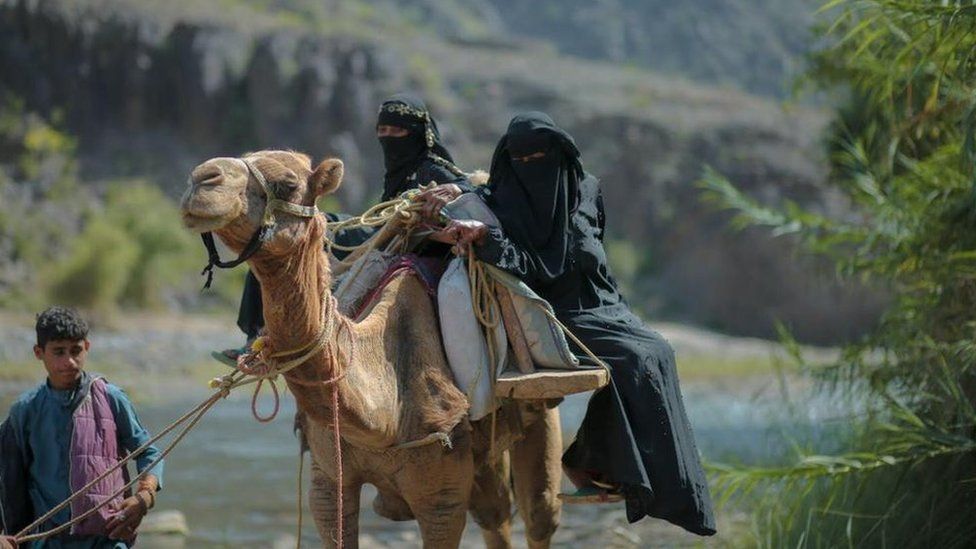
When Mona's contractions hit, a camel became her lifeline.
Mona, 19, expected the 40km (25-mile) journey to the hospital would take four hours from her home on top of rocky mountains. But with no roads - suffering labour pains and in bad weather - it took seven hours instead.
"With every step the camel took forward, I was torn apart," she said.
When the camel could go no further, Mona dismounted and trudged the final leg of her journey on foot with her husband.
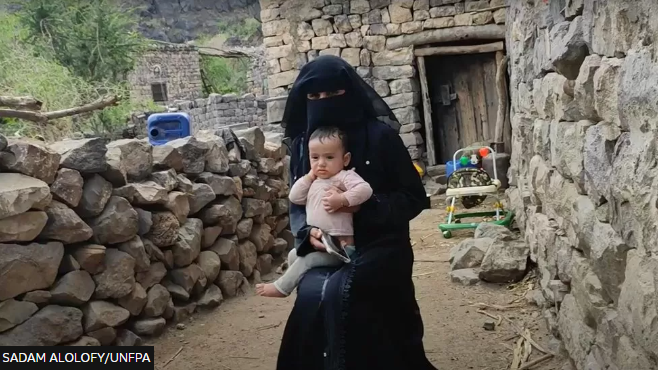
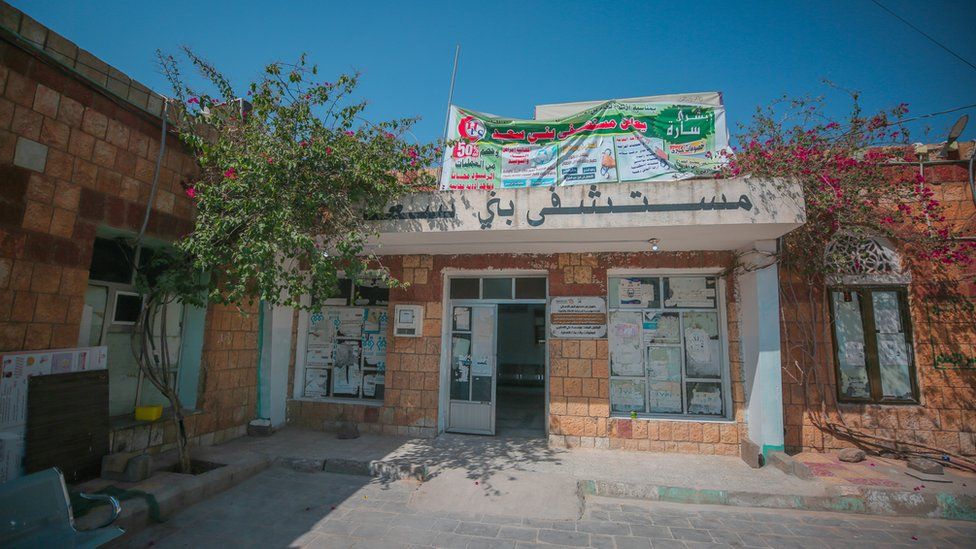
In north-west Yemen's Mahweet province, Bani Saad hospital is the only surviving health facility for thousands of women. From Mona's house, in Al-Maaqara village, the facility can only be reached through treacherous mountains on camels or by foot.
While clinging to her ride, Mona feared for her safety and that of her unborn child.
"The road was rocky," she said, recalling the "physically and mentally exhausting trip".
"There were times I prayed that God would take me away and protect my baby so I could escape the pain."
Mona has no memory of arriving at the hospital but she does remember being filled with hope after hearing her baby's cries in the hands of midwives and surgeons.
She, along with her husband, named the baby boy Jarrah after the surgeon who saved them.
The roads to the hospital from nearby villages are narrow. Some are disintegrated or blocked due to eight years of war between pro-government forces supported by a Saudi-led coalition and the Iranian-backed rebel Houthi movement.
Women, family members, or partners often assist pregnant women for hours through the hills to the hospital.
Salma Abdu, 33, who was accompanying an expectant mother, said that halfway through her journey she saw a pregnant woman who had died at night on her way.
Salma is urging people to have mercy on the women and children.
"We need roads, hospitals, pharmacies. We are stranded in this valley. Those who are lucky give birth safely. Others die, also having endured the misery of the trip," she said.
Some families can pay for the hospital but do not have the financial resources to get there.
A woman dies every two hours during childbirth from preventable causes in Yemen, according to Hicham Nahro of the United Nations Population Fund (UNFPA) in Yemen.
Mr Nahro said it was often the case that women in remote areas of Yemen did not have regular check-ups or seek help unless they started bleeding or were in severe pain.
Fewer than half of births are assisted by a skilled doctor and only one third of births take place in a health facility, according to the UNFPA. Two fifths of Yemen's population live more than an hour away from the nearest fully functioning public hospital.
Yemen's broken healthcare system was struggling even before the war. The conflict, though, has caused widespread damage to Yemen's hospitals and roads, making it impossible for families to travel without difficulty.
Hospitals are lacking qualified staff, equipment and medicines, and investment in roads and infrastructure has stalled.
Only one in five of the functioning facilities can provide reliable maternal and child health services, according to UNFPA.
'I thought it was the end'
Mona's story is just one of many such cases of hardship faced by expectant mothers in Yemen. Car ownership is beyond the reach of most ordinary people in Yemen, where 80% of the population is reliant on aid.
Hailah's husband used the little money he had saved when he worked in Saudi Arabia to ensure his wife could travel to the hospital on a borrowed motorcycle.
When her waters broke, her brother-in-law strapped her to the bike and set off, but on the way she fell.
When they got to the Hadaka health centre in Dhamar, Hailah was quickly moved to the surgery ward.
"I thought it was the end," said the 30-year-old. "There was no way for me and my unborn to survive."
She was warned during the early stages of her pregnancy that giving birth at home was not an option due to risks of severe bleeding and other pregnancy complications.
The doctor at the health centre said Hailah and the baby were saved at the 11th hour.
She named her baby girl Amal, meaning "hope" in Arabic.
"I nearly lost the baby and life lost its meaning due to the cursed war, but this baby gave me hope," she said.
With international funding drying up, centres like the Bani Saad hospital are further financially squeezed. Staff at the centre fear for the future of mothers and babies as they are forced to prioritise who they can save.
Latest Stories
-
Supreme Court rejects Solomon Asamoah’s bid to overturn Sky Train ruling
3 minutes -
Nungua Traditional Stool, WT Plastics partner to establish factory, create 1,400 jobs
4 minutes -
Mahama describes Ghana’s religious diversity as its greatest treasure, defends fairness to all faiths
10 minutes -
Police to arrest motorists who use pedestrian footbridges – ACP Obeng
11 minutes -
KNUST announces revised reopening dates, lectures begin October 19
24 minutes -
GoldBod, military engineers partner to reclaim galamsey-damaged Tano Nimri Forest
24 minutes -
NACOC educates 450 Koforidua SHS students on dangers of drug abuse
25 minutes -
First-year students stranded as Obuasi SHTS remains closed over misconduct probe
26 minutes -
Court halts promotion of 40 police officers pending IGP’s appeal
29 minutes -
Gender Ministry deploys teams nationwide to monitor LEAP cash grant payments
34 minutes -
GNFS contains Somoco warehouse fire; bushfire near TTU in Takoradi
35 minutes -
Recurring teacher-student sexual abuse cases give cause for worry – Salaga South MP
39 minutes -
D-Black shocked as only 16 radio and TV stations pay music royalties
44 minutes -
Former SIC Savings and Loans MD Amma Frimpomaa Dwumah honours EOCO invitation
56 minutes -
Meta removes 3.7 million accounts in international fraud crackdown linked to UK, US victims
58 minutes