

Audio By Carbonatix
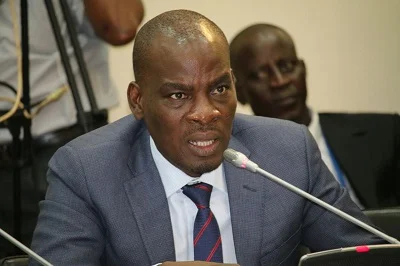
A legal position strongly advanced years ago by the Minister for Education and former Minority Leader, Haruna Iddrisu, regarding the prosecutorial powers of the Office of the Special Prosecutor has been reaffirmed by a recent High Court ruling in Accra.
On October 26, 2017, during parliamentary deliberations on the bill to establish the Office of the Special Prosecutor, Mr Iddrisu raised significant constitutional concerns.
He argued that the proposed law was “pregnant with constitutional flaws” and cautioned that it risked creating what he metaphorically described as “an illegal child called a Special Prosecutor.”
Citing the 1992 Constitution of Ghana, which vests prosecutorial authority in the Attorney-General, Mr Iddrisu questioned the necessity and legal standing of an independent Special Prosecutor.
He emphasised that the Attorney-General already possesses the constitutional mandate to initiate, conduct, and discontinue prosecutions on behalf of the state.
He further challenged the principle of prosecutorial independence as outlined in the bill, noting that both the Attorney-General and the proposed Special Prosecutor would be appointed by the same President, thus undermining claims of autonomy.
Mr Iddrisu also highlighted potential institutional overlaps, arguing that granting the Special Prosecutor investigative and prosecutorial powers could blur roles with established bodies such as the Ghana Police Service and the Economic and Organised Crime Office (EOCO).
In his submission, he proposed a clearer delineation of responsibilities, suggesting that investigative bodies like EOCO should focus on fact-finding, while prosecutorial authority remains firmly within the remit of the Attorney-General.
Years later, this position has gained judicial backing. The Accra High Court, presided over by Justice John Eugene Nyadu Nyante, has ruled that the Office of the Special Prosecutor does not possess independent authority to prosecute criminal cases.
The ruling followed an application for quo warranto filed by Peter Archibold Hyde, who challenged the legal basis of the Special Prosecutor’s prosecutorial powers. In his judgment, Justice Nyante directed that all cases initiated by the anti-corruption body must be referred to the Office of the Attorney-General for prosecution.
The decision marks a significant moment in Ghana’s legal and governance landscape, effectively affirming concerns raised during the bill’s formative stages. For many observers, it underscores the enduring relevance of constitutional interpretation and the importance of legislative scrutiny.
As the debate over institutional mandates and anti-corruption frameworks continues, this ruling serves as a reminder that, in the pursuit of justice, time often brings clarity and, in some cases, vindication.
Latest Stories
-
Ghana ranked joint 6th in 2026 Absa Africa Financial Markets Index
56 minutes -
Demand and savings deposits decreased in August 2026, but currency outside banks increased by 4%
1 hour -
Fiscal policy implementation poses downside risk to inflation – BoG
2 hours -
Organised Labour should seek fair adjustment, not excessive pay rise – Labour consultant
2 hours -
BoG maintains medium-term inflation target of 8 ± 2%
2 hours -
Sammi Awuku urges NPP Germany to unite ahead of 2028 elections
3 hours -
The Inconvenient Truth: We cannot pray for the cure while protecting the disease
3 hours -
MTN Ghana trains civil society organisations on artificial intelligence
4 hours -
GoldBod FX framework aims to make dollar supply predictable – Acheampong
5 hours -
How does a Ghanaian team make it to the BAL?
5 hours -
Ghana’s investment climate presents opportunities for industrial growth and job creation.
5 hours -
‘I paid thousands to a company for jobs that never came’
5 hours -
SSNIT intensifies informal sector enrolment drive with Techiman float
5 hours -
Ghana seeks long-term mining investments that benefit local communities – Armah-Kofi Buah
5 hours -
GHATOF demands compensation for 85 businesses affected by La Pleasure Beach demolition
6 hours