

Audio By Carbonatix
The Director of Democratic Futures in Africa at the Open Society Foundations, Dr Chukwuemeka B. Eze, has warned that African leaders who fail to recognise the continent’s shifting political tide will be remembered unfavourably by history.
Speaking on JoyNews’ PM Express on Tuesday, July 1, he delivered a sharp assessment of ongoing unrest in Togo and growing calls across the continent for accountable governance, particularly about term limits and people-centred democracy.
“Africa is witnessing the emergence of a new political dispensation,” Dr Eze declared.
“This is championed by a new generation of leadership. New political cultures are emerging, and new forms of people power.”
He said those in power who fail to “read in between the lines… will be on the wrong side of history.”
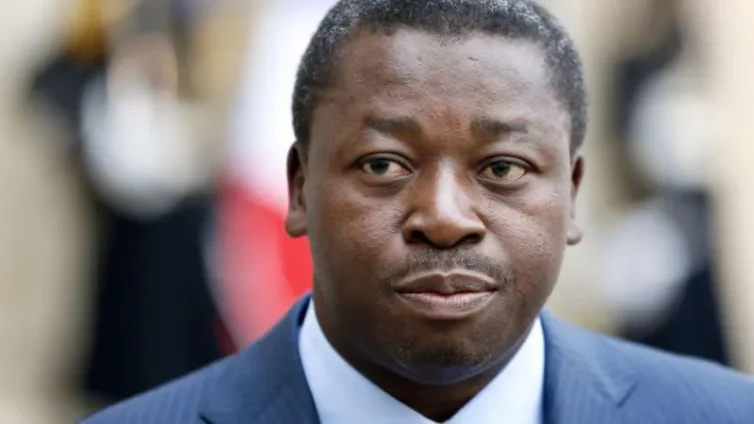
His comments follow recent disturbances in Togo, where protests have erupted over constitutional changes widely seen as paving the way for President Faure Gnassingbé to become a de facto lifetime ruler.
Dr Eze, a former head of the West Africa Network for Peacebuilding (WANEP), argued that what is unfolding is not isolated.
“Even while I was still heading WANEP, post Emmanuel Bombande’s era, we had alluded to that. When Mali happened, we were very clear that there are remaining countries that will soon go in the same direction, and we have been vindicated.”
According to him, “in the last decade, new intersectional and intergenerational and de-tribalized coalitions and pressure groups have emerged across the continent.”
He named several examples: “The movements in Senegal, Nigeria, Ghana, Kenya, South Africa, Sudan and the Sahel—such as Occupy Parliament, Recall Your MP, Text Your MP, End SARS, Free Senegal—they are not focusing on political ideologies, and that’s what people don’t understand.”
He stressed that these are not ethnic or partisan movements, but mass actions rooted in socioeconomic justice.
“They are organising around social economic justice, rather than even stolen elections or human rights violations,” he said. “And they are asking a simple question.”
He emphasised that the driving force behind this wave of activism is a frustrated generation.
“These are people who have been promised over time that the future belongs to you. They now want to interrogate that future.”
To Dr Eze, this shift marks a fundamental redefinition of democracy on the continent.
“The reimagination of democracy, in my opinion, in Africa, can no longer belong to the political elites,” he said. “The youths are asking critical questions. The women are asking critical questions.”
He added that this groundswell of activism is not confined to cities alone.
“It is not just happening at the urban centres. It is happening at the rural centres. It’s happening at the very urban centres, and they are questioning what democracy is delivering for them.”
Dr Eze insisted that the era when states defined democracy for the people is over.
“The States can no longer decide what democracy should deliver to the people. The people are saying, ‘This is what we want democracy to deliver.’”
He noted that one of the main fault lines remains term limits.
“To that extent, term limits have always been a very controversial issue and a trigger to most of the political instabilities we have had, at least in West Africa.”
His final caution: “That’s why history does not lie.”
Latest Stories
-
President Mahama ends Resetting Ghana tour of Ahafo Region
5 minutes -
African negotiators seek delivery of climate commitments at COP31
7 minutes -
BoG develops AI rules for financial sector
9 minutes -
‘Big Push’: Government assures contractors of prompt payments
13 minutes -
Court fines miner for breaking into gold buying shop
23 minutes -
Tarkwa court jails labourer for three years over GH¢123,000 theft
1 hour -
GAEC must retain nuclear scientists for Ghana’s nuclear ambitions – Minister
2 hours -
Man reportedly mistaken for game and shot by hunter dead in forest
2 hours -
19-year-old mason jailed 15 years for defiling seven-year-old pupil
2 hours -
Ghana’s banking sector assets rise 20.47% to GH¢500.2bn – BoG Governor
2 hours -
22 injured as Sprinter bus overturns at Sege after tyre burst
2 hours -
UN housing expert urges Ghana to strengthen Rent Control Department amid housing affordability concerns
2 hours -
Delta-BCI partnership reaches 166,000 people with breast cancer education
2 hours -
Power restoration fault suspected in Kumasi Central Market fire
8 hours -
The 7-foot giant of Ngleshie Amanfro: Seven-foot Ghanaian Ephraim Saawa dreams of joining the national basketball team
8 hours