

Audio By Carbonatix
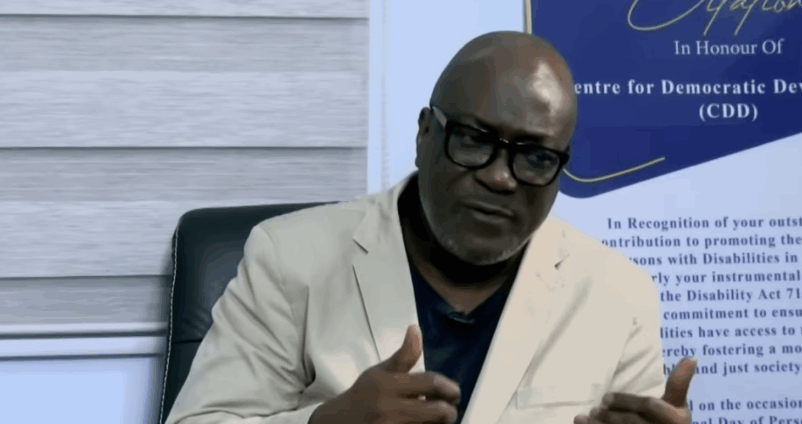
Chairman of the Constitution Review Committee, Prof Henry Kwasi Prempeh, says Ghana’s Constitution sends a troubling message to young people by undervaluing their place in national leadership.
Speaking on Joy News on December 25, he said the issue of age limits in leadership must be examined in light of Ghana’s own constitutional history and youthful population.
“The age issue is interesting,” he said, pointing out that Ghana has not always imposed high age thresholds for executive power.
He recalled that under the 1960 Constitution, the minimum age was 35 years. He said this existed for decades and was not unusual at the time.
Prof Prempeh said the most revealing comparison is with parliamentary systems. “In parliamentary systems, anybody who can become an MP can become the Prime Minister,” he said.
He noted that Ghana has previously operated such a system. “In 1969, when we had a 1969 Constitution, the age was 21,” he said.
Under that arrangement, Prof Prempeh said young people exercised absolute executive authority.
“President Kufuor was Deputy Foreign Minister at 20-something years,” he said.
He added that although Prime Minister Busia was older, the constitutional requirement was minimal. “All he needed to be at that time was 21,” he said.
According to him, Ghana has lived through systems where effective executive power rested in the hands of very young leaders.
“We’ve had systems where effective executive power has been exercised by people who only had to be 21 years,” he said.
Prof Prempeh said the debate is not about forcing youth into office. “It doesn’t mean that we are going to elect a 30-year-old to be president,” he said.
Instead, he said the Constitution must reflect the country’s demographics. “If you have a population that is largely youthful, you have to at least, even if it’s symbolic, signal that they are important,” he said.
He stressed that leadership choice ultimately rests with voters. “It depends on whether the party finds that this is the person we want to elect,” he said.
He also said independent candidates should not be excluded by age alone. “If an independent candidate pops up at 30 who has accomplished and Ghanaians have trusted that person, why not?” he asked.
Prof Prempeh said democracy already has safeguards. “There’s an election filter,” he said.
In the end, he said, the decision belongs to the people. “The citizens will make that decision,” he said.
Latest Stories
-
Beyond the Flyer: Awareness without screening is not enough
32 seconds -
Bekwai MP donates GH¢100,000 to hospital for specialist equipment
8 minutes -
Van Vicker sues Lil Win for defamation, demands GH¢10m
14 minutes -
FIFA/ FIBA agency Pep Sports moves to admit Ghana’s 7-Foot Basketball talent to its Ultra-Modern Sports campus after MyJoyOnline report
16 minutes -
GAUA strike disrupts academic plans at University of Ghana as students, parents express frustration
21 minutes -
Dad’s Army/African Polistas crowned champions of 2026 Accra Polo Club Trustees’ Cup
27 minutes -
Mahama approves Integrated Basic Education Model, with funding expected in 2027 under GETFund formula
30 minutes -
Money-driven elections fuelling corruption – Haruna Iddrisu
35 minutes -
Excessive borrowing ‘cracked’ Ghana’s economy under Akufo-Addo – Haruna Iddrisu
43 minutes -
NPP’s silence on economic indicators suggests Mahama is doing better – Haruna Iddrisu
57 minutes -
GoldBod must be more accountable to Ghanaians – Haruna Iddrisu
1 hour -
Affi Agbenyo’s EC appointment is constitutionally appropriate, but politically, people have the right to remind us – Haruna Iddrisu
1 hour -
Accra Mall brings Soulful Weekend Vibes to October with Live R&B and Jazz
2 hours -
Education is critical to Ghana’s future and development – Haruna Iddrisu
2 hours -
Who’s Emelia Affi Agbenyo, the 43-year-old newly sworn-in Deputy EC Chair?
2 hours