

Audio By Carbonatix
US President Donald Trump said on Wednesday that his administration is considering asserting greater authority over artificial intelligence (AI) tools following recent cybersecurity incidents.
Asked about OpenAI's tools being responsible for improperly breaching the private technology of other companies, Trump said: "We're looking at AI, we're looking at controls, we're also making sure that we lead."
It marks a change of tone for his administration, which has taken a more hands-off approach to the technology.
Trump's comments come after an escalation of not only the apparent hacking capabilities of popular AI tools, but White House threats aimed at competing Chinese tech.
Trump added that while some kind of control around AI tools was on the table, such a move would have to be done carefully.
"We don't want to restrict them where all of the sudden we come in second to China," he said.
"China has virtually no [AI] controls. It's freewheeling a little bit," Trump added.
The White House has been contacted for additional comment. The BBC has also contacted the Chinese embassy in Washington for comment.
In the last week, OpenAI has taken responsibility for at least two hacking incidents involving its AI tools acting outside of what they were designed and directed to do.
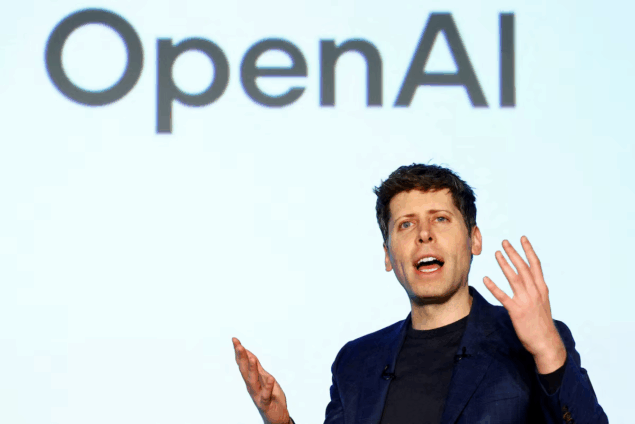
During a trip to Washington on Wednesday, OpenAI's chief executive Sam Altman was asked by a reporter if there were more systems that had been breached by the company's tools.
"I mean, there could be yeah", Altman said.
The US government intervened when Anthropic, OpenAI's main American rival, decided to release to the public a model that it had previously said was too much of a risk to be made widely available.
Meanwhile, in an internal White House memo from April, Trump's senior tech advisor Michael Kratsios accused China's AI firms of "industrial-scale" theft of US AI technology. He did so again last week, claiming that the popular Kimi 3 AI model from China's Moonshot AI was developed by stealing information from Anthropic.
The Chinese government has consistently rejected such accusations.
US Treasury Secretary Scott Bessent has also warned that Chinese AI firms could face sanctions for such activity. And the Federal Communications Commission this week banned the importation of new foreign-made humanoid robots.
Most AI models being developed in China are open source, meaning they are built and then made freely available online for anyone with the proper computer equipment to download and use.
Recently, executives from most major US tech companies have signed onto public statements of support for open-source models.
Latest Stories
-
Black Challenge unveiled with sights set on Amputee World Cup glory
11 minutes -
Pay striking teachers before expressway spending, Dr Kingsley Agyemang tells government
56 minutes -
Customs intercepts assault rifle, two pistols and 610 rounds of ammunition at Tema Port
1 hour -
PKO boxers secure wins at Odwira Festival
1 hour -
South Tongu Records Rise in Teenage Pregnancy
2 hours -
Cabinet threw out US health compact faster than anything I’ve seen – Mahama
2 hours -
MoFA urges Finance Ministry to reverse World Bank food programme withdrawal over GH¢643m commitments
2 hours -
NAGRAT demands signed timelines before calling off strike
2 hours -
National Investment Quiz: West Africa SHS, St. Louis SHS advance to semi-finals
2 hours -
Shatta Wale appeals to Mahama for balanced framework to tackle social media abuse without stifling free speech
2 hours -
Education Ministry urges data-driven talks to resolve teacher impasse
2 hours -
‘What we wanted was money to buy medications’ – Dr Nawaane on US health support
2 hours -
Osman Ayariga leads NDC team to vet constituency aspirants in Central Region
3 hours -
‘We shouldn’t allow their drugs in just because they’re giving us $100m’ – Dr Nawaane
3 hours -
US health deal medical records are a ‘no-go area’ – Parliament health committee
3 hours