

Audio By Carbonatix
Scientists have announced new HIV prevention and treatment advances, including a twice-yearly injection and a weekly tablet.
The findings will be presented at the 26th International AIDS Conference (AIDS 2026) in Rio de Janeiro, Brazil, where researchers say the medicines could improve HIV prevention and treatment worldwide.
Researchers presenting the findings ahead of AIDS 2026 said the new medicines could address challenges associated with daily medication, including adherence difficulties and treatment fatigue.
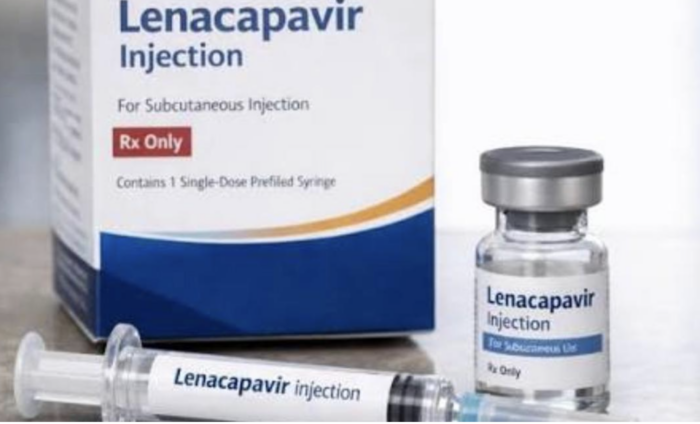
A key development is lenacapavir, a long-acting injectable medicine administered twice a year to prevent HIV infection.
Researchers said, unlike daily Pre-Exposure Prophylaxis (PrEP) pills, lenacapavir provides continuous protection through two injections annually, making it an option for people who struggle with daily pill-taking.
They said the medicine works by blocking HIV from entering and multiplying inside immune cells.
A trial involving women in South Africa and Uganda found that none of the participants who
received the twice-yearly injections contracted HIV during the first year of follow-up.
Researchers said more than 95 per cent of participants continued using the injections after the main trial, while 96 per cent received their doses on schedule.
A separate study involving men and gender-diverse people from seven countries, including South Africa and Brazil, also found lenacapavir to be effective and safe in preventing HIV infection.
Scientists also presented a weekly tablet combining the antiretroviral medicines islatravir and lenacapavir for people living with HIV.
Researchers said the tablet did not cure HIV but maintained the virus at very low levels to prevent it from multiplying in the body.
“This pill protects the immune system, allowing people living with HIV to remain healthy while also preventing transmission of the virus to others when treatment is taken consistently,” they said.
Clinical trials found that the weekly tablet controlled HIV as effectively as standard daily treatment and was safe and well tolerated.
Dr Beatriz Grinsztejn, President of the International AIDS Society and Co-Chair of AIDS 2026, said the advances had the potential to transform the global HIV response.
She said the medicines would only save lives if countries could make them affordable and
accessible to those who needed them.
Researchers said the new options could benefit people in Africa and other regions where stigma, distance to health facilities and challenges with daily treatment affect adherence.
They said medicines requiring fewer doses could improve treatment uptake and support efforts to end AIDS as a public health threat by 2030.
Latest Stories
-
Ballon d’Or Power Rankings: Lamine Yamal leads race for Golden Ball ahead of Rodri and Kane
30 minutes -
‘Nothing worked for us’ – Gideon Mensah takes responsibility for Gambia defeat
48 minutes -
2026 Women’s Super Cup: FC Savannah beat Epiphany Warriors to win trophy for first time
2 hours -
AFCON 2027Q: ‘The last time Ghana won was eight games ago’ – Carlos Queiroz
3 hours -
AFCON 2027Q: Gambia defeat doesn’t make me a loser – Carlos Queiroz
3 hours -
2027 AFCONQ: Late goals seal 2-0 for Côte d’Ivoire against Somalia
3 hours -
AFCON 2027Q: My resignation won’t solve Ghana football issues – Queiroz
3 hours -
Morocco call off Ghana friendly after Black Stars’ AFCON setback
3 hours -
‘We have to say sorry’ – Queiroz apologises after Ghana’s humiliating defeat to Gambia
3 hours -
New Yorker identified as Yaw Boahene, 57, killed after bag was caught in subway train doors
3 hours -
Former American Idol contestant and pastor found guilty of murdering wife
4 hours -
Trump rules out joint US-China venture to develop AI
4 hours -
‘Beating Ghana did not surprise me’ – Gambia boss
4 hours -
OpenAI agents get rebrand – as ‘dots’ – while safety worries delay new model
4 hours -
US ban on Canadian alcohol and dairy takes effect as trade war drags on
4 hours