

Audio By Carbonatix
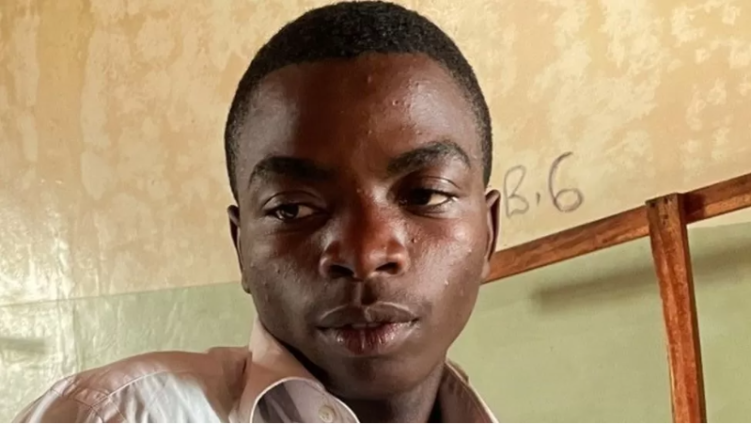
Student Julius Isingoma has told the BBC how he miraculously survived a night-time assault by suspected Islamist rebels on his school dormitory in western Uganda.
"I smeared the blood of my dead colleagues in my mouth, ears and on my head so that the attackers would think I was dead," he said, when we met him at Bwera General Hospital in Kasese district.
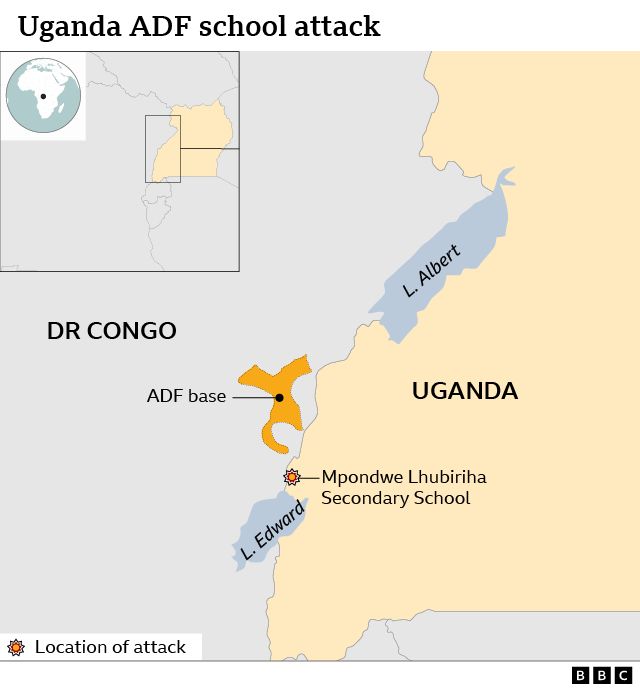
About 40 people - 37 of them students - died in the attack on the secondary school in the small town of Mpondwe on Friday night.
Uganda's President Yoweri Museveni blamed the attack on the Allied Democratic Forces (ADF), adding that they were "possibly working with other criminals because I hear that school had some wrangles". He did not elaborate, but vowed to hunt down the militants in their hide-outs across the border in the Democratic Republic of Congo.
The ADF has not yet commented.
It was formed in the 1990s and took up arms against Mr Museveni, alleging persecution of the minority Muslims population.
Its leader reportedly pledged allegiance to the Islamic State (IS) group in 2016.
But it was not until April 2019 that IS first acknowledged its activity in the area, when it claimed an attack on army positions near the border with Uganda.
This statement marked the announcement of IS's "Central Africa Province" (Iscap).
Six students are believed to have been abducted as the militants retreated to DR Congo.
Julius was among six people who managed to survive the assault which lasted for several hours.
He did not identify the attackers, but said they were gun-wielding men who launched their attack at about 22:00 local time.
They came to the boys' dormitory but the students had locked it after realising they were in danger.
"When they couldn't open the door they hurled a bomb inside the dormitory and then used hammers and axes to break down the door," he said.
Julius was standing behind many of the students who had formed a shield near the door and were shot dead when the militants got into the dormitory.
There were cries as the students were gunned down, hacked or shot to death.
He quickly climbed to the top of a bunk bed, removed some of the wooden planks of the ceiling, and jumped inside to hide.
From there, he helplessly watched his colleagues being brutally murdered by the assailants, who then set fire to mattresses and left.
"I was overwhelmed by the smoke and dropped back down into the dormitory with a thud," he said.
The militants heard the thud and came back.
It was at that point that Julius knew he had to come out of the attack alive.
"I lay next to the bloodied bodies of my friends and thought very fast. Then I smeared a lot of blood into my ears, mouth and on my head and when the militants came, they checked my hand for a pulse and left," Julius said.
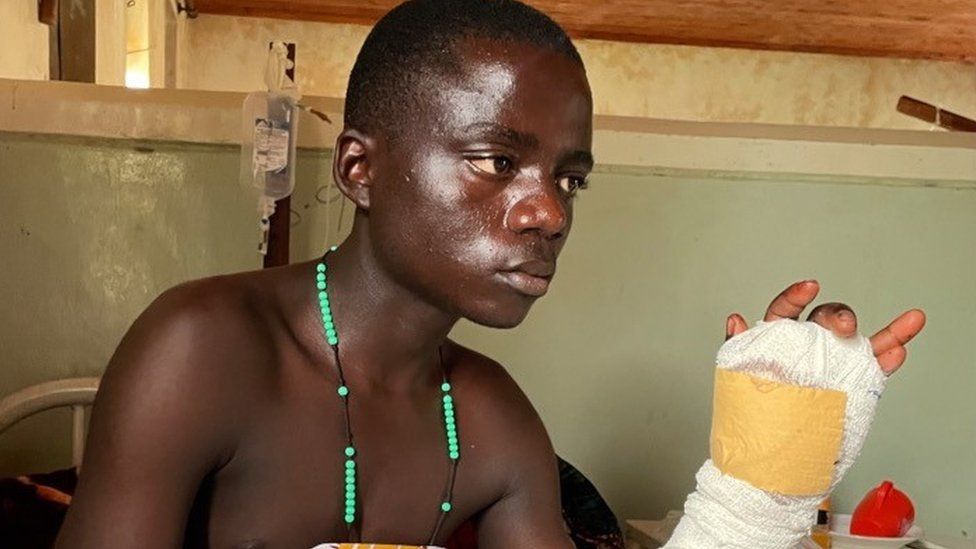
Another survivor, Godwin Mumbere, was in the same dormitory as Julius.
The 18-year-old recalled the assailants going to the girls' dormitory, dragging them out and hacking them to death with machetes.
They then came to the boys' dormitory, broke down the door and started attacking the students.
The bed Godwin was hiding under was overturned and his friends who were on top fell to the ground and were killed.
"The attackers saw me but thought I was dead," he told the BBC.
But they went out and came back into the dormitory to ensure everyone was dead.
"It was at this point that they shot me in the hand and set the dorm ablaze," he said.
Godwin was brought back to reality by the shouts of another student who said they were dying.
He ran out of the dormitory, scaled the school gate and ran to a nearby hardware store through a cocoa plantation. He got to a lodge and hid under a vehicle until he was rescued.
Clarice Bwambare, the senior administrator of Bwera General Hospital, told the BBC they started receiving the bodies of students and residents at around 01:00 - about three hours after the attack started on Friday night.
He noted that out of the 20 bodies they received, 18 were those of students.
Five survivors are currently recuperating at the hospital. One of them is a girl who is in critical condition at the intensive care unit. A surgeon advised that she cannot be moved because of a severe head injury from being hit with a hammer by the rebels.
Mr Bwambare said only one body had not been claimed from the mortuary.
On Sunday, grief-stricken families buried 21 of the students, according to Uganda's New Vision newspaper.
Lying on his hospital bed, Julius expressed regret that he could not attend their funerals. He said he wished he was a soldier who could fight back and save the lives of his friends and colleagues.
Latest Stories
-
Services drive 7.4% expansion in Ghana’s economic activity
6 minutes -
‘I don’t make music for awards, I make it to connect people’ – Rocky Dawuni
18 minutes -
Farmer jailed for three months over assault on wife in viral video
24 minutes -
Police arrest eight in Okaishie operation targeting illicit drugs and medicines
26 minutes -
David Agyemang Yeboah: Marriage is not the problem; your approach is
30 minutes -
Lawyer sues Standards Authority over used-vehicle import restrictions
32 minutes -
Ukraine to restart strikes on Russian oil refineries, Zelensky says
32 minutes -
CIMG awards drive competition among Ghanaian businesses
38 minutes -
NSA regional director Emmanuel Reagan files nomination to contest NDC Ashanti Regional Organiser position
43 minutes -
Obuasi SHTS: Number of students alleging sexual abuse rises to 16
48 minutes -
Ghana’s economy grows by 7.4% in July 2026
59 minutes -
NDC member challenges Dennis Yeboah Twumasi’s eligibility for Bono Regional Secretary elections
1 hour -
Popular Nigerian gospel singer Toluwanisings dies
1 hour -
Spio-Garbrah proposes debt swaps to fund reparative justice in Africa and Caribbean
1 hour -
Alban Bagbin calls for governance reforms and coordinated action to address Africa’s debt crisis
1 hour