

Audio By Carbonatix
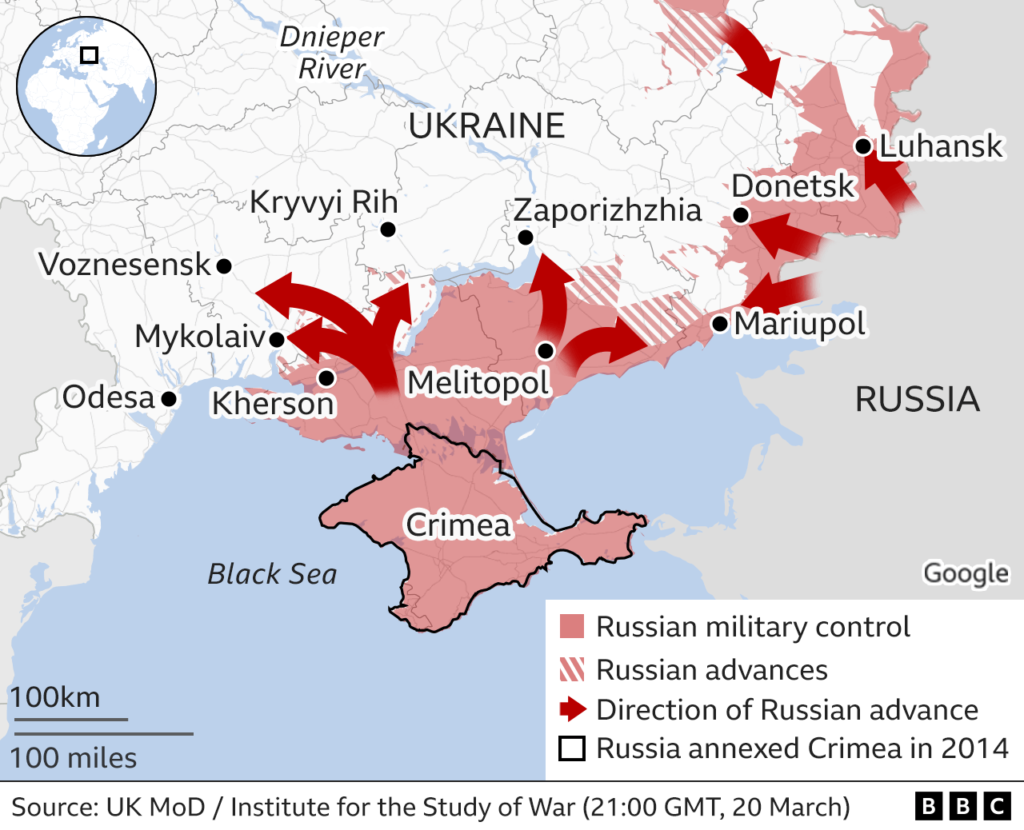
About 100 African students are pleading for help to leave the Ukrainian port city of Kherson, more than two weeks after it was captured by Russian forces.
They have been sheltering for days in underground bunkers on campus in bitterly cold temperatures, with no heating or supplies of medicines. They say they are traumatised and desperate to leave the southern city.
One student told the BBC that they could still hear the "terrifying" continuous sound of gunfire, explosions and military aircraft.
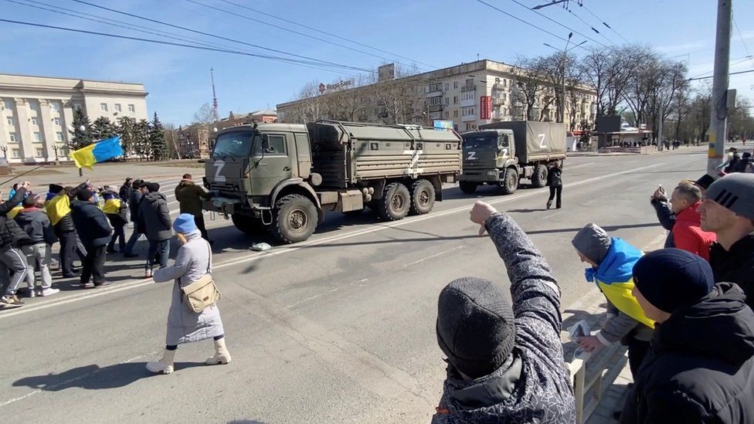
This could be the sound of clashes as the Russian forces push north-west towards Mykolaiv. Russian soldiers have also fired shots at people protesting against their occupation.
The Nigerian students among them have appealed to their government to help evacuate them before it is too late. They have told the BBC that they are among the last foreigners left in the city.
"We are begging, we really need to leave this place, things are not easy for us," one student told the BBC by phone. We're not naming them for their own safety.
Nigeria's government says it is working relentlessly to help them get out. Last week, its ambassador to Moscow was told by a Russian official that plans were being put in place to get the students out through Russia.
But that has not happened yet and in any case the students say they are wary of being taken to Russia.
In the meantime, the students, some of whom are from other countries including Cameroon, Ghana, Egypt, Tunisia and Morocco, said there was still some food available at the university but that most supermarkets had run out of supplies.
Those that are open are selling basic food supplies at double or even triple the normal price.
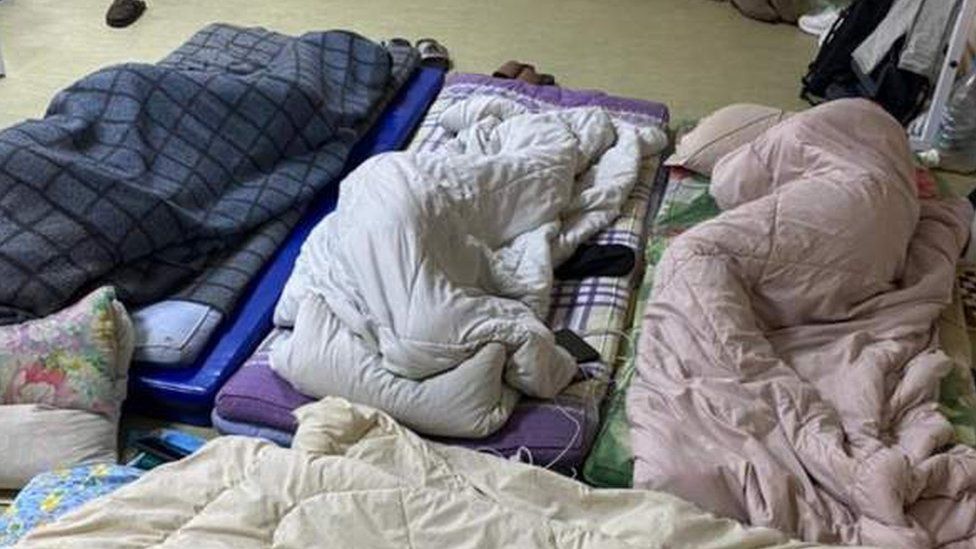
"Those of us who are staying on campus are the lucky ones because there's still food being offered at the cafeteria," said one student.
A second student said that Russian troops who control the city had been dropping off basic foods such as vegetables, rice, pasta and water outside government buildings and near train and bus stations around the city. But they said they had been urged not to take them in case they were seen as collaborators by Ukrainians.
"How can we accept Russia's humanitarian support when Ukrainians are trying to reclaim their country? Anyone who dares to suggest that we take the food is sending us to death," he said.
Water for cleaning is still available but there has not been enough drinking water. Aid groups have been delivering some water and food but it is not clear how long that will go on for.
Kherson was among the first major cities to be taken over by Russia in the first week of the invasion and in the aftermath residents have been holding regular anti-Russia protests.
"We came to this country for education and now we're stuck in the middle of a war, at the frontline."
"Even though we have not seen fighting ourselves, the Ukrainians we have interacted with have told us that they're not giving up. They want to take back their city and by extension their country."
The student also said that Russian soldiers had not been allowing food supplies to be brought to Kherson from other parts of the country, in case Ukrainian forces used this as a way of getting back into Kherson to fight.
One student said they were worried about their parents back home.
"My parents have been calling me every day and I'm scared to take some of their calls because I have nothing new or positive to tell them.
"We're still stranded here and it doesn't look like help is coming anytime soon." They said their mother had not stopped crying and praying for their safe return since the war began.
'Ordered to shoot'
The university has advised them to only venture outside in groups, and to wrap white scarves around the left upper arm so the Russians can see that they are
civilians.
One said they had been told by Russian soldiers that their orders "are to shoot anyone who misbehaves - to shoot them immediately".
Tens of thousands of students from Africa and South Asia were studying at Ukrainian universities before the Russian invasion began but many have managed to leave. Some are trying to pursue their studies in neighbouring countries, while others have safely returned back home.
But for those in Kherson, it is considered dangerous for them to attempt to make their own way, although some are making their own plans to hire taxi drivers to get them out of the city.
"Those who've tried to leave Kherson are risking their lives," one student said.
"On some days Russian forces are in a good mood and they tell you nicely to go back where you came from.
"Others are aggressive - they fire their guns in the air as a way of telling you to make a U-turn."
Latest Stories
-
GoldBod must be more accountable to Ghanaians – Haruna Iddrisu
11 minutes -
Affi Agbenyo’s EC appointment is constitutionally appropriate, but politically, people have the right to remind us – Haruna Iddrisu
23 minutes -
Education is critical to Ghana’s future and development – Haruna Iddrisu
42 minutes -
Who’s Emelia Affi Agbenyo, the 43-year-old newly sworn-in Deputy EC Chair?
1 hour -
Haruna Iddrisu calls for limits on annual university accommodation fee increases
2 hours -
Today’s front pages: Tuesday, October 13, 2026
3 hours -
Wealth Over Water: How Galamsey Is Threatening Ghana’s Water Security
3 hours -
LA 2028: Black Queens pumped up for second leg of Mauritius tie
3 hours -
LA 2028: Black Queens hold final training session ahead of second leg against Mauritius
4 hours -
Standards are not Seasonal: What the EC appointments teach both sides
4 hours -
King Mohammed VI urges private sector to create youth jobs and spread benefits of growth
4 hours -
KGL U17 Colts 2026: Greater Accra win title after penalties win over Western Region
4 hours -
UK Investment Roadshow opens in London to advance UK-Ghana growth partnership
4 hours -
Assemblies of God requires pastors to resign before entering partisan politics – Rev. Wengam
5 hours -
Ghana targets 20% annual reduction in maternal deaths – Health Minister
5 hours