

Audio By Carbonatix
Director of the United Nations University Institute for Natural Resources in Africa (UNU-INRA), Professor Fatima Denton, is calling for the development of resilient systems to support Africa’s transition to clean energy, particularly within the agricultural sector.
According to her, without robust institutional and policy support, many promising clean energy solutions risk failing to achieve long-term impact.
Speaking at the closing workshop of the Innovate for Clean Agricultural Technologies project, Professor Denton stressed the need to build strong coping mechanisms to sustain emerging innovations and technologies aimed at accelerating the shift to cleaner energy sources.
“Climate change and some of the devastation we are seeing in terms of land systems are affecting Africa more than any other continent, so we need to have resilience so that people can have coping mechanisms, buffers and incentives to support them, and this project has been about creating the technologies required and also building the resilience that is needed so that women entrepreneurs and farmers can cope,” she mentioned.

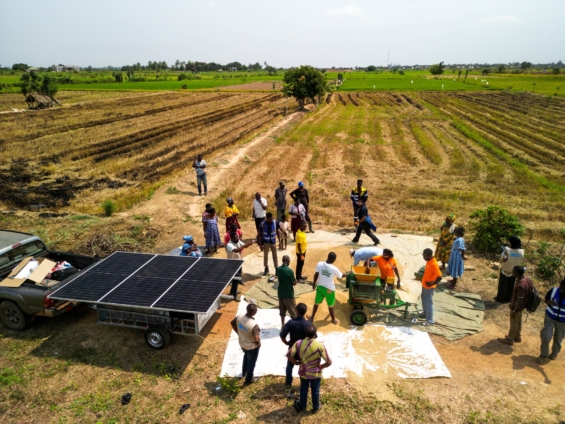
The Innovate for Clean Agricultural Technologies project, implemented by UNU-INRA, focuses on promoting the adoption and diffusion of affordable and clean energy technologies to enhance agricultural productivity.
The initiative demonstrates the potential of clean agritech innovations to transform farming practices, improve efficiency, and strengthen rural livelihoods across the sub-region.
Professor Denton noted that strengthening systems to support clean energy adoption is critical, particularly in rural communities where access to reliable and sustainable energy remains limited.
She emphasised that clean energy solutions must be embedded within broader development frameworks to ensure their scalability and sustainability.
Program Coordinator at ENDA Energie, Jean Pascal Correa, explained that the project has been particularly impactful for women in agriculture, helping them overcome barriers to increased production through the integration of clean energy into their processing and farming activities.
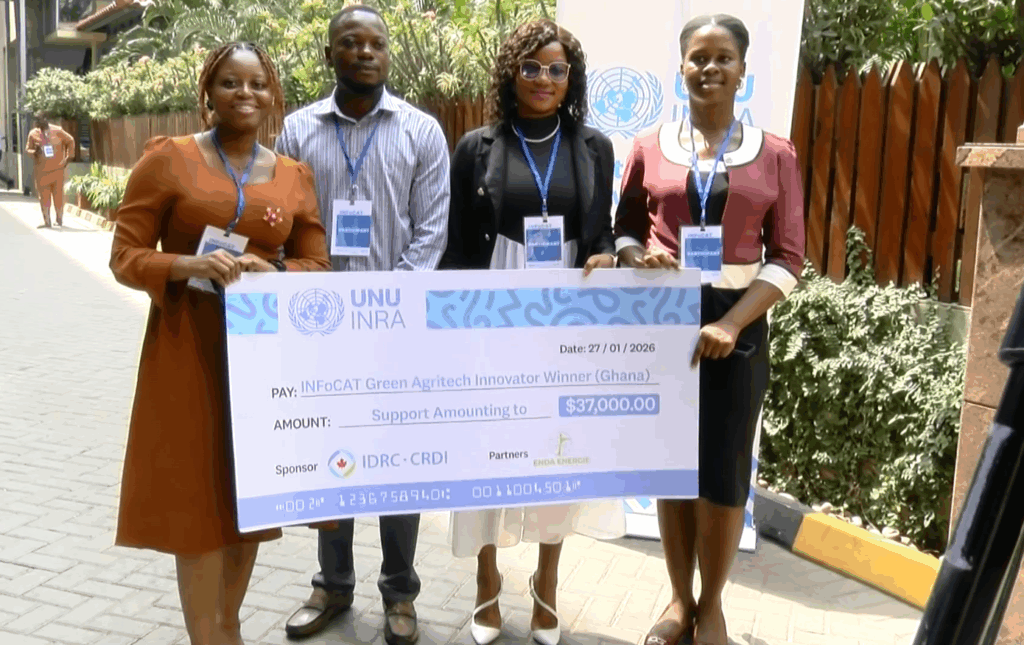
As part of the project, selected innovators received a total of 37,000 dollars in seed funding to scale up their clean agritech solutions.
The Innovate for Clean Agricultural Technologies project was implemented in selected rural communities in Ghana, Côte d’Ivoire, and Senegal, contributing to efforts to promote sustainable agriculture and accelerate the transition to clean energy across West Africa.
Latest Stories
-
Chef Abbys: Feeding 50,000 people, putting food security on Ghana’s agenda
21 minutes -
Ho set to host Republic Bank–JoyNews Habitat Fair as multiple firms prepare to showcase housing solutions
29 minutes -
NPP demands public inquiry into alleged $600,000 World Cup visa fraud, wants Sports Minister, GTA CEO summoned
36 minutes -
I want my brand to be bigger than just music – Yaw Wazinga
40 minutes -
Houthi missile attack on Yemeni presidential palace kills two, minister says
40 minutes -
I hoped to win an award; I worked hard – 2026 Best Graduating Law Student
50 minutes -
Fraudsters increasingly target bank customers instead of banking systems – Fraud detection expert
51 minutes -
44 teacher sexual abuse cases tracked since 2015; school heads feature in 40% of recent cases — JoyNews Research
53 minutes -
Unchecked imports and the Middle East crisis threaten Ghana’s fragile food inflation anchor
1 hour -
Ecobank Junior Saver Big Pitch to reward 10 winners with GH¢2,000 each
1 hour -
AMA demolishes unauthorised pigsty obstructing Agbogbloshie waste evacuation exercise
1 hour -
I was filled with disbelief – Akosua Achia Sarpong Esq. shares her first reaction
1 hour -
Snake Village: A look at Volta Region’s hidden snake village and its tourism potential (Video)
1 hour -
Election Watch Ghana calls for constitutional reforms to strengthen Electoral Commission independence
1 hour -
NACOC, Postal and Courier Services Regulatory Commission intensify efforts to curb drug trafficking
1 hour