

Audio By Carbonatix
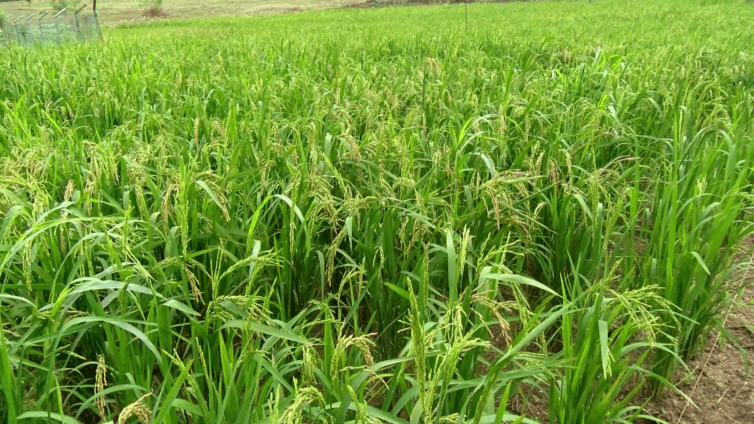
On a small plot of land at the Fumesua campus of the Crops Research Institute of the Council for Scientific and Industrial Research, a rice plantation tassels, but not in its usual wetland. Rather on dry ground where wheat once grew.
This is the new rice variety developed by the CSIR-CRI – the new upland rice variety, which is seeking to transform the rice value chain in Ghana.
Farmers in the country have long known rice to be grown in flooded fields, but the new variety is a result of local research and development to adapt to the changing climatic conditions.
Research Scientist at the CSIR-CRI, Dr. Felix Frimpong, explained that dryland or upland rice cultivation opens opportunities for farmers who do not have access to wetlands.
“With upland rice, you don’t need a wetland. Any good upland soil can grow rice just like maize, and the taste is the same as lowland rice,” Dr. Frimpong said.
Beyond its convenience, the upland rice has been identified as environmentally friendly.
Unlike the lowland rice, which generates high methane emissions due to flooded conditions, the upland rice eliminates such risks.
Scientists explain that the wetland creates a fine environment for anaerobic conditions, where microbes are able to exchange gases into the atmosphere, contributing to greenhouse gas emissions.
In a country feeling the pressures of climate change, such a shift could contribute to Ghana’s climate commitments.
“Because upland rice does not grow in wetlands, there are no anaerobic conditions, so the process that generates methane is cut off completely,” Dr. Frimpong explained.
Since 2010, the CRI has developed more than 30 rice varieties, including nine released in 2022 alone, of which three of these varieties are upland rice variants.
Among its popular lowland varieties is the high-yielding “Agyapa Rice,” which produces up to nine tons per hectare and competes with any imported brand.
Even as the research institute continues to develop these varieties to match the farm needs of local producers, its adaptability in the country is a challenge.
Ghana spends nearly one billion dollars annually on rice imports, despite having the land and climate to produce its own. By expanding rice cultivation beyond wetlands, upland rice makes it possible for more farmers, even smallholders, to participate in the sector.
Director of the Crops Research Institute, Professor Maxwell Asante, has been leading the breeding of rice varieties in the country.
With his rich experience in the field, he expressed concern over the country’s heavy reliance on imported rice despite the availability of quality local varieties.
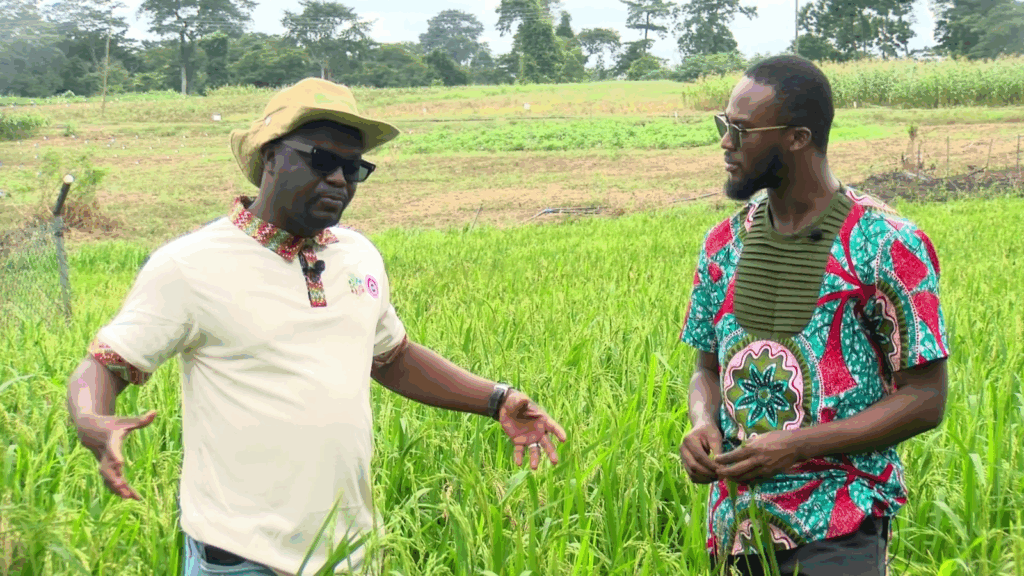
“It is unfortunate that Ghana continues to import rice when our resources and varieties are as good as anywhere in the world,” he said. “Other African countries are already adopting our rice varieties, and we must invest in our own value chain.”
He advocated for a public-private investment in rice production and research to facilitate Ghana’s quest to achieve rice self-sufficiency.
For farmers and traders, the upland rice is more than science; it is an opportunity. It gives rural households a crop that feeds families, cuts national imports, and grows resilience against climate change.
With CRI’s innovation, Ghana’s rice sector could transform from a net drain on the economy into a pillar of self-reliance, one upland harvest at a time.
Latest Stories
-
Who gave Gbande the EOCO remote control?
3 minutes -
Ghana begins review of 1999 National Land Policy, targets new framework by 2027
43 minutes -
Tiptoe Lane’s tech takeover: The story behind Ghana’s booming informal phone market
2 hours -
Abanga vows to use social media to counter NDC messaging ahead of 2028 elections
2 hours -
Okai Mintah seeks Sabah Zita Benson’s support for NDC National Youth Organiser bid
2 hours -
Okai Mintah vows to strengthen NDC campaign machinery ahead of 2028
2 hours -
Mother of four and Jasikan teacher among new Telecel M’ahitti Promo winners
2 hours -
International Youth Shakers Conclave 2026 set to bring global young leaders to London
2 hours -
Gov’t is committed to addressing teachers’ conditions of service, deprived-area allowance – Education Minister
3 hours -
GoldBod’s structure encouraging galamsey – Afenyo-Markin
3 hours -
Tullow starts selling Jubilee, TEN crude to Ghanaian refineries
3 hours -
Local Government Service authorises rationalisation, redistribution of staff
3 hours -
PURC assures consumers of working to ensure quality services in Northern Region
3 hours -
Ghana develops US$4.28bn water financing framework
3 hours -
Christian Council calls for protection of mission schools’ religious identity
3 hours