

Audio By Carbonatix
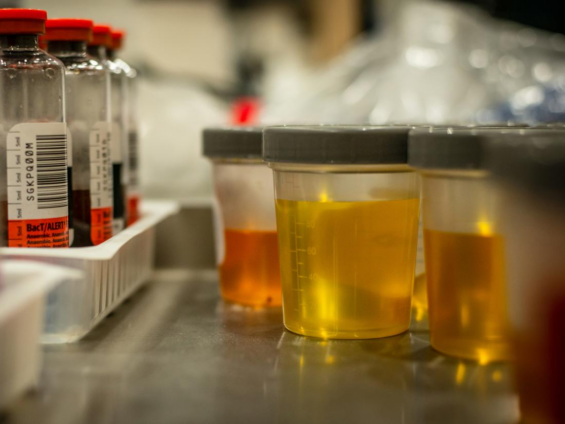
An at-home urine test that the NHS has been trialling can detect more than nine in ten cases of bladder cancer, latest findings show.
The study, published in European Urology Oncology, was led by the University of Birmingham and a diagnostics company Nonacus, and involved nearly 1,000 patients at seven hospitals in England and Scotland.
Researchers hope it could reduce the number of patients needing urgent, more invasive procedures, called cystoscopies, which involve inserting a small camera up the urethra and into the bladder.
If a larger trial is successful, it could mean tens of thousands of patients a year are spared these tests.
More convenient for patients
More than 300,000 cystoscopies are performed in the UK each year and there are significant waiting lists in some areas.
While the urine test is not a replacement for cystoscopies, it could help doctors identify patients at greater risk who should be prioritised for urgent ones rather than wait.
This NHS trial found that the Galeas urine test identified 92% of bladder cancer cases.
A negative result meant there was more than a 99% chance that the patient did not have bladder cancer.
It checks for any genetic material shed into the urine by bladder cancer and was originally developed by the University of Birmingham with funding from Cancer Research UK (CRUK).
It looks for more than 450 DNA mutations associated with bladder cancer across 23 genes.
Prof Richard Bryan, co-author of the study and from Birmingham University, said after spending years developing and evaluating the science, it was exciting to see "very promising early performance" in a large real-world patient population.
Under a licensing agreement, the test has been commercialised by Nonacus, which pays back part of the revenue to the University and CRUK.
Michelle Mitchell from CRUK said: "Too many people are waiting longer than they should for a bladder cancer diagnosis, and it's essential that we find ways to tackle this problem.
"It's early days for this test and further research is needed, but it's vital that we continue to find faster and less invasive ways to help diagnose or rule out cancer."
Bladder cancer is more common in men over the age of 60 and the main symptom is blood in your urine.
How serious bladder cancer is depends on how big the cancer is and whether it has spread elsewhere in the body.
Early detection and treatment of cancer saves lives.
Latest Stories
-
Sidney Nii Oko Bampoe & Isaac Akuetteh Addo
4 minutes -
Haruna Iddrisu calls for ‘Big Push’ investment in health, education, sports and agriculture
5 minutes -
Ghanaian youngster Prince Amoako Jnr reaches new milestone with FC Nordsjælland
8 minutes -
Ho Teaching Hospital to get cardiology centre under Ghana Medical Trust Fund
10 minutes -
PAC pushes for effective use of GH¢25m by Tree Crops Development Authority
12 minutes -
UK MEET Fellowship challenges journalists to look beyond AI hype
14 minutes -
Kurt Okraku’s regime has ‘failed to perform’ – Kudjoe Fianoo demands resignation of GFA Executive Council
14 minutes -
Afenyo-Markin’s influence is limited by minority numbers in Parliament – Haruna Iddrisu
17 minutes -
Police administration is doing a yeoman’s job – President Mahama
20 minutes -
GoldBod tells PAC Bank of Ghana authorised its foreign exchange transactions
20 minutes -
GCB customers call for more frequent engagement with bank leadership
25 minutes -
Dark Signals: The death trap of non-functioning traffic lights along Asokwa-Aputuogya Road
26 minutes -
80–90% of gold purchased and exported is now refined in Ghana– Sammy Gyamfi
44 minutes -
Dichemso M/A teachers go house-to-house to get absent pupils back to class after strike suspension
47 minutes -
Meet Dr Hazel and Nhyira: Mother and daughter called to the Ghana Bar
50 minutes