

Audio By Carbonatix
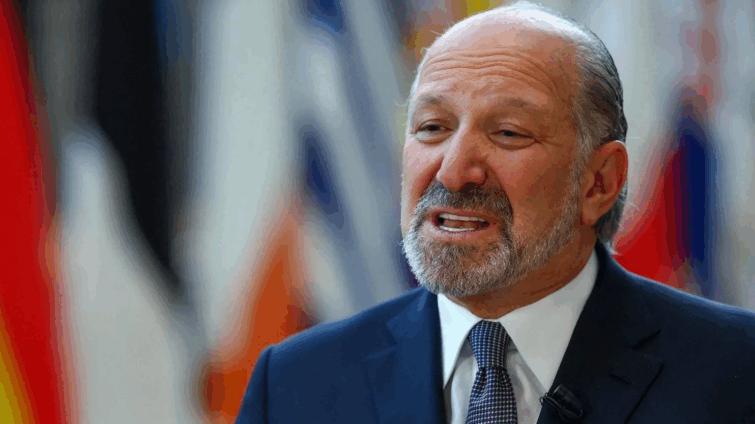
Europe should "reconsider" its rules for big tech companies if it wants to see lower US tariff rates on its steel and aluminium exports, US Commerce Secretary Howard Lutnick has said.
His comments come as officials from the US and European Union are meeting in Brussels to discuss the status of the trade framework that the two sides agreed on in July.
That deal set US tariff rates on European products at 15%, lower than had been threatened, in exchange for promises of European investment and changes that would allow more American agricultural products.
But the two sides remain at odds over some parts of the deal.
European officials hoped they would secure relief for their metals exports as part of the deal reached over the summer, but the US is still charging at 50% duty - and has expanded the number of products subject to the levy.
Europe is also hoping to win carve-outs from tariffs for items such as wine, cheese and pasta, similar to the rollback the Trump administration recently granted for tropical fruit and coffee.
In an update to reporters on the talks, US Trade Representative Jamieson Greer said the US wanted to see Europe follow through on promises to lower tariffs on American goods before it would grant exemptions.
He and Mr Lutnick said the US wanted to see concessions over European rules for tech companies in exchange for changes to metals tariffs.
"They would like to have steel and aluminium as part of this package and we think it is very, very important that they understand our digital companies and they reconsider their digital regulations to be more inviting to our big companies," Mr Lutnick said in an interview with Bloomberg Television.
The US has long maintained that taxes on digital services - which typically charge levies on revenue from streaming or digital advertising companies above a certain size - unfairly target American firms.
US firms have also been unhappy with Europe's Digital Markets Act, which came into force last year. It was aimed at boosting competition, for example setting rules that would require a company like Apple to make its iPhones work with devices such as headphones made by other brands.
When Trump was re-elected last year, many tech firms hoped he would champion a fight over the rules and taxes, unlike the Biden administration, which was seen as leaving such battles up to the firms involved.
European officials have previously said that their digital rules were not up for negotiation. European Trade Commissioner Maroš Šefčovič said the EU had maintained that stance when the issue arose on Monday.
"This is not discriminatory. It is not aimed at American companies," he added.
Latest Stories
-
NPP national elections: 3,000–4,000 police to handle security, traffic in Kumasi – Karbo
1 hour -
Atta Akyea fumes as Manhyia MP is to spend another night in EOCO custody
2 hours -
SSNIT says La Beach clearance was to protect hotel investments, beaches to remain public
2 hours -
APSU congratulates St Augustine’s College after back-to-back National Investment Quiz wins
2 hours -
Renewed flood intervention at Mallam Junction raises hopes among residents, businesses
3 hours -
St Augustine’s College retain National Investment Quiz title after nail-biting grand finale
3 hours -
Education infrastructure investment will drive Banda’s development – Ahmed Ibrahim
3 hours -
Teacher unions strike: Gov’t presents fresh proposals as talks end inconclusively
4 hours -
51,000 teachers’ promotion arrears to be validated for October payment – Education Minister
5 hours -
Kwabena Boamah appointed Board Chair for Impact Investing Ghana
5 hours -
Striking teacher unions to meet Fair Wages and Salaries Commission on October 6
5 hours -
EOCO working with AG to arraign Nana Baffour Awuah before weekend court
5 hours -
Duraplast reassures customers after fire, announces October 5 reopening
5 hours -
Call off strike, gov’t will not renege on promotion arrears pledge – Haruna Iddrisu to teacher unions
5 hours -
Committee set up to validate teachers eligible for 20% deprived-area allowance – Education Minister
5 hours