

Audio By Carbonatix
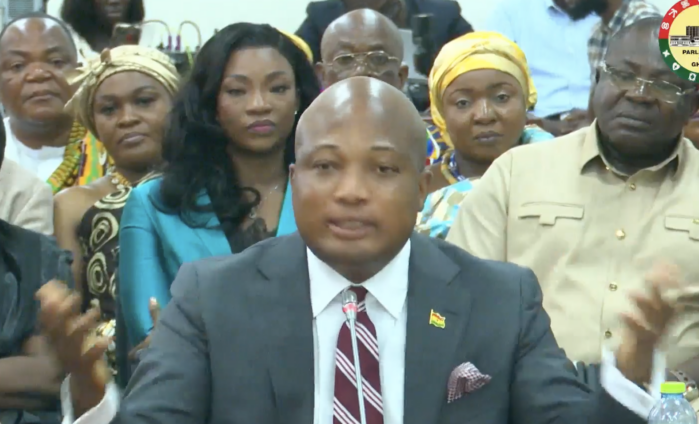
Minister nominee for Foreign Affairs, Samuel Okudzeto Ablakwa, has pledged to use foreign policy as a tool to ensure Ghanaians abroad have dignified work.
Human rights organisations advocate for safe workplace conditions for all, particularly women, promoting the rights of women workers around the world.
In Ghana, there have been concerns about reports of ill-treatment and horrible experiences some Ghanaian women seeking jobs in the United Arab Emirates in particular encounter.
Addressing this issue before Parliament’s Appointments Committee on Friday, January 31, Mr Ablakwa outlined his vision to address the problem through strategic bilateral agreements.
“One of the priority areas that the President tasked me to work on is how the Foreign Ministry can be re-positioned to help resolve the unemployment crisis in our country. According to the Ghana Statistical Service, unemployment has risen from 8.6% in 2016 to 14.7% currently," he stated.
Mr Ablakwa emphasised the need to turn labour migration into a structured and beneficial system for both the workers and the nation.
“We need to make sure this migration that is going on because of the search for employment benefits, must be regulated so that it becomes a win-win situation,” he noted.
He cited countries like Cuba and Indonesia, which have successfully leveraged foreign policy to secure employment for their citizens abroad. “They sign bilateral agreements with other countries and export labour legally, ensuring that workers rights are protected while also generating revenue for the country,” he explained.
Mr Ablakwa assured that under his leadership, the Foreign Ministry would prioritise economic diplomacy in a way where bilateral agreements will be signed.
“There are many countries looking for Ghanaian nurses, teachers, professionals, artisans, and domestic workers. Why can’t we take advantage of that to solve our unemployment crisis?” he asked.
He also highlighted the need to protect Ghanaian workers from exploitation, particularly in the Gulf region. “When these receiving countries know that the labour they have received is not from some clandestine agency engaged in human trafficking, they will be more mindful of how they treat these workers,” he stressed.
He concluded by promising to formalise and aggressively pursue these arrangements.
“Expect that we will formalise these arrangements and be very deliberate in creating jobs for our young people. We can make sure that brain drains become brain gain.”
Latest Stories
-
Every year, the lawyers come out, and so does the nonsense! – Ace Ankomah writes
1 minute -
Digital transformation without an ownership culture can digitise poor service
4 minutes -
Fishing communities demand revocation of offshore gold exploration licences over livelihood concerns
7 minutes -
How Ghanaian tycoon Manoj Lakhiani built a water and plastics empire from a $25,000 loan
9 minutes -
GoldBod recovers GH¢38.7m of GH¢55.8m outstanding receivables; remainder subject to legal action – Sammy Gyamfi
15 minutes -
GEXIM Bank donates GH¢200,000 worth of medical equipment to Korle-Bu Child Health Department
19 minutes -
Majority rejects Minority’s claims over GH¢49.7m South Africa evacuation
20 minutes -
GEXIM urges banks to support refurbishment of Korle-Bu Teaching Hospital’s Child Health Department
24 minutes -
Don’t appoint your cheerleader as referee
28 minutes -
Ghana needs stronger international cooperation to fight cybercrime – CSA
30 minutes -
CSA warns of growing cyber threats as Ghana’s digital dependence increases
36 minutes -
USTED dean warns GAUA strike could disrupt Ghana’s restored academic calendar
49 minutes -
Bechem meat processing factory 50% complete, set for March 2027 completion – Kwakye Ofosu
1 hour -
NDC can appoint whoever they want to EC, but Ghanaians will make a decision in 2028 – Titus Glover
1 hour -
GoldBod initiative has created over 1,300 public and private sector jobs – Sammy Gyamfi
1 hour