

Audio By Carbonatix
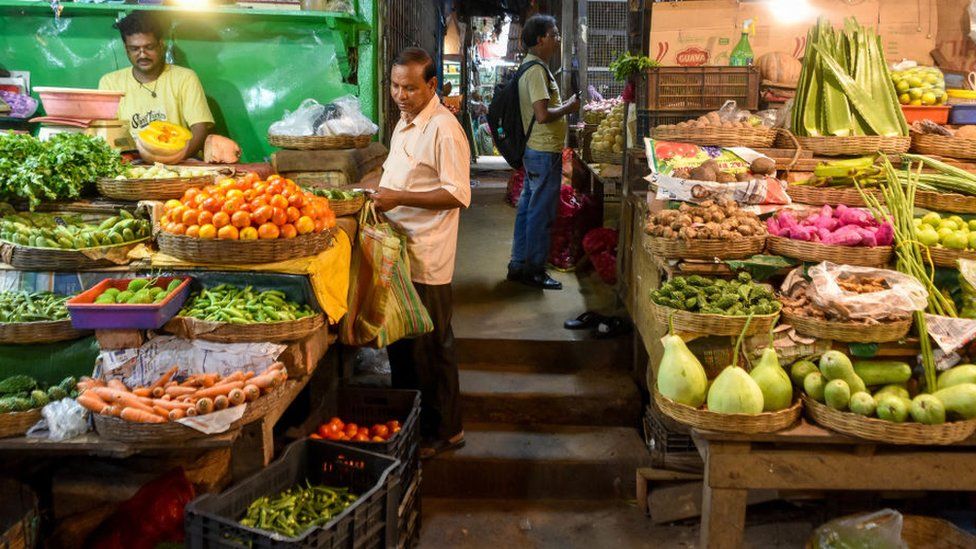
Erratic climate conditions - including the driest August in more than a century - have sent food prices spiralling above 11% in India, which is a major player in global agri-trade.
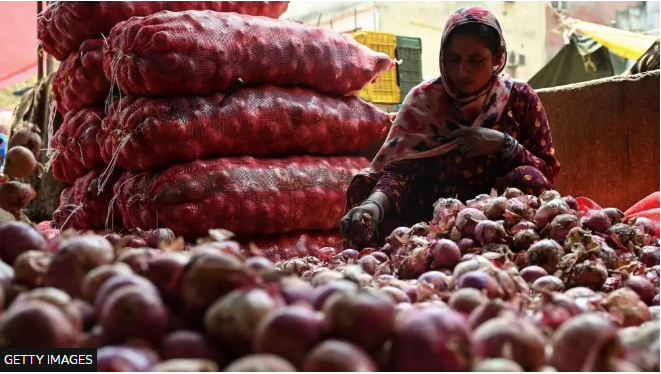
Just as tomato prices begin cooling down, onions have gotten dearer by a quarter since June in the domestic market. And pulses which go into making the humble dal (lentil soup) are now around 20% more expensive than at the beginning of the year.
India's got a "curry problem", some economists say, as the cost of a regular vegetarian meal jumped by a third in the month of July alone.
With some key state elections this year and a big general election looming next summer, the Indian government has swung into action, unleashing a number of measures to tame food inflation.
Following a ban on wheat exports in May 2022, India announced an abrupt stop to non-basmati white rice exports last month. More recently, the finance ministry imposed a duty of 40% on onions to discourage exports and improve domestic supplies.
With sugar production expected to be lower this year, "the likelihood of a ban on sugar exports has also increased", according to Rajni Sinha, chief economist at CareEdge Group.
The government could step up its response with further measures going ahead, analysts say. For instance, since the consecutive export restrictions on rice have not yet lowered domestic rice price inflation, "the government could seek a more comprehensive ban", global brokerage Nomura said in a recent note.
So does India, with its aggressive defence of domestic prices, run the risk of exporting food inflation to the world?
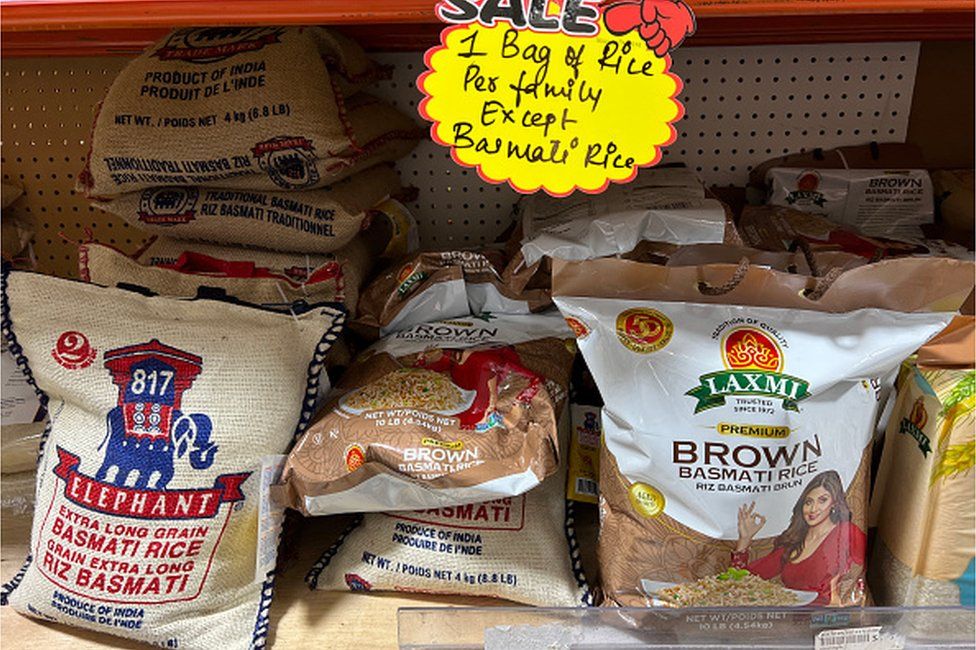
The International Food Policy Research Institute (IFPRI) believes it does, particularly with rice, sugar and onions. Over the past decade, India has emerged as the world's largest exporter of rice - it holds a 40% market share - and second largest exporter of sugar and onions.
The United Nation's Food and Agriculture Organization's (FAO) Rice Price Index jumped by 2.8% in July - its highest level since September 2011 - driven mostly by price increases in the Indica variety of rice whose exports India banned. This has amplified the "upward pressure" on the prices of rice from other regions, the FAO said.
"Since the ban was announced late last month, Thai rice prices have increased 20%," Joseph W Glauber, senior research fellow at IFPRI, told the BBC.
The impact of this - particularly on the world's poor - could be devastating with food insecurity deteriorating in 18 "hunger hotspots" identified by the FAO and UN's World Food Programme.
Rice is part of the staple diet accounting for a large share of the caloric consumption of millions across Asia and Africa. And India is a major supplier to these markets.
Forty-two countries in Asia and Sub-Saharan Africa get 50% of their total imports from India, going up to 80% in some countries according to IFPRI, and its share cannot be "easily substituted with imports from other large exporting countries such as Vietnam, Thailand or Pakistan".
Elevated global food prices could also have other implications in these countries such as keeping food import bills high, leading to the use of precious foreign exchange, "thus worsening balance of payment problems and contributing to inflation", says Upali Galketi, senior economist at the markets and trade division of the FAO.
But the increase in global food prices cannot be blamed singularly on India's actions. The termination of the Black Sea Grain Initiative after Russia's invasion of Ukraine and extreme climate conditions across the world are other major contributing factors.
The coming together of these market dynamics, however, has "resulted in reversing the declining trend in international food prices observed since the middle of last year", Mr Galketi told the BBC.
Global food prices are at historical highs despite a slowdown in many parts of the world such as China. This is weighing on international food prices because of muted demand from these places.
The World Bank expects its food price index to average lower in 2023 compared with 2022, driven by lower oil and grain prices. But analysts say the future price trajectory will depend on the impact of El Niño weather phenomena - something that could have far-reaching implications, and put further pressure on food markets.
Amid the uncertainty, calls for India to reverse its ban on the export of key commodities have come from various quarters, including the International Monetary Fund.
Besides contributing to global food inflation, "export bans have other negative externalities, such as denting India's reputation as a dependable supplier and preventing farmers from benefiting from remunerative prices globally", say analysts at Nomura.
"Trade restrictions could also exaggerate boom-bust price cycles. For instance, higher inflation in pulses in 2015-16 led India to significantly increase imports, but normal monsoons and stronger domestic production in subsequent years led to a supply glut and prices crashed into deflationary territory through 2017-18."

Others like Mr Glauber warn that "importers may choose to find other more reliable partners if the benefits of diversifying suppliers outweigh price considerations".
But according to the FAO, the most significant threat comes from the likelihood of more countries resorting to export restrictions, which would "undermine trust in the global trading system".
However, some say realpolitik and a resolve to increase food self-sufficiency will outweigh these other considerations in India, especially during a politically sensitive period.
In the past, high prices of crops such as onions have led to electoral defeats in India; add to that an already wobbly consumption recovery. Higher cost of food, which makes for a big chunk of an average Indian's expenses, can eat into discretionary incomes ahead of the upcoming festive season, and derail this recovery further.
India's central bank has already raised interest rates six times, and can do little more to control food inflation given that it is a supply-side problem.
So the government is left with little ammunition apart from imposing trade restrictions.
"All countries right now are focused on controlling inflation in their own economies. I would say India also has to take care of its own interests before it starts worrying about global inflation," says Ms Sinha.
Latest Stories
-
BoG proposes new rules to ensure banks can always pay customers when they need their Money
1 hour -
Hotline Documentary: ‘Silent Football’ to air on JoyPrime and JoyNews today
2 hours -
NDPC examines how evidence shapes Ghana’s development planning and policy decisions
2 hours -
Education Ministry calls urgent talks to break GAUA strike deadlock
2 hours -
NCCE engages women in North East Gonja on rule of law, anti-corruption
2 hours -
NDPC reviews 2004 planning guidelines to reflect changes in decentralised system
2 hours -
Trade Ministry commends Prisons Service for using art to drive inmate rehabilitation
2 hours -
Books, brushes and second chances: Dr Abena Asomaning launches three titles to support prison outreach
2 hours -
Treasury bill auction oversubscribed by 53.5% as yields fall across maturities
2 hours -
NPP warns aspirants premature campaigning could jeopardise eligibility for primaries
2 hours -
Ghana courts investors in Bangkok after exit from $3bn IMF bailout
2 hours -
8 arrested over alleged internet fraud initiation assault in Bono Region
2 hours -
SSNIT says Labadi Beach Redevelopment will create local economic opportunities
3 hours -
BoG proposes 30-day liquidity buffer requirement for banks
3 hours -
BoG plans reviews of banks’ cybersecurity compliance
3 hours