

Audio By Carbonatix
Women in vulnerable communities continue to shoulder the greatest social and economic burden after climate disasters.
This came up at a national multi-faith dialogue on climate-responsive social protection held in Accra.
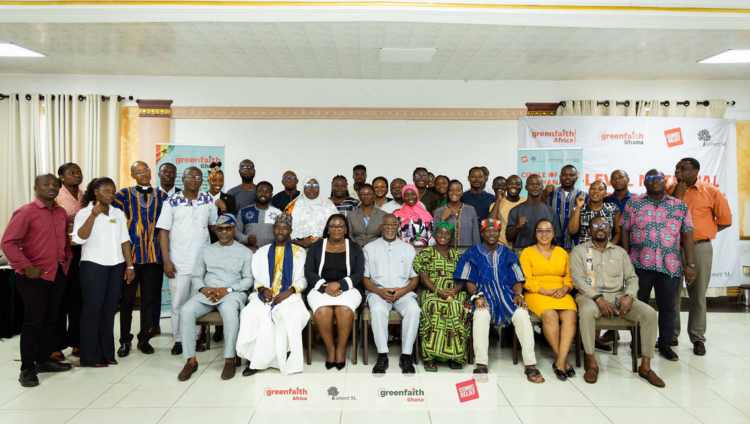
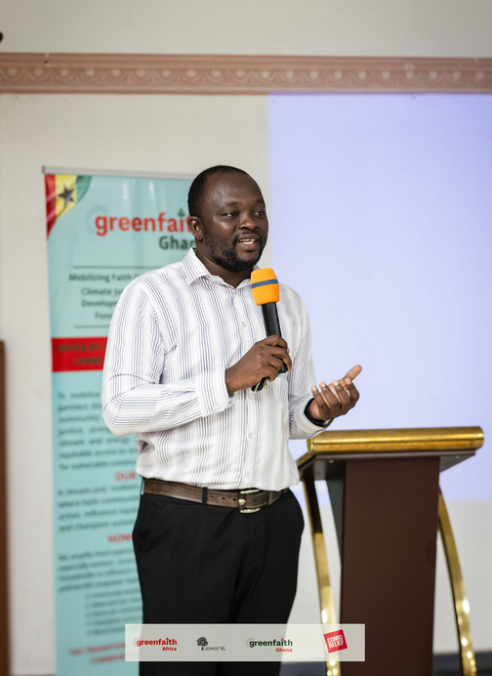
The dialogue, organised by Greenfaith Ghana, brought together faith leaders, government officials, civil society organisations, traditional authorities, and media to discuss how communities can better prepare for and recover from climate-related shocks.
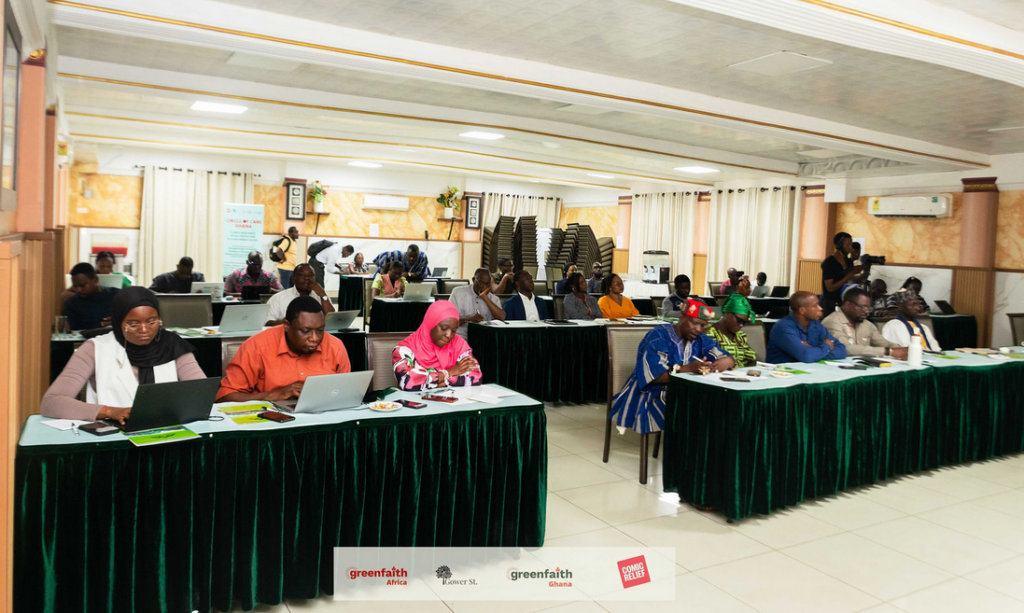
The discussions come amid growing national conversations around climate resilience and shock-responsive social protection systems in Ghana.
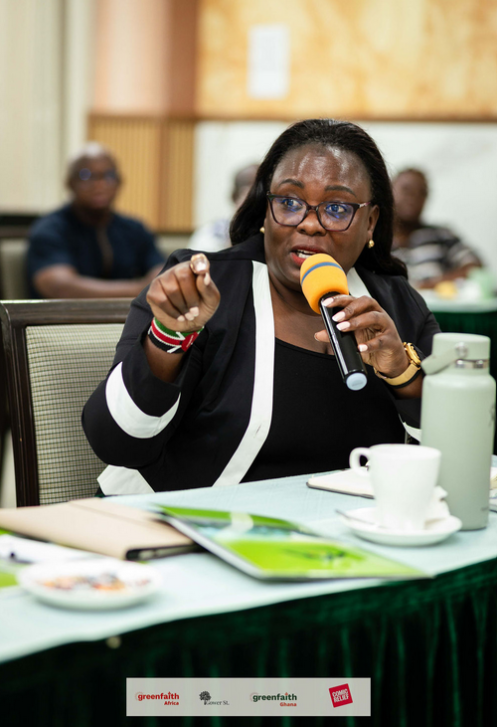
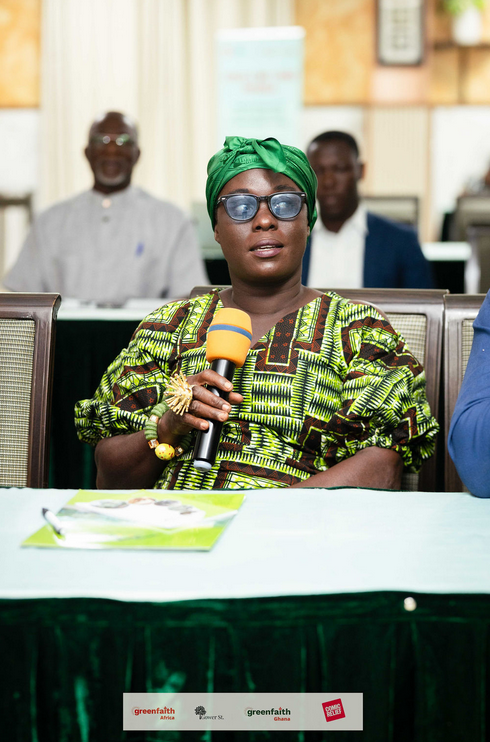
Speaking on the sidelines of the event, Executive Director of GreenFaith Africa, Meryne Warah, said women often become the backbone of affected households and communities after climate disasters strike.
“Women at the grassroots communities are always left with the burden of holding the community, holding the family, holding everybody together in the aftermath of disasters,” she said.
According to her, climate disasters are not only destroying homes and livelihoods but are also erasing identities and critical records many families depend on for survival and access to services.
She explained that during floods, displacement or forced relocation, families often lose important documentation, including birth certificates, marriage certificates and medical records.
“The impacts of climate change in most cases tend to take away the identity of people in the community,” she noted.
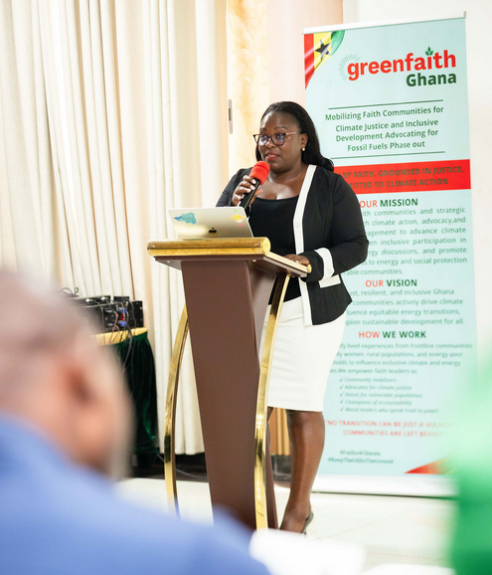
Warah stressed the need for stronger collaboration between government institutions, faith communities and civil society organisations to strengthen resilience systems at the grassroots level.
She argued that faith leaders have increasingly become first responders during disasters because affected residents often turn to religious institutions for refuge, emotional support and assistance.

“People run to places of worship either for refuge, either to seek support, but sometimes also to lift their spirits,” she said.
The dialogue also highlighted concerns from communities directly affected by energy infrastructure projects and environmental changes.
Chief of Ngalekyi in the Ellembelle District, Nana Morkeh Kpanyinli IV, said residents living near the Ghana Gas enclave continue to face harsh living conditions and declining fishing livelihoods.
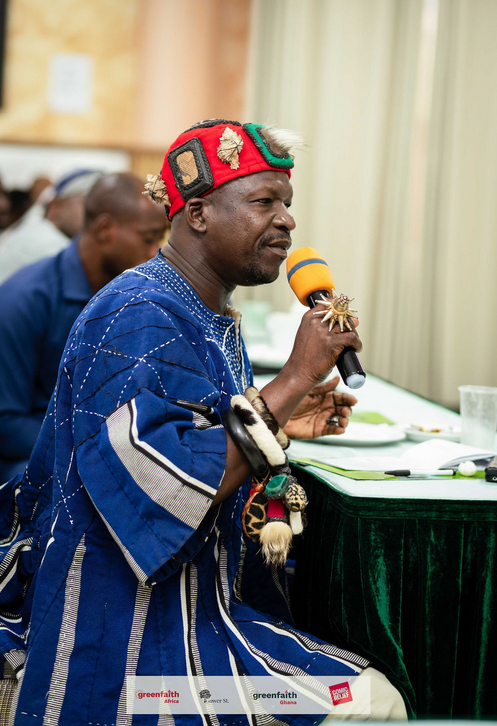
According to him, fishing activities in the area have been severely affected over the past decade following gas operations in the enclave.
“For the past ten years, our job being fishing community, we cannot get any fish to fish for our livelihood,” he said.
The chief said although residents support national development and the operations of Ghana Gas, local communities need stronger support systems and alternative livelihood programmes.
“Ghana Gas has come to stay, but we are suffering,” he added.
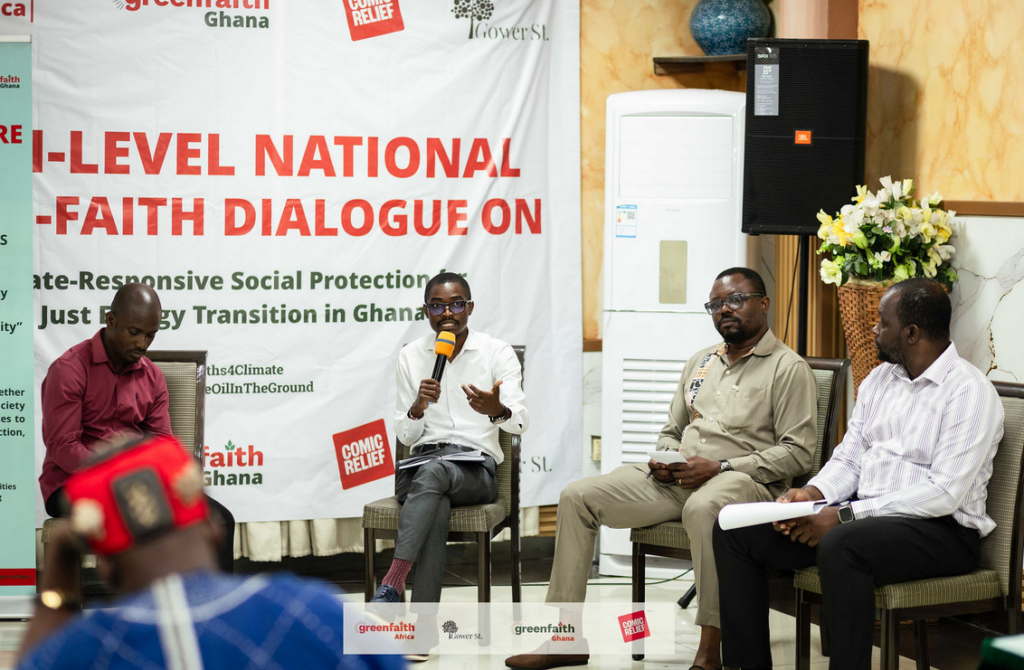
He called for interventions including solar energy support and aquaculture projects to help affected residents adapt economically.
Officials from the Ministry of Energy and Green Transition say government is implementing several renewable energy and climate mitigation initiatives to reduce emissions and improve energy access.
Deputy Director for Renewables and Green Emerging Technologies at the Ministry, Dr Robert Sogbadji, said climate action requires participation from all sectors of society.
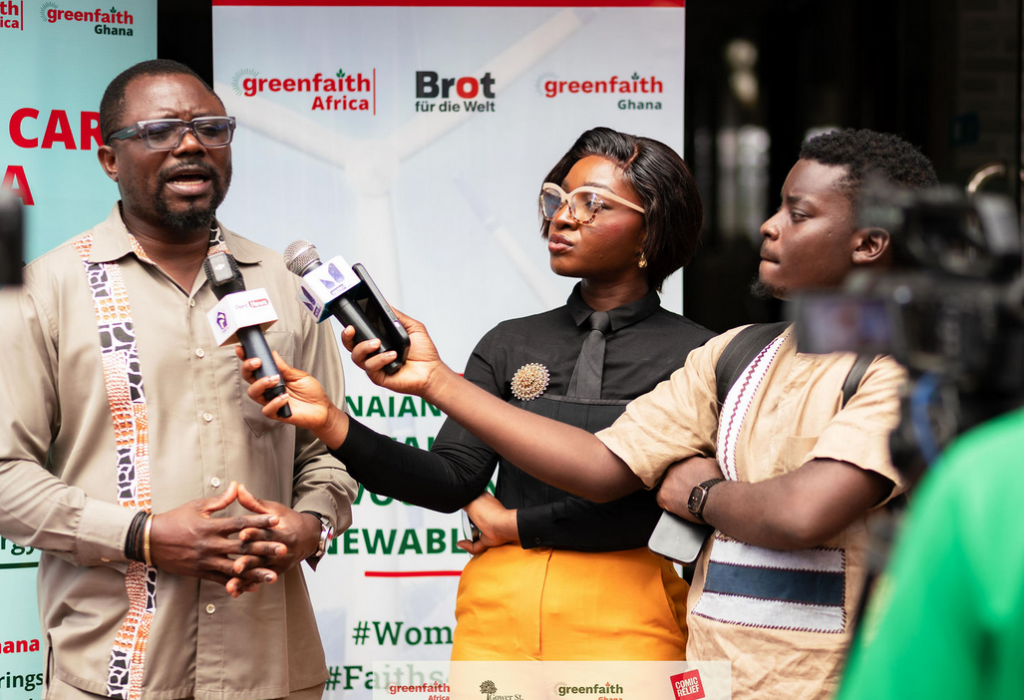
“Climate change is not only a government initiative, but it’s supposed to be implemented by everyone,” he said.
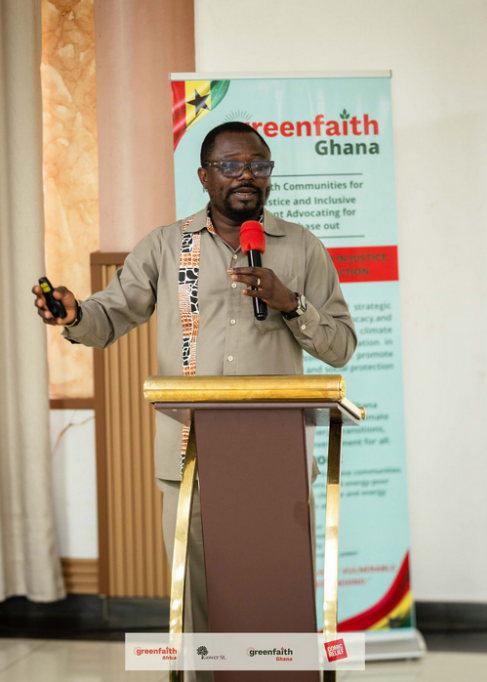
He pointed to interventions including solar mini-grids for island communities, solar irrigation systems, LPG expansion programmes and plans to reduce gas flaring as part of government’s broader energy transition strategy.
Ghana has in recent months intensified discussions around climate resilience, renewable energy and social protection in response to growing climate vulnerabilities affecting communities across the country.
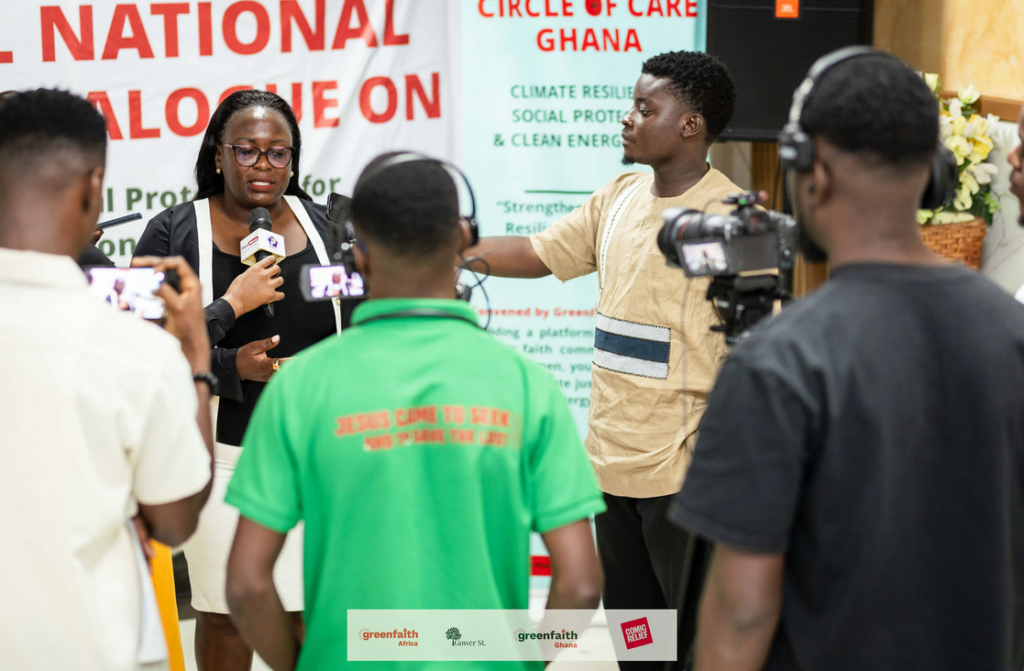
Stakeholders at the dialogue, however, maintain that climate action must go beyond policy announcements and focus on protecting vulnerable communities — especially women who often remain at the centre of recovery efforts long after disasters occur.
Climate activist and journalist with The Multimedia Group, Kenneth Awotwe Darko, also explained that "one of the biggest challenges with climate reporting is that many people still see climate change as a distant scientific or policy issue instead of something affecting everyday livelihoods, health, food systems and communities."

"As journalists and storytellers, we have a responsibility to humanise these conversations and move beyond statistics and conferences. When fisherfolk lose their livelihoods, when women have to hold families together after floods, when communities are displaced, these are more than environmental stories; they are human stories."
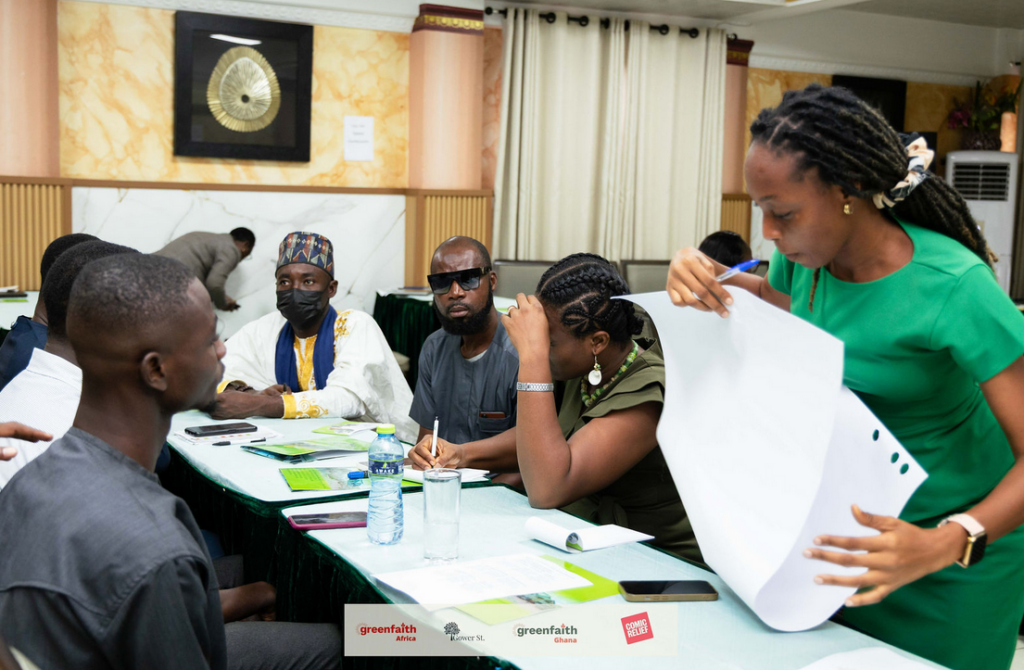
This convening also forms part of the “Circle of Care” initiative, which aims to strengthen the role of faith actors as strategic contributors to climate-responsive social protection systems.

Latest Stories
-
Ayawaso West Assembly cracks down on unauthorised market near Villagio
4 minutes -
Lastec CEO Lasisi Oseni nominated for Ghana Auto Fix Award
9 minutes -
Polo Beach Club land belongs to La Traditional Council, not Labadi Beach Hotel – Freddie Blay
10 minutes -
‘Don’t speculate’ – Upper West Minister charges SOCO facilitators as project delivers 127 projects, 173 more underway
11 minutes -
Finance Ministry approves 3 months’ rent allowance for security personnel
25 minutes -
Ten people linked to Kenya’s first-ever Ebola case quarantined as screening concerns grow
39 minutes -
Ghana warns medical travellers to South Africa to obtain visas for treatment beyond 90 days
46 minutes -
Canada suspends plans to expand assisted dying to people with mental illness
47 minutes -
Minority accuses Sports Ministry, NSA of creating fake portfolios for VISA applicants
48 minutes -
6th Inter Tourism Expo comes off in Cape Coast this October; register now
1 hour -
Afenyo-Markin accuses government of diverting attention from cocaine seizures linked to Ghana
1 hour -
GJA gives Armed Forces 14 days to account for alleged assaults on Sika Official, Bullet TV’s Philip Abutiate
1 hour -
PAC gives CWSA 30 days to recover GH¢10m in unpaid water bills from police, army, hospitals, other public institutions
1 hour -
Major Accra roads to get facelift ahead of Ghana’s 70th Independence anniversary – Agbodza
2 hours -
Account for GH¢650bn allocated to existing programmes before new economy – Oppong Nkrumah to gov’t
2 hours