

Audio By Carbonatix
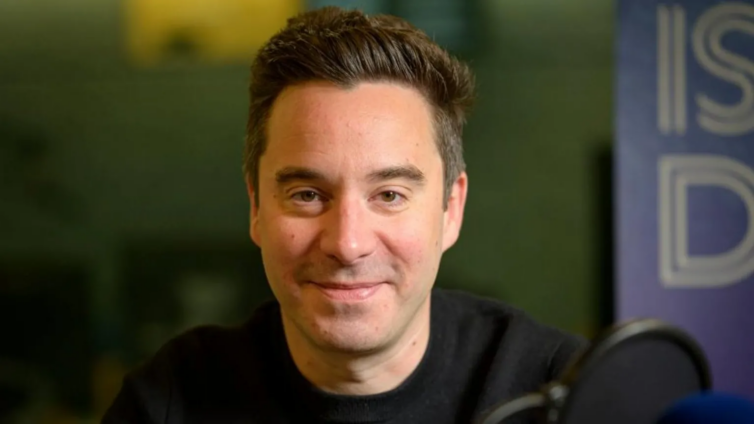
Playwright James Graham has told Desert Island Discs how he turned to Workaholics Anonymous for help after realising work addiction had become a problem for him. I joined a support group session to hear how it has affected other people's lives.
"I feel emotional and ashamed," one woman says, describing how she had spent the evening struggling against the urge to meet "a self-imposed deadline" after putting her young son to bed.
She was speaking to fellow members of Workaholics Anonymous, a free recovery programme for work addicts modelled on Alcoholics Anonymous.
Her voice shakes with emotion as she thanks the group for their support. Despite joining three years ago, the woman says she still feels her workaholism pulling her back to her desk.
Another woman tells the group she realised she had a problem while sitting at the dinner table with her partner's family, talking compulsively about her job in an attempt to hide her insecurities.
"Afterwards I was so embarrassed," she says. "I lived in fear that people would find out I'm a fraud."
The woman says her life has become "so small" because all she can think about is work.
They are among a group of 20 people joining the weekly meeting of Workaholics Anonymous on Zoom, bringing together people from across the UK and even those in different time zones. The BBC was invited to join the meeting with the agreement of all the members of the group.
Like Alcoholics Anonymous, the organisation describes itself as a judgement-free place where people can talk openly about their struggles. There is no leader, and people work through a recovery programme with the help of other group members.
Speaking after the meeting, one woman who is writing a book about her recovery says she is happy to waive her anonymity.
Caroline Walker says she knew she had a problem just over three years ago, when she realised she would miss pizza night with her family yet again.
"I couldn't step away from the computer, but I desperately wanted to," she says. "I was constantly working in the evenings, weekends and holidays."
For her, there is a clear distinction between people who overwork and those who have a work addiction.
"A lot of people overdo things," says the doctor, from Kent. But if you're a workaholic, you know "you're doing something wrong or harmful, and you're not in control of it", she adds.
"I used to say I was going to tidy up in my office for an hour and actually I'd be finishing off some work. I'd feel ashamed of it, I'd want to hide it."
She believes workaholics are often seeking to avoid difficult feelings like low self-esteem.
Speaking on Desert Island Discs last weekend, playwright James Graham said his own workaholism had similar roots.
"All of my self-esteem, all of my validation, all of my happiness and joy was coming from work, and I didn't allow myself to believe that there was space for anything else," he told host Lauren Laverne.
The writer behind football drama Dear England said he had struggled to form "intimate relationships" as a result of the condition.
At one point he had two plays, Quiz and Ink, running simultaneously in the West End.
"90% of me was just like really happy and proud of that," he said. "There was like 10% of me going: you look up at the lights and that's part of your illness, isn't it?
"It's a pattern of behaviour that is slowly sort of killing you."
'Silently missed'
According to Ms Walker, the adrenaline that comes with high-pressure workloads - whether professional or otherwise - can feel addictive.
The NHS website describes work addiction as an obsession with work that leaves people physically exhausted and negatively impacts relationships and social lives.
Despite this, workaholism is not recognised as a medical condition by the main diagnostic manuals used by psychiatrists in the UK.
"People will get seen by their GP when they burn out and get sick from work, or if they have an accident because they drive their car off the road because they're tired, or they have a heart attack... I think it goes silently missed," Ms Walker says.
Nick Hatter is a life coach from Bristol who works closely with those suffering from work addiction. In his experience, work addiction is "driven often by fear of not having enough, not doing enough, not being enough".
Financial insecurity can also play a part in the urge to work, he adds.
"Because UK food bank usage is going up and up, I think there is a lot of feeling of insecurity. I think unless the economic situation improves in the UK, we're probably going to see a lot more workaholism," he says.
Lee Fernandes, lead therapist at the UK Addiction Treatment Group, says employers should be wary of allowing their employees to over-work.
"An employer will always want to get the most out of an employee, but... ultimately employees who over-work will burn out quicker," he says.
Work addiction can manifest in different ways for men and women, Mr Fernandes adds.
"For women, it might be that they may not be in the office as long as a man would be, for example, but they are still incessantly working at every possible opportunity they have."
Of the workaholics who shared their stories with the BBC, many say the meetings often have more women than men in attendance. This could be because "men aren't opening up or admitting to their work addiction as easily as women are", Mr Fernandes explains.
A spokesperson for Workaholics Anonymous says the group has close to 20 weekly meetings based in the UK, with members of all ages, from as young as 18. While the organisation does not keep statistics on its membership, it says growing numbers of people are joining the weekly groups.
While help is at hand, recovery is a lifelong process. Ms Walker says: "I still have to disentangle what I do and who I am. I'm still trying to learn that I am not my job."
Latest Stories
-
Ghana housing finance conference adopts communiqué to improve affordable housing access
3 hours -
Special Initiatives Minister urges Wa Technical Institute to enrol more girls as EU-backed solar training lab opens
4 hours -
In the matter of my first year at the Bar
4 hours -
ActionAid Ghana calls for an end to child marriage, greater investment in girls’ rights
4 hours -
Newsfile to tackle World Cup visa scandal, beach demolitions, education strikes, BRICS bid
4 hours -
UK-Ghana Trade & Investment Summit: Trade Resource Centre to help businesses maximise UK-Ghana trade opportunities
5 hours -
Embassy of Denmark celebrates World Maritime Day
5 hours -
Linking LEAP to productive inclusion could cut extreme poverty by 2030 – UNICEF
6 hours -
Trade Ministry backs use of creative arts to rehabilitate prison inmates
6 hours -
Negotiations with government to continue despite strike suspension – GNAT
6 hours -
‘Ghana cannot afford to waste public resources; every cedi has a job’ – Ato Forson
6 hours -
Ghana expects economic boost as World Assemblies of God Congress brings 10,000 delegates to Accra
6 hours -
Joy in Nayilifong as Farouk Aliu Mahama donates 100kVA transformer to improve power supply
7 hours -
Chief Justice urges employers to tackle mental health stigma in workplaces
7 hours -
Analysis: Ghana’s yellow fever numbers reveal a gap between vaccination and protection
8 hours