

Audio By Carbonatix
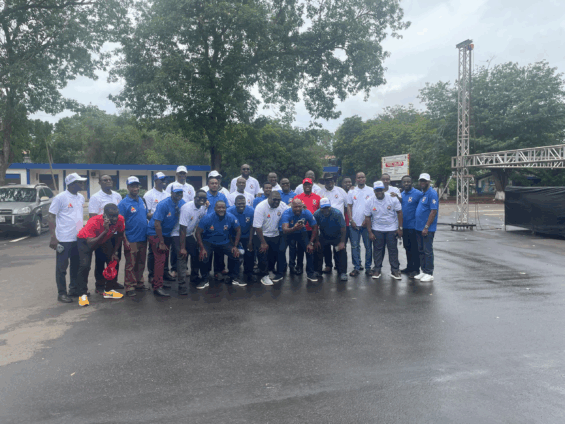
As part of their 25th anniversary celebrations, the Ɔdadeɛ 2000 group of the prestigious Presbyterian Boys’ Secondary School (PRESEC-Legon) has announced plans to renovate the school’s kitchen and introduce a sustainable green energy system.
A member of the group, Alain Gbeasor shared details of the project during the anniversary launch event which took place in the school on Saturday, May 17. He explained that the initiative is aimed at improving the living and learning conditions of students on campus while also promoting sustainability.
“As part of our 25 years anniversary celebrations, we are embarking on a programme to renovate our kitchen and then create a sustainable green energy kitchen,” he said.
Mr Gbeasor stated that the group plans to completely retool and retrofit the kitchen area to give it a modern feel and make it more efficient.
“We are going to retool the kitchen area and retrofit it for the students to showcase that Presec is the school of the future, and our dining hall will be properly set up.”
He also mentioned the construction of a new space for kitchen staff, which will include resting areas, offices, and changing rooms.
“We are building an ultramodern area for our kitchen staff so they can relax. They can have offices, changing rooms.”
One of the highlights of the project is the introduction of a biogas system to power the kitchen making Presec one of the first schools in Ghana to run a fully green kitchen.
“We are also doing a biogas kitchen. You know, that will be one of the first schools in Ghana that is going fully green on the utilisation of our kitchen.”
He said the group hopes the facilities will not only benefit the current students but also show that Presec is committed to innovation and progress.
“We hope that these resources in place will make Presec the school that indeed we want to make of it.”
The project forms part of a broader effort by the old students to give back to their alma mater and ensure it remains one of the leading institutions in the country.
This is a significant step towards Ghana's target of improving clean cooking methods aiming at a 50% LGP usage penetration by 2030.
Currently, around 54.3% of households still rely on solid biomass for cooking with 31.1% depending on firewood and 23.2% on charcoal using inefficient rudimentary stoves. This exposes millions, especially women and children, to harmful indoor air pollution, while accelerating environmental degradation.
Fuelwood consumption has been a major driver of deforestation. Over 90% of Ghana’s original 8.22 million hectares of natural forest has been lost due to logging and fuelwood production. Increasing access to clean cooking solutions, particularly through LPG promotion, offers a strategic pathway to reduce deforestation, protect biodiversity, and mitigate climate change impacts.
Indoor air pollution remains a major public health challenge. An estimated 20.5 million Ghanaians, over 70% of the population, burn solid fuels like wood, charcoal, and dung for cooking and heating, often in poorly ventilated spaces.
This results in the release of harmful pollutants, including black carbon (BC), a potent short-lived climate pollutant. In 2017, Ghana's total black carbon emissions were 16.5 kilotons, with residential cooking contributing 78% of that amount. Rural households, particularly in the forest regions, accounted for 74% of black carbon emissions from cooking, while peri-urban households contributed the remaining 26%.
Household air pollution is responsible for approximately 16,000 premature deaths annually in Ghana, with 8,500 deaths in urban areas and 7,600 in rural areas. Respiratory and cardiopulmonary diseases, often linked to inhalation of particulate matter, lead to increased hospital visits and economic burdens on families and the health system. Using LPG, a cleaner-burning fuel, is a feasible and highly effective intervention to improve air quality, reduce health risks, and lower household black carbon emissions.
The Government of Ghana (GoG) has implemented various initiatives to combat this:
The Rural LPG Cooking Fuel Promotion Program (RLPGPP) (2013–2017) helped 151,500 rural households adopt LPG, increasing rural LPG access from 5.5% in 2013 to 7.7% in 2016.
Following lessons learned, GoG developed the National LPG Promotion Program (NLPGPP) to scale LPG access across rural, urban, and peri-urban areas.
The LPG Cylinder Recirculation Model (CRM), launched in 2017, aims to restructure the marketing and distribution of LPG to make it safer, more accessible, and affordable.
These efforts contribute to Ghana’s broader energy and climate goals outlined in the Sustainable Energy for All (SEforALL) Country Action Plan (2012), Nationally Determined Contributions (NDCs-2015), Renewable Energy Master Plan (2019), and the National Energy Policy (2022).
Despite significant progress, many Ghanaian households continue to face barriers to adopting clean cooking technologies. High LPG refill costs, long distances to filling stations, safety concerns, cultural preferences for traditional cooking methods, and limited financing options hamper progress.
Latest Stories
-
Mahama to meet relevant stakeholders over concerns about the new Customs Act
3 minutes -
CHASS demands a 20% increase in SHS funding and payment of outstanding debts
5 minutes -
Investigation launched after male body found in County Cork
7 minutes -
We have been scammed by NDC, government is only doing PR – Abanga Fuseini
7 minutes -
Tamale Teaching Hospital records 44 new breast cancer cases in six months
9 minutes -
GES declares October 30 CPD day for private school teachers; learners to observe holiday
9 minutes -
South Korea to support Ghana’s forts and castles restoration with $4.5m over five years
11 minutes -
School headscarf ban sparks rare protests in Azerbaijan and row with Turkey
19 minutes -
Ghana explores underwater sightseeing and shipwreck tourism
20 minutes -
Association of Women Lawyers calls for national sexual offenders register to protect school children
21 minutes -
Soaring commodity prices influenced our 2026 revised growth forecast of 5.7 % for Ghana – IMF
24 minutes -
Government urged to recruit more speech therapists to support children with language disorders
26 minutes -
Chef Abbys: Feeding 50,000 people, putting food security on Ghana’s agenda
54 minutes -
Ho set to host Republic Bank–JoyNews Habitat Fair as multiple firms prepare to showcase housing solutions
1 hour -
NPP demands public inquiry into alleged $600,000 World Cup visa fraud, wants Sports Minister, GTA CEO summoned
1 hour