

Audio By Carbonatix
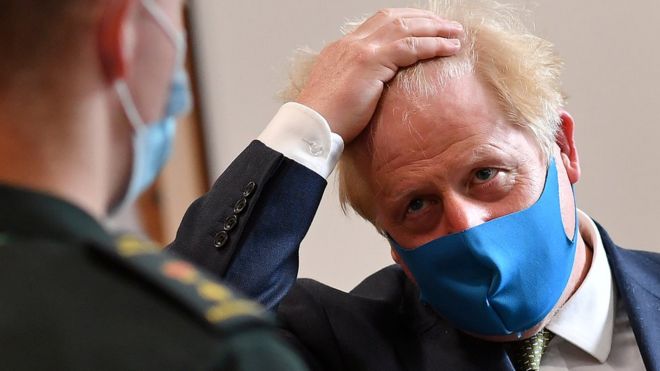
Boris Johnson has said he does not want to impose a second national lockdown in the event of another Covid-19 outbreak.
Speaking to The Sunday Telegraph, the PM compared the option of a nationwide shutdown to a "nuclear deterrent", adding he does not think the country "will be in that position again".
But the UK's chief scientific adviser said there is "a risk" such measures could be needed as winter approaches.
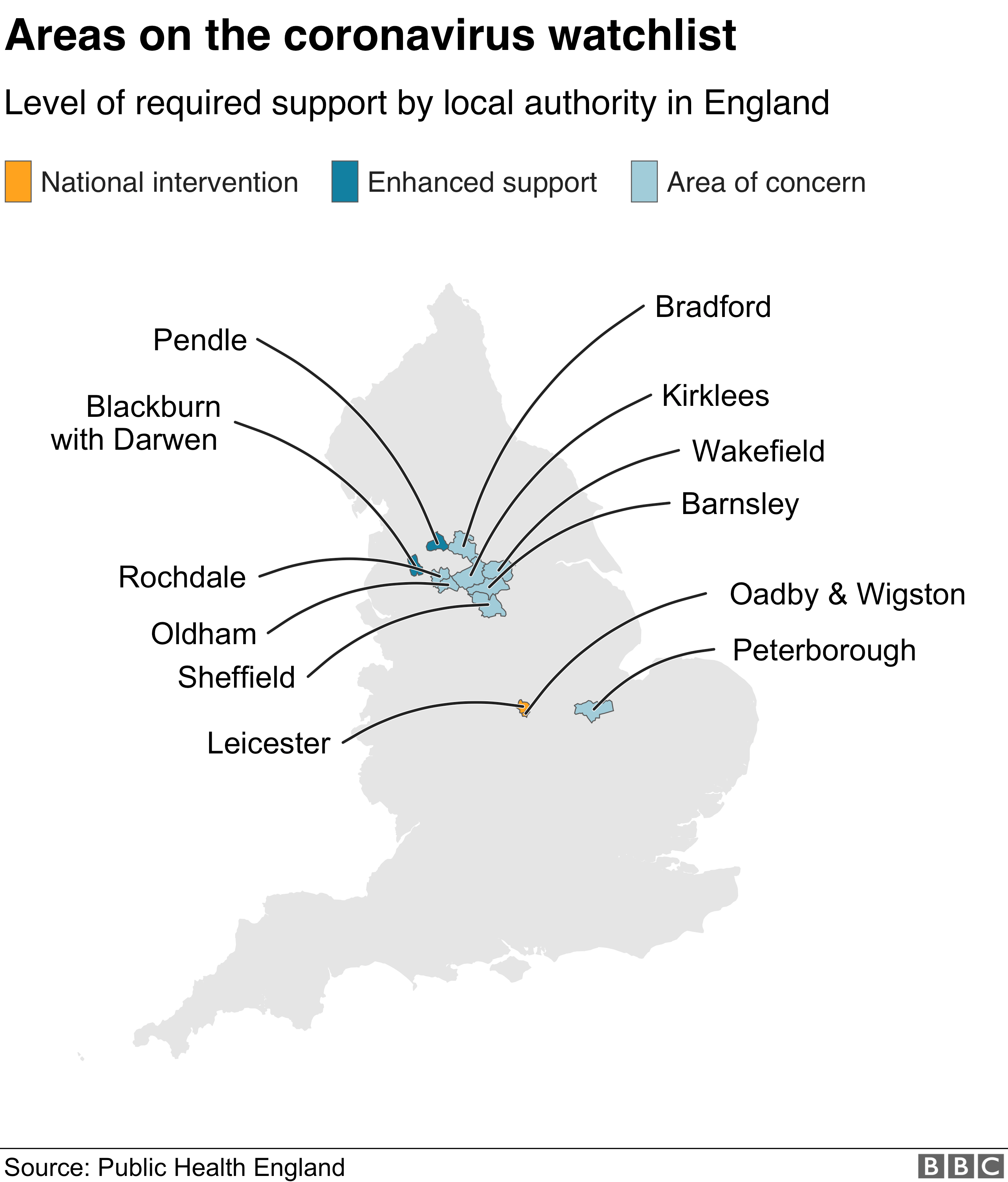
It comes as councils in England have been given "lightning" lockdown powers.
Under the new powers, local authorities can close shops, cancel events and shut outdoor public spaces to manage local outbreaks.
Elsewhere, Scotland has seen the biggest daily rise in new confirmed coronavirus cases since 21 June.
Mr Johnson said authorities were getting better at identifying and isolating local outbreaks, adding that the power to order national action will remain an option.
"I can't abandon that tool any more than I would abandon a nuclear deterrent. But it is like a nuclear deterrent, I certainly don't want to use it. And nor do I think we will be in that position again," he said.
The PM told The Sunday Telegraph that experts were getting better at spotting the disease, isolating it locally and identifying which groups it affects - and how.
"We're genuinely able now to look at what's happening in much closer to real time, to isolate outbreaks and to address them on the spot, and to work with local authorities to contain the problem locally and regionally if we have to," Mr Johnson said.
It comes after Mr Johnson set out his hopes on Friday for a "significant return to normality" by Christmas.
Under the new guidelines, people can use public transport for journeys immediately, and employers will have more discretion to bring staff back to workplaces if it is safe to do so.
But Chief Scientific Adviser Sir Patrick Vallance warned on Friday that "come winter, the challenges will be very much greater and of course there is a risk that this could also need national measures as well".

At-a-glance: The latest changes in England
- From 25 July indoor gyms, pools and other sports facilities can reopen
- On 1 August the government will update its advice on going to work, asking employers to make decisions about how and where their staff can work safely
- From the same date, most remaining leisure settings, including bowling, skating rinks, casinos and all close contact services, such as beauticians, will be allowed to reopen
- Live indoor theatre and concerts will be able to resume with socially distanced audiences
- Wedding receptions for up to 30 people will also be allowed from next month
- From September, schools, nurseries and colleges will be open for all children and young people on a full-time basis, while universities are also working to reopen as fully as possible
- From October, the government intends to allow audiences to return to stadiums, while conferences and other business events can recommence, subject to the outcome of pilots
And Prof John Edmunds, a member of the government's Scientific Advisory Group for Emergencies (Sage), told the BBC's Today programme that a return to pre-lockdown normality was "a long way off".
He said that activities such as going to work normally, travelling on public transport, going on holiday without restrictions, hugging and shaking hands with friends will not be returning any time soon.
"We won't be able to do that until we are immune to the virus, which means until we have a vaccine that is proven safe and effective.
"If we return to those sort of normal behaviours, the virus will come back very fast," he said.
A further 40 coronavirus deaths were announced on Saturday, taking the total number of people who have died after testing positive for coronavirus in the UK to 45,273.
A report released on Tuesday warned the UK could see almost 120,000 new coronavirus deaths in a second wave of infections this winter in a "reasonable" worst-case scenario.
The estimate does not take into account any lockdowns, treatments or vaccines.
Devolved administrations in Scotland, Wales and Northern Ireland have the power to set their own timings for the easing of restrictions.
Latest Stories
-
Russia opens neo-Nazism exhibition at International Festival of Youth 2026
4 minutes -
VC inaugurates three committees ahead of UG’s 80th anniversary celebration
10 minutes -
Today’s Front pages: Monday, September 14, 2026
18 minutes -
The Or Foundation to launch recycled textiles platform Foose Materials during London Design Week
24 minutes -
110 children at Cardiothoracic Centre get second chance at life as Ghana Medical Trust Fund marks first year
28 minutes -
‘I’m suffering’ – Motherless 12-year-old who lost both legs, father in Ofankor-Pokuase crash seeks support
32 minutes -
Education Ministry extends 2026 SHS placement exercise by one week
2 hours -
Better roads will create sustainable jobs for Ghana’s youth – Joyce Bawah Mogtari
2 hours -
Kumasi Expressway to cut travel time, boost economic activity – Joyce Bawah Mogtari
2 hours -
GOIL could hold fuel prices despite $100 crude oil shock – Edward Bawa
2 hours -
Fitch lifts Ghana’s 2026 current account surplus forecast to 7.8%
2 hours -
Do not identify yourself as Ziavi Paramount Chief or Queen – Volta Region House of Chiefs warns
2 hours -
Sosu demands probe into $260m cocaine shipment seized in France
2 hours -
Mahama to receive cleared Accra-Kumasi Expressway right-of-way today
3 hours -
Mahama to cut sod for US$1.3bn Sentuo Airport Garden City on Tuesday
3 hours