

Audio By Carbonatix
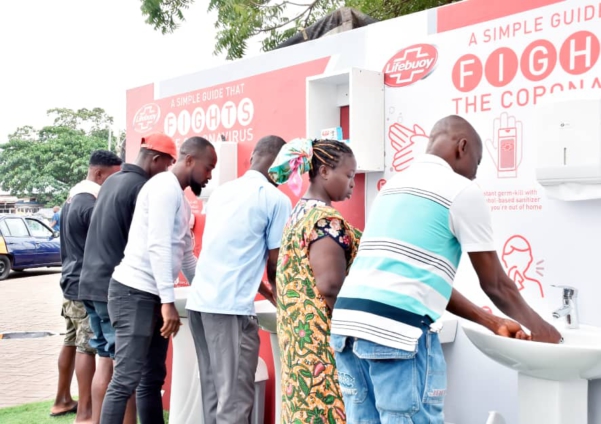
Hygienic practices and environmental cleanliness is the only viable and best defence against the spread of the novel coronavirus and other communicable diseases, Felix Gbevillah, a Programme Officer at Water Aid Ghana, has said.
“Hygiene Behaviour Change is central to the prevention of infections and transmission of diseases including; Covid-19.
"Facts about the mode of transmission of Covid-19 are still emerging, but what is certain, however, is that handwashing with soap under running water can minimise the rate of infection and transmission,” he added.
He, therefore, called on Ghanaians to imbibe in themselves the habit of good hygiene, sanitation and environmental cleanliness practices to protect themselves from contracting diseases and infections particularly the deadly Covid-19.
The programme Officer made the call at Paga in the Kassena-Nankana West District of the Upper East Region, at a two-day technical training and hygiene campaign workshop.
The workshop, meant to prepare participants for the implementation of a Hygiene Behaviour Change (HBC) initiative, was organized by Water Aid Ghana, hygiene and sanitation focused organisation, with funding from the Department for International Development (DFID) of the United Kingdom, for selected staff of the Kassena-Nankana and Bongo Health Directorates.
The training was, therefore, to equip the stakeholders with the needed communication strategies to roll out the clean community campaign as part of measures to cause a positive change in people’s behaviour and contribute to fighting the spread of the virus.
The project dubbed, “Clean Community Campaign”, was initially implemented in the Wa Municipality in collaboration with the Wa Municipal Health Directorate, and is currently being implemented in some districts across the country including; the Bongo, Kassena-Nankana West, Nanumba South, Kwahu Afram Plains North Districts and Ablekuma.
Mr Gbevillah said changing people’s behaviour was difficult but not impossible and required a multifaceted approach to understanding the values of the people before building a campaign message with creativity and innovation to convince them to change.
The Programme Officer said the clean community campaign, which would be implemented by the various health directorates in collaboration with the Assemblies at both the health care facilities and community levels, would employ the ‘Assess, Build, Create, Deliver and Evaluate’ (ABCDE) approach to design the hygiene behaviour change campaign.
Mr Gbevillah noted that the project would not only contribute to minimizing the spread of coronavirus, but would instil Water, Sanitation and Hygiene (WASH) standards in people and communities and help attain the Sustainable Development Goals (SGDs) by 2030, particularly goals three and six.
Ms Fauzia Aliu, Policy Officer, Water Aid Ghana, said for stakeholders to achieve the needed impact of behavioural change, a paradigm shift of the campaign messages from health benefits centred to motivational messages had to be made.
She said people were likely to conform with the campaign message when it had something to do with their dignity and how the society viewed them and, therefore, urged stakeholders to make the sustained behavioural change messages more appealing to the receiver.
Latest Stories
-
NDC has built strong structures to face any electoral challenge – Mustapha Gbande
6 minutes -
John Boadu can appeal across Ghana’s social groups – Prof Mike Oquaye
14 minutes -
‘Electing Kojo Bamba is backward politics’ – Mustapha Gbande
28 minutes -
Government must order payment of promoted teachers’ salaries – GNAT
37 minutes -
Meet Sethina Edem Sunu, the healthcare professional eyeing the NDC UK & Ireland deputy organiser role
41 minutes -
The myth of ‘sophisticated customer experience’ in the digital age
45 minutes -
What happened to lands reserved for sanitary sites? -WasteCare CEO calls for audit
46 minutes -
Manasseh Writes: The shift in the NPP
1 hour -
The price of a seat: Financial barriers and the structural quality of Ghana’s Parliament
1 hour -
Government targets October 16 for first tranche of teacher arrears – Haruna Iddrisu
1 hour -
Daily Insight for CEOs: The CEO’s role in driving innovation
1 hour -
Audit existing sanitary sites to address waste management land shortages – WasteCare CEO urges assemblies
1 hour -
Two-bin household waste system could support waste-to-energy in Ghana – Waste Care Associates CEO
1 hour -
Dealing with political and social media insults
1 hour -
Essi Donkor urges stronger support for girls’ education, announces GH¢2,000 BECE reward
1 hour