

Audio By Carbonatix
When Australia's coronavirus lockdown forced bars and restaurants to shut down in March, breweries were left with huge inventories of unsold, stale beer.
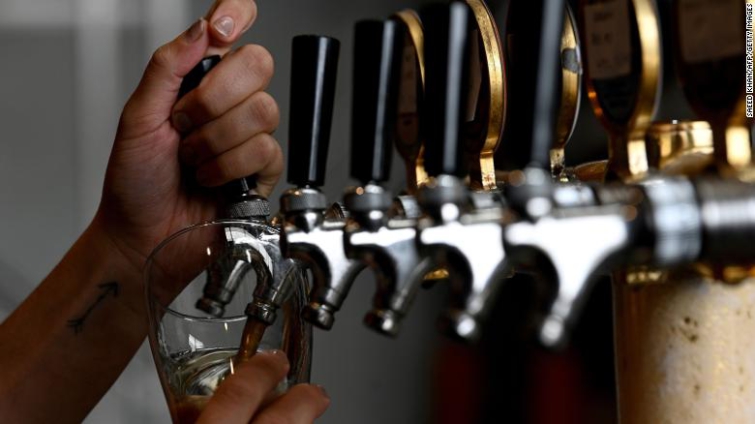
But instead of going to waste, some expired ales and lagers in the state of South Australia have been serving a new purpose: powering a water treatment plant.
At the Glenelg Wastewater Treatment Plant to the west of the state capital Adelaide, millions of liters of unused beer from local breweries have been converted into renewable energy to power its water treatment process in recent months.
The plant mixes organic industrial waste with sewage sludge to produce biogas, which is then turned into electricity to power the whole facility. It usually generates enough biogas to provide about 80% of its energy needs.
But the recent influx of beer has boosted its energy generation to new levels, reaching 654-megawatt hours in a single month, Lisa Hannant, senior manager of production and treatment at SA Water, said in a statement.
"By adding around 150,000 litres of expired beer per week, we generated a record 355,200 cubic meters of biogas in May and another 320,000 cubic metres in June, which is enough to power 1,200 houses," Hannant said.
Beer worked well for the plant's "digesters," Hannant said, referring to the large sealed concrete tanks where sewage sludge is heated in an oxygen-free environment and decomposed to produce methane-rich biogas. The booze's high calorific value -- the amount of heat released during combustion -- makes it "perfect" for the anaerobic digestion process, she added."
Honourably, our thirsty digesters have been doing their bit for the environment by drinking themselves silly and with such a horrific diet it's no wonder they produce so much gas!" she said.
Imposed in late March, Australia's coronavirus lockdown hit the brewing industry hard. In May, Lion Beer Australia, one of the country's largest breweries, said it was emptying 90,000 kegs -- or 4.5 million litres (1.188 million gallons) -- of unwanted beer, according to CNN affiliate 7News.
The beer was tipped into the onsite wastewater treatment plants at its breweries across the country to create biogas, which can be used to brew new beer, 7News reported.
Latest Stories
-
Renewed flood intervention at Mallam Junction raises hopes among residents, businesses
7 minutes -
St Augustine’s College retain National Investment Quiz title after nail biting grand finale
16 minutes -
Education infrastructure investment will drive Banda’s development – Ahmed Ibrahim
23 minutes -
Teacher unions strike: Gov’t presents fresh proposals as talks end inconclusively
1 hour -
51,000 teachers’ promotion arrears to be validated for October payment – Education Minister
2 hours -
Kwabena Boamah appointed Board Chair for Impact Investing Ghana
2 hours -
Striking teacher unions to meet Fair Wages and Salaries Commission on October 6
2 hours -
EOCO working with AG to arraign Nana Baffour Awuah before weekend court
2 hours -
Duraplast reassures customers after fire, announces October 5 reopening
2 hours -
Call off strike, gov’t will not renege on promotion arrears pledge – Haruna Iddrisu appeals to teacher unions
2 hours -
Committee set up to validate teachers eligible for 20% deprived-area allowance – Education Minister
2 hours -
Five-member committee to search for new Black Stars coach after Sports Ministry-GFA meeting
3 hours -
Pinktober: Breast cancer survival exceeds 90% when detected early – Breast Society of Ghana
3 hours -
TCDA to adopt Upper West’s MATCO mango farm as northern prototype, issues warning against felling shea trees
3 hours -
‘Fear delegates’ tag: Afoko touts genuineness among delegates ahead of NPP delegates conference
3 hours