


Audio By Carbonatix
Solidaridad, an international civil society organisation, has partnered the Food and Drugs Authority (FDA) to promote high quality food safety standards among artisanal palm oil producers.
The move is to enhance market access for workers in the palm oil value chain as it will ensure that finished products meet both local and international market standards.
Under the partnership, Solidaridad, the FDA, and the Environmental and Health Units of metropolitan, municipal and district assemblies in palm oil-producing districts will train 260 artisanal mill owners and over 3,000 machinery fabricators and processors in the last quarter of the year.
It will also strengthen the capacity of environmental health officers in palm oil-producing areas.
The FDA is statutorily mandated to work with the assemblies, particularly the Environmental and Health Units, to monitor and enforce standards for the preparation and sale of food products in the country.
Solidaridad, on the other hand, through its Sustainable West Africa Palm Oil Programme, has been working to transform the oil palm sector in the country by promoting best management and milling practices.
The collaboration will enable the FDA to strengthen the capacity of the assemblies to monitor and enforce standards in the preparation and sale of palm oil.
Moreover, Solidaridad's deployment of field officers in palm oil-producing districts will also make up for the FDA's lack of offices at the district level, which makes it difficult for the authority to reach palm oil processors in the districts.
Under the partnership, a training programme on food safety and good manufacturing practices in the palm oil production process would be held for workers in the value chain.
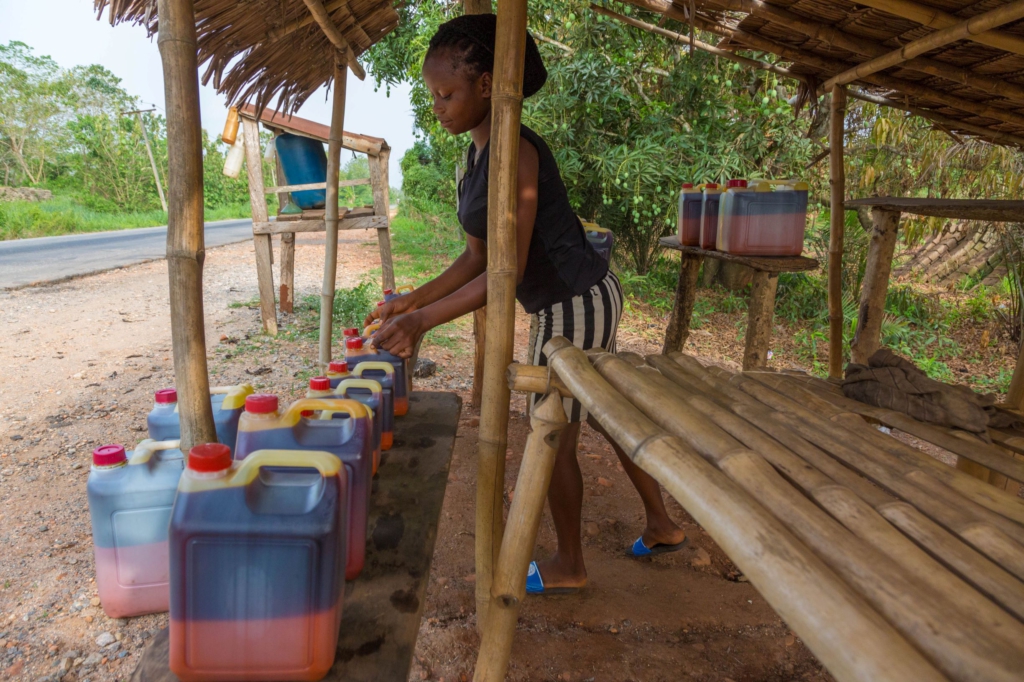
It will cover topics such as hygienic sterilisation and digestion of the palm fruits, identifying food safety hazards during processing, the use of potable water for palm oil processing, waste handling, test management techniques, cleaning and siting of milling equipment, and personal hygienic of workers at the mills, among others.
The effort, according to the partners will build on two training programmes recently organized at Boadua and Assin Fosu in the Eastern and Central regions of Ghana respectively for staff of the Environmental and Health unit of the assemblies, the Business Advisory Centre, and Women in Agriculture Development of six district assemblies.
According to the Oil Palm Programme Manager for Solidaridad, Nicholas Issaka Gbana, a substantial part of Ghana's palm oil imports could be sourced locally from artisanal palm oil producers if they meet the quality requirements of both industrial users and palm oil exporters.
The requirements, he explains, include palm oil with low free fatty acid below five per cent, low rancidity — that is, having the right taste, smell and colour —and has no physical, biological or chemical contaminants.
“Our expectation is that our two organizations would pull resources together to support artisanal palm oil producers to meet these requirements”, says Gbana.
Head of Industrial Support Services Department of the Food and Drugs Authority, Kofi Essel, said his outfit is pleased with the partnership and hopeful that the collaboration would equip artisanal oil palm producers to process safe and quality products to position them to expand their market base.
He adds that food hygiene and safety should be a core element of all food preparation processes, including palm oil, hence the need for processors to obtain and regularly update their knowledge in food safety and good manufacturing practices.
On food safety, Mr Essel advised consumers to stop demanding for palm oil with a redder hue, explaining that such market preference causes some unscrupulous palm oil producers to add substances to the product to change its natural colour, which could compromise food safety.
Solidaridad and the FDA are pursuing this course as part of the implementation of the second phase of the Sustainable West Africa Palm Oil Programme funded by the Embassy of the Kingdom of Netherlands (EKN) in Accra and the Swiss government through its State Secretariat for Economic Affairs (SECO).
The programme seeks to contribute to the transformation of the oil palm sector in West Africa, increase incomes of smallholder farmers and processors, and generate economic growth and jobs. SWAPP II is part of Solidaridad’s global agenda to build sustainable production for oil palm and other commodities.
Latest Stories
-
Gov’t challenges ABL’s claim that beer tax changes threaten 2,000 jobs
7 minutes -
Ghana’s small businesses don’t have a marketing problem. They have a capacity problem.
11 minutes -
GNFS intensifies fire safety campaigns across Eastern Region
13 minutes -
One dead and more than a dozen missing after ‘terrifying’ flash flood hits Grand Canyon
23 minutes -
Full Report: SIGA releases 2025 State Ownership Report on performance of state entities
28 minutes -
Messi retires from international football
32 minutes -
Accra Institute of Technology holds 22nd graduation as 572 students graduate and PhD alumni surpass 100
32 minutes -
Metro Mass Transit returns to profit as revenue rises to GH¢161.85m
36 minutes -
Barcola joins Liverpool from PSG in £123m move
39 minutes -
GOIL profit rises to GH¢90.67m despite 9% revenue decline
42 minutes -
Aid system is broken, African Civil Society leaders say; 200 gather in Accra to build a new Africa-Led model
47 minutes -
TrustGH records more than 6,000 ‘scam’ numbers as TikTok emerges a major fraud channel in Accra, Ghana
47 minutes -
SIGA proposes liquidation of Ghana Railway Company and absorption of staff into GRDA
48 minutes -
FWSC boss steals show at JoySports Invitational with CEOs Penalty thriller
53 minutes -
Ghanaian dogs sweep top honours at West African August classic dog show
56 minutes