

Audio By Carbonatix
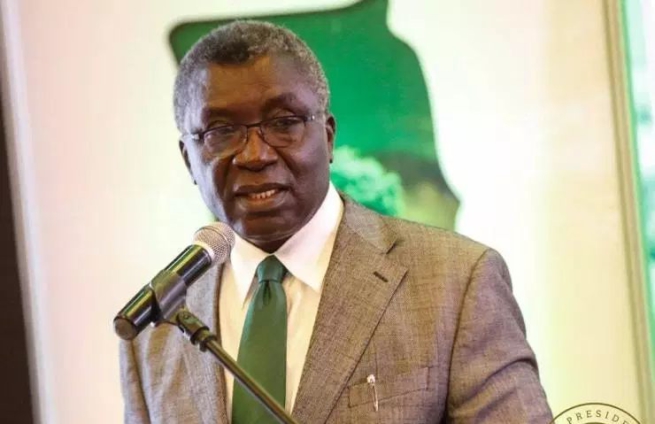
Environment Minister Prof. Kwabena Frimpong Boateng has assured government is working to drastically reduce air pollution related deaths and sicknesses in the country.
He says the situation of air pollution related illnesses is troubling and there is the need for all to work together to stem the tide.
“Air pollution is recognized globally as a major health threat, requiring urgent action from everyone… The NPP government led by the H.E Nana Addo Dankwa Akuffo-Addo is fully aware of the heavy burden of air pollution on human health and economic development. We also understand the staggering consequences of inaction and as a result have initiated some actions to reduce the harm that air pollution causes,” Prof. Frimpong Boateng said.
He was speaking during a virtual forum to mark the very first observance of an International Day of Clean Air for Blue Skies. The United Nations General Assembly adopted the resolution to hold an International Day of Clean Air for blue skies on December 19, 2019, during its 74th session. The day has been set aside to raise awareness and mobilize global action to address air pollution.
The World Health Organisation (WHO) in 2014 estimated that about one-third of deaths from heart attack, stroke, lung cancer and lingering lower respiratory tract infections, and related diseases result from air pollution.
According to Nature Journal, in 2018, 400,000 African children under five died prematurely because of the bad air they breathed. The Ghana Statistical Service in 2010 disclosed that lower respiratory infection ranked 2nd to malaria among the top 10 diseases with children under 5 mostly affected.
In 2015, the Environmental Protection Agency (EPA) estimated that 2,800 lives were lost due to the effects of air pollution. Pollution-related deaths contributed to about 16% of deaths in Ghana in 2016, Prof. Frimpong Boateng disclosed. Air pollution, both indoor and outdoor, caused more deaths than water-related contamination and chemical exposure did. Air pollution cost Ghana between US$226 million and US$300 million in 2015, the equivalent of 0.6% to 0.8% of the country’s 2015 gross domestic product (GDP).
“The global COVID-19 pandemic has provided an opportunity to act more positively towards our environment as we move forward. We must drastically reduce pollution from our production systems and consumption habits. Our factories must install pollution control systems. We must stop the open burning of waste and other hazardous materials. We must think green to regenerate our natural systems,” Prof. Frimpong Boateng said.
Accra Mayor Mohammed Adjei Sowah told the meeting his office is committed to ensuring that residents in the metropolis breathe clean air.
“Vehicular traffic is a major contributor to air pollution in our cities and that if we aim for clear skies we should look at restricting the vehicular traffic and certainly the assembly is looking at some sustainable interventions including strengthening our mass transit systems and also constructing bicycle lanes to promote non-motorized transport,” the Accra Mayor said.
“There are ongoing initiatives in Accra to leverage on low cost air quality sensors to monitor air pollution levels in the city and provide data to influence air pollution control efforts of the Assembly to aid clear skies,” he added.
“Clear skies is a collective effort and we all have a responsibility to achieve that aim by ensuring we minimize our air pollution activities including cooking with clean fuels such LPG and minimize use of charcoal and wood; stopping burning of garbage in households and neighborhoods; reducing our reliance on private vehicles and riding public transport and bicycles to work, and discarding the obsolete technologies at our factories,” Mr. Sowah said.
“The Assembly is stepping up its efforts to free the sidewalks taken over by street vendors so as to encourage walking and reduce dependence on motorized transport,” he concluded.
The Executive Director of the Environmental Protection Agency Henry Kwabena Kokofu said “raising people’s awareness on the need to stop activities that emit pollutants which negatively impact our health, environment and the economy cannot be over emphasized.”
Mr. Gordon Dakuu of the World Health Organization Officercalled for deliberate policy actions to reduce human impact on climate change and improve health.
Agata Pawlowska who is Acting Country Director of the World Bank assured Ghana can continue to count on the support of the bank in efforts improve air quality planning capacity in Ghana.
Latest Stories
-
‘Ghana cannot afford to waste public resources; every cedi has a job’ – Ato Forson
54 seconds -
Ghana expects economic boost as World Assemblies of God Congress brings 10,000 delegates to Accra
7 minutes -
Joy in Nayilifong as Farouk Aliu Mahama donates 100kVA transformer to improve power supply
36 minutes -
Chief Justice urges employers to tackle mental health stigma in workplaces
1 hour -
Analysis: Ghana’s yellow fever numbers reveal a gap between vaccination and protection
2 hours -
Education Ministry welcomes suspension of teachers’ strike
2 hours -
Vice Chancellors Ghana appeal to striking university administrators to resume work
2 hours -
KNUST postpones 2026/2027 academic year reopening indefinitely amid GAUA strike
2 hours -
Fire destroys mattress factory at Sokoban in Kumasi
3 hours -
ECOM-SMS Ghana launches ‘Agriculture Our Future Clubs’ to address threat of ageing farmer population
3 hours -
Nicholas Atsu Kumi
3 hours -
Cherif Sarr: Economic participation needs more pathways, not one prescribed route
3 hours -
Cyber Security Authority: Ghana led Operation Blackout, not FBI
3 hours -
GH¢800,000 goods destroyed as fire engulfs Kia Rhino truck on Apedwa-Kibi Road
3 hours -
Chief Justice calls for supportive workplaces to address mental health stigma
3 hours