

Audio By Carbonatix
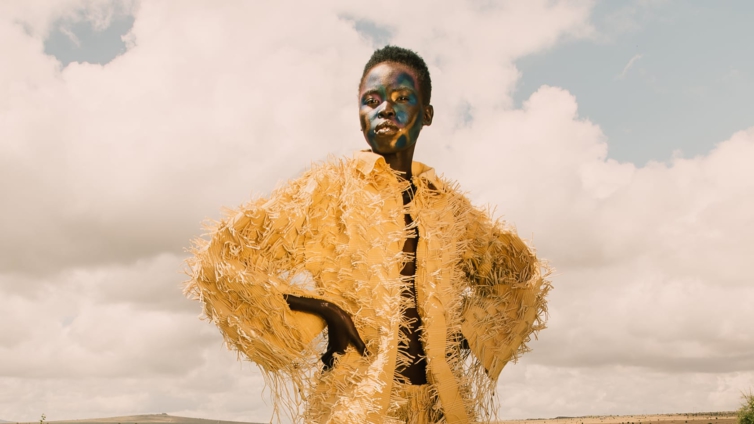
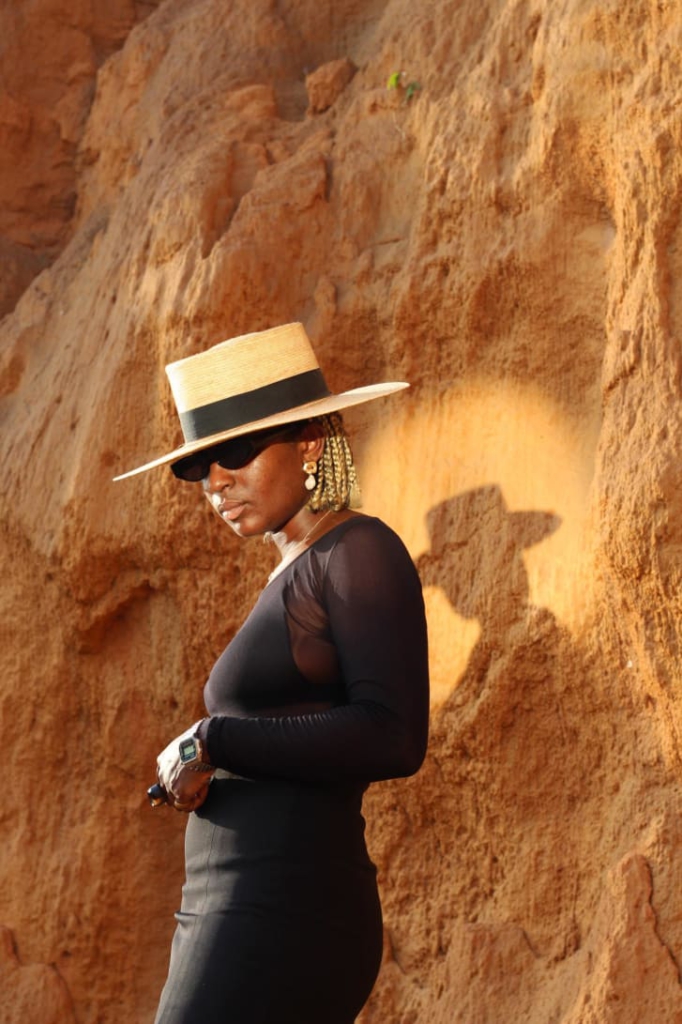
Bubu Ogisi is making African fashion in Africa for Africans. The Nigerian creative director, stylist and the designer behind the label IAMISIGO, Ogisi is committed to celebrating African philosophies, fabrics and techniques. She and her close-knit teams of artisans have created a label which breaks many of the "rules" about what African brands are and should be.
Not interested in capturing Western audiences or selling big, IAMISIGO's work is focused on using fashion to tell the colorful and complicated story of Africa's history, present and future.
"In 100 years, what will our descendants reference about us?" Ogisi said over the phone. "Are they going to be referencing Western pieces that we tried to Africanize, or this new age of African design that was able to bring the continent together? That's my long-term goal."
Credit: Maganga Mwagogo/Bubu Ogisi/Iamisigo
And it's a goal she has been working towards for quite some time. After leaving Nigeria to study computer science in Ghana, Ogisi began to become aware of the complexity of West African style. Noticing the difference in aesthetics, body shapes, fabrics and styling between Ghana and her home country, Ogisi realised that she could use her lifelong interest in clothing to showcase the diversity of Africa.
Not one to rest on intuition and talent alone, Ogisi studied fashion at the Ecole Supérieure des Arts et Technique de la Mode (ESMOD) in Paris. Having mastered the technical elements of fashion, IAMISIGO was born in 2009. The label's name combines the words "I AM" with Ogisi's surname stylized in the reverse -- a nod to the fact that the label is Ogisi's stamp on the world.
She has since showcased collections at Paris and London fashion weeks, been featured in British Vogue and had one of her garments handpicked by supermodel Naomi Campbell. But the mission has not shifted. Despite an increase in international interest, Ogisi is clear about what she is (and isn't trying) to do with the brand.
Credit: Kader Diaby/Bubu Ogisi
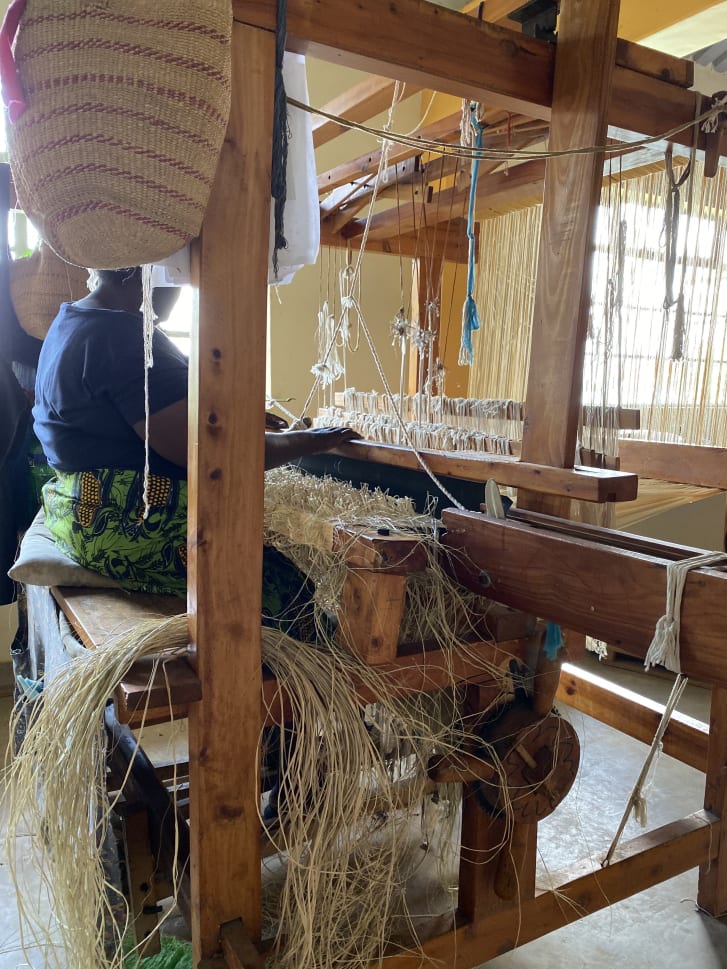
"I've had offers from China and Italy and all over; people who want to buy my designs and mass produce them. I'm not interested in that," she said. "I spend time with old men in villages who pass on their weaving craft to their grandchildren, because that is the only way the skills will survive".
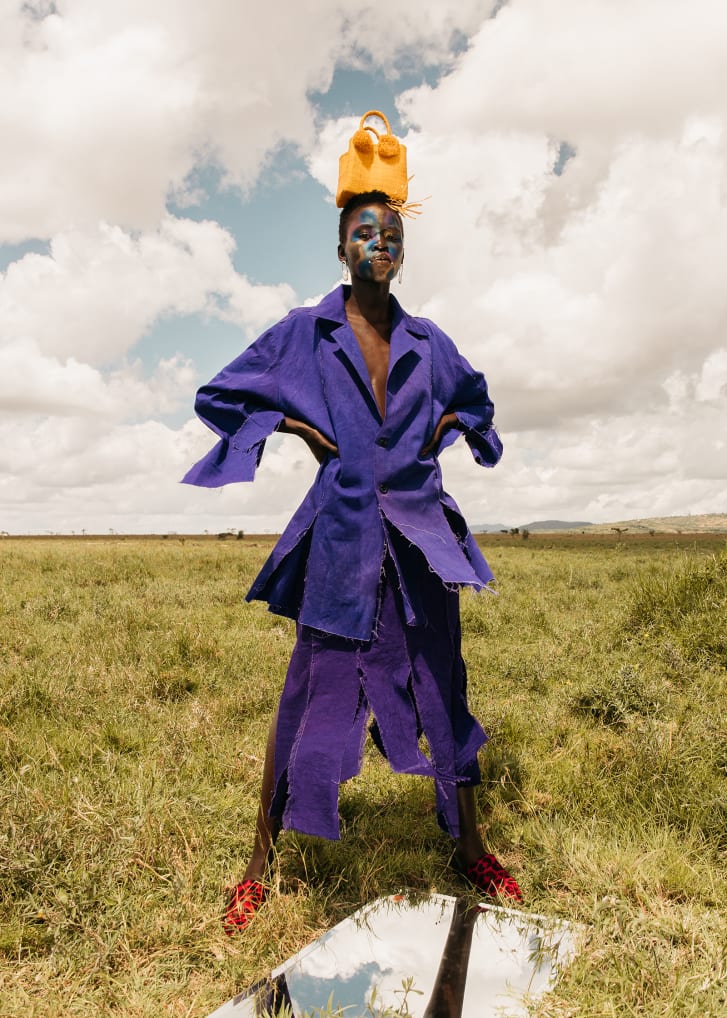
This dedication to locally focused craftsmanship and materials shows itself in each of her garments. Operating between studios in Lagos, Accra and Nairobi, regular road trips to source materials and learn new skills are crucial to Ogisi's creative process. Her most recent collection, Chasing Evil, makes use of palm leaf from the Congo, which she transported cross-continent in bags filled with sand to preserve the delicate material. She says that some of the garments require an intricate weaving process, which she said can take up to a full day to complete.
Credit: Bubu Ogisi
For Chasing Evil, Ogisi enlisted Kenyan master jeweler Brian Kivuti to create once-off pieces to accompany her apparel. Where appropriate the designs make use of secondhand fabrics and accessories, where making or buying a new item would have meant unnecessary waste. The collection also makes use of Ugandan unbleached cotton as a staple material. The name of collection was chosen to reflect this return to African pride,
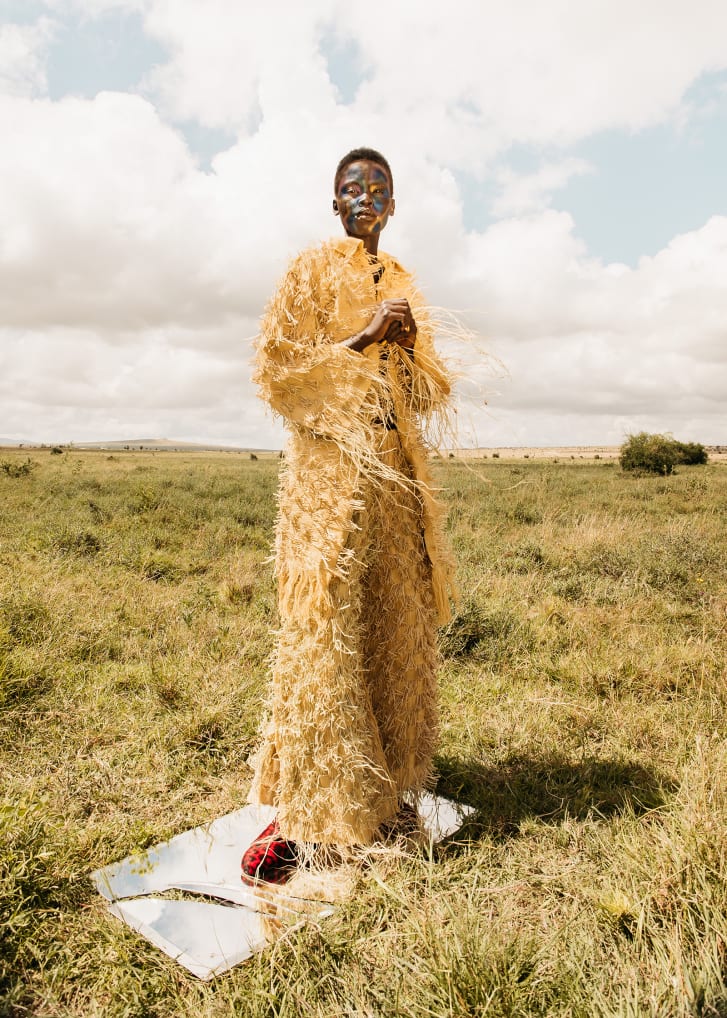
Credit: Maganga Mwagogo/Bubu Ogisi/Iamisigo
"The only way to chase evil is through unity across borders and truly believing in the works of our hands," Ogisi said.
While her pro-Africa outlook is by no means novel in the world of fashion, the commitment to applying it to all elements of the label is part of a shift in approach taken by African designers. Like the LVMH Prize 2019 winner, South African Thebe Magugu, who continues to operate from his inner-city Johannesburg studio, Ogisi recognizes that being accepted by the Western fashion world does not necessarily mean that she should take her sights off the many markets across the continent.
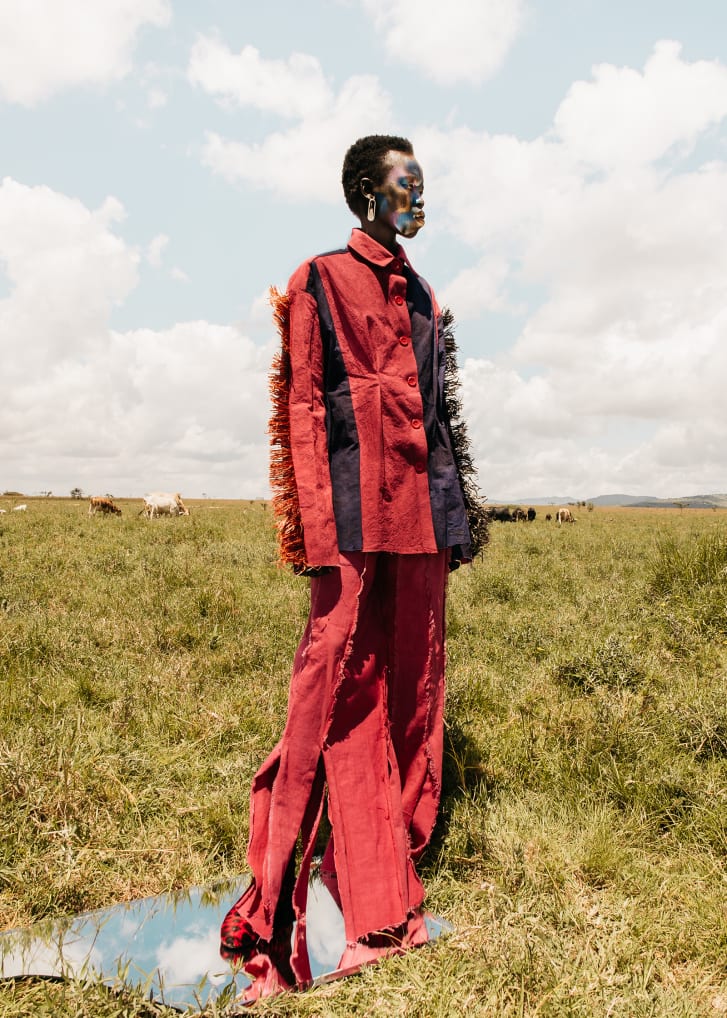
Credit: Maganga Mwagogo/Bubu Ogisi/Iamisigo
"I want to see my clothes on women in Nairobi, Cape Town, Lagos, Accra," she said. "I want these women to feel that somebody understood their history and their bodies and the lives they lead. Every piece is a love letter to them, and to my continent."
IAMISIGO represents the hope of a self-affirming, self-sufficient Africa. While fashion is often dismissed as frivolous, or separate from "real issues," Ogisi proves that politics is everywhere: in the products we consume, in the people with whom we work and even the clothes we wear.
Latest Stories
-
Companies that delay AI adoption risk losing market opportunities – ALX Enterprise
12 minutes -
‘The future is bright’ – Gyan backs Black Princesses squad after U-20 World Cup exit
18 minutes -
We should treat AI has an opportunity rather than a threat – ALX Enterprise
26 minutes -
Malta and Ghana set sights on practical AI partnership
29 minutes -
2026 U-20 WWC: ‘Not all wishes come true’ – Gyan inspires Black Princesses after elimination
34 minutes -
‘I am not a magician’ – Zdravko Logarušić on Nations FC exit from Africa
48 minutes -
Three nights. 28 titles. Ultimate history made
58 minutes -
Ghanaian delegates at IYF 2026 could become bridges for stronger Russia ties – John Aggrey
1 hour -
Nigeria: Over 30 dead, 50 hospitalised after consuming alcoholic substance in Ondo State
1 hour -
UK lawmakers demand new law to address AI threat to human rights
1 hour -
WAFU B U-17 Girls Cup: Black Maidens depart Accra for tournament in Yamoussokro
1 hour -
Sweden’s center-left bloc narrowly ahead as election remains too close to call
1 hour -
GPL 2026/27: ‘We won ugly’ – Kotoko head coach unimpressed after Lions victory
1 hour -
7 out of 10 human trafficking cases in Ghana never reach prosecution — JoyNews Research
2 hours -
Music, football to converge at Music Meets Football Summit 2026 in Lusaka
2 hours