

Audio By Carbonatix
When it comes to food security, the challenge is not always about producing more – it’s also about quality; producing food that is wholesome and preserved safely.
About 690 million people go hungry each year. The Covid-19 pandemic is expected to add between 83-132 million people to this number based on socio-economic factors. Even before the pandemic, about half of Africa’s citizens were food insecure. And much of Africa’s food is of low quality or lost before it even reaches the consumer.
Africa has made some great strides in food production over the last decade even though it continues to be a huge net food importer to the tune of $47 billion in 2018. But this pandemic has halted successes chalked in fighting poverty and disease and progress towards reaching the Sustainable Development Goals (SDGs).
Covid-19 is not the only challenge. In the past year, Africa has grappled with locust swarms, droughts, flooding and conflicts which have slashed livelihoods and brought hunger to many in the region.
Resilient systems need efficient storage and production processes. Post-Covid-19 Africa must invest in appropriate storage technology which is lacking in most developing nations and this causes unnecessary waste and considerable loss to their economies
Restrictions on movement during lockdown also impact on commodities like seeds, fertilizers and farming implements which has, in turn, led to decreased food production. Many crops were not readily accessible and farmers struggled to get their produce to markets. And then, adding to the crisis, the continent’s poor storage facilities were not up to scratch.
Covid-19 showed the fault lines in our food production systems and this has compromised the livelihoods of millions of farmers. Food systems on the continent – including production, storage and processing, distribution and transportation, retailing and promotion – are dominated by traditional methods which are vulnerable to unexpected crises.
The Comprehensive African Agricultural Development Programme (CAADP), one of African Union’s continental frameworks under Agenda 2063, urges African governments to increase investment for agriculture by allocating at least 10% of national budgets to achieve agricultural growth rates of at least 6% per annum.
Also in the declaration on Food security and Nutrition during the Covid-19 pandemic, African ministers of agriculture committed to putting in place measures that will reduce food post-harvest losses and make more food available in the markets.
Now, as countries struggle to recover from the impact of the pandemic, there is the need for an action plan to consolidate efforts at these policies.
Past interventions for Africa have focused on food production through improvement on crop varieties and yield. But we are not living in normal times. We must do more than simply look at production.

Resilient systems need efficient storage and production processes. Post-Covid-19 Africa must invest in appropriate storage technology which is lacking in most developing nations and this causes unnecessary waste and considerable loss to their economies.
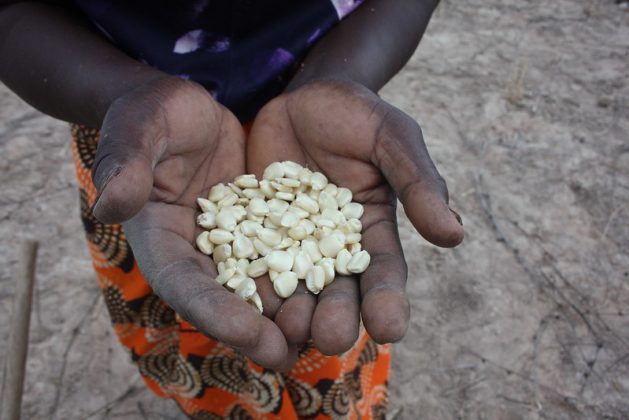
For example, it is estimated that 60–70% of food grains produced in developing nations are stored in traditional structures either in threshed or unthreshed at the home. However, most traditional methods of grain storage practices are peculiar to certain cultures or societies.
According to the Food and Agriculture Organisation, 30% of food is lost in the supply chain every year and this figure can go as high as 50% for Africa. In Ghana the government is aiming at building silos in various farming communities and providing technologies such as irradiation that will be used to manage, process and store food for future use.
We can increase food security by ensuring that most of what we produce is well preserved and reaches the consumer instead of being spoiled or dumped.
The world’s population is estimated to grow to 9 billion by 2050, with Africa contributing more than half of that increase. Food availability must increase by up to 70% if we want to feed that population. However, instead of producing more, we could strengthen our supply chain to ensure that we preserve most of what we grow to meet the needs of our people.
The primary problem of sub-saharan Africa, for example, is not insufficient production levels. A 2011 World Bank report estimated Africa grain losses at USD$4 billion – a loss which could feed 1.6 billion people each year.
These losses are as a result of improper post harvest handling including drying where farmers rely on traditional sun drying. Using this method can facilitate the growth of the fungi which produces aflatoxin that compromises the quality of our foods.
High aflatoxins are associated with cancer, especially liver cancer which has been widely reported in some African countries and Southeast Asia. Complimenting agronomic practices, rapid and proper drying, sorting, and grain processing reduces aflatoxin contamination to some extent.
This year’s World Food Day under the theme “Grow, nourish, sustain together” was a reminder that African governments should strive to build future food systems that provide affordable and healthy diets for all.
In order for Africa to position itself to handle another epidemic, we must begin to put in place robust and modernized storage systems, promote food processing and stockpiling food reserves to ensure stability in demand and supply.
As Africa strives for food security, we should not let food safety be bargained for food accessibility.
***
Dr Mavis Owureku-Asare is a food scientist in Ghana and a 2020 Aspen New Voices fellow
Latest Stories
-
Abu Jinapor demands transparency over GH¢49.72m evacuation cost
2 minutes -
4,972 Ghanaians repatriated from 10 countries since 2025 – Ablakwa
6 minutes -
Israeli strikes in southern Lebanese village kill 12
6 minutes -
Ghana to launch Diaspora Consular Fund to support citizens in crisis – Ablakwa
6 minutes -
Asiedu Nketiah urges political parties to rebuild public trust at inter-continental dialogue in South Korea
24 minutes -
Heavy pitch, intense heat made Kotoko draw physically demanding – Eric Tinkler
32 minutes -
Pregnancy School initiative lauded for reducing maternal mortality in Kwabre East
33 minutes -
Emergency nature of South Africa evacuation justifies GH¢49.7m cost — International relations expert
34 minutes -
Hearts coach Kapor tips Alex Banso for Ghana football stardom
42 minutes -
“Antoine Semenyo can play nine” – Maresca backs Semenyo to deputise for Haaland
55 minutes -
Semenyo becomes second Ghanaian to hit 50 Premier League goal contributions
55 minutes -
King makes clear Harry and Meghan remain non-working royals
57 minutes -
Former GPHA Director-General Edward K. Osei receives Honorary Doctorate, Excellence Award
59 minutes -
Beres Owusu named Man of the Match after impressive Grazer AK display
1 hour -
29 Players to commence Black Starlets preparations ahead of 2026 WAFU U-17 Championship
1 hour