

Audio By Carbonatix
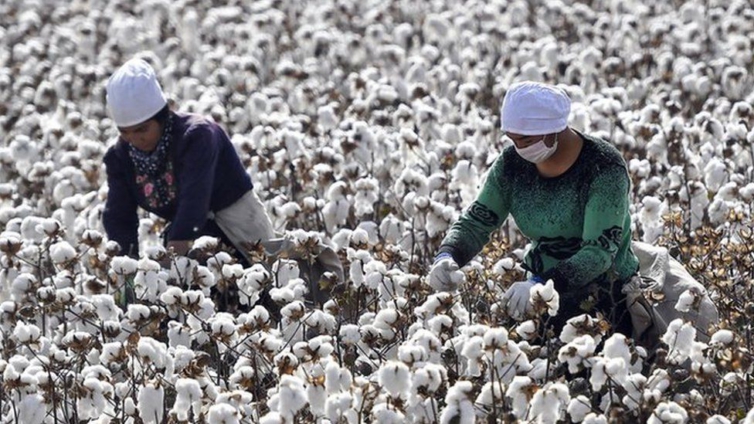
UK firms doing business in China will face fines if they can't show their products aren't linked to forced labour in the country's Xinjiang region.
Foreign Secretary Dominic Raab told MPs exports will be monitored to ensure goods are not being used in camps where Uighur are among minorities being held.
UK firms above a certain size must show they are trying to avoid using slavery in their supply chains.
UK tightens rules on using Uighur-picked cotton https://t.co/hTaffieMXk
— Top Most Popular News (@TPM_NEWS) January 12, 2021
But there is currently no penalty if they fail to do so.
There will also be new guidance for firms and public sector organisations about the risks of trading with Xinjiang where, Mr Raab said, there is growing evidence of more than a million Uighurs and other minorities being held in forced labour camps.
Details of the fines have not yet been released.
Campaigners said the law needs to go further.
"The government has missed an opportunity to guide a meaningful shift away from exploitation and forced labour wherever it occurs," Joanna Ewart-James, executive director of the anti-slavery organisation Freedom United told Reuters.
"Reporting requirements are not enough to hold companies accountable - we need business and government to be held liable for rights abuses in their supply chains and victims should be able to seek redress," she added.
Last week retailer Marks & Spencer signed onto a call to action on human rights abuses in China's Xinjiang region.
The call to action comes from a coalition of civil society organisations and labour unions who want to end abuses against Uighur people.
The coalition said it is almost certain that any brand currently sourcing apparel, textiles, yarn or cotton from the region is profiting from human rights violations, including forced labour.
Marks & Spencer sources its cotton through businesses that are accredited with the Better Cotton Initiative (BCI), a not-for-profit organisation that focuses on sustainable production.
In March last year, BCI suspended its activities in Xinjiang, and as a result, there is no new licensed BCI cotton coming from the region or in M&S products.
Nevertheless, M&S said it was important to sign on to the call to action to encourage other companies to examine their supply chain.
In December, the BBC revealed new evidence that China is forcing hundreds of thousands of Uighurs and other minorities into hard, manual labour in the cotton fields of Xinjiang.
The report increased pressure on clothing retailers to remove Xinjiang cotton from their supply chains.
M&S uses around 40,000 tonnes of lint cotton each year from various sources.
Latest Stories
-
Fisheries Commission inaugurates national-level fisheries co-management committees with support from GFRA
14 minutes -
Rafatu Inusah appointed Chef de Mission for 2027 Commonwealth Youth Games
16 minutes -
Production, market risks and poor records constrain agricultural lending – GIRSAL
20 minutes -
Photos: Gender Ministry presents 2027–2030 priorities at budget technical hearing
30 minutes -
Photos: Mahama engages global leaders in Presidential Roundtable in New York
31 minutes -
Ecobank deepens support for agriculture with dedicated expertise and training – Charlotte Amanquah
36 minutes -
High collateral, documentation requirements limiting farmers’ access to finance – PFA
47 minutes -
NPP will be out of opposition in just two years – Afoko vows
56 minutes -
5-month-old baby stolen at Asafo Market, police launch manhunt for female suspect
1 hour -
Forklift kills roadside pawpaw seller at Asokwa Brewery
1 hour -
When market traders want to lose weight: What are they doing and who are they listening to?
2 hours -
‘I made the decision for him’ – Adebayor on Senaya representing Ghana
2 hours -
Livestream: Ecobank-Joynews financial dialogue series
2 hours -
AFCON 2027Q: Ghana faces ‘difficult’ Ivory Coast clash without Kudus – Adebayor
2 hours -
Daily Insight for CEOs: Understanding the Competitive Landscape
3 hours