

Audio By Carbonatix
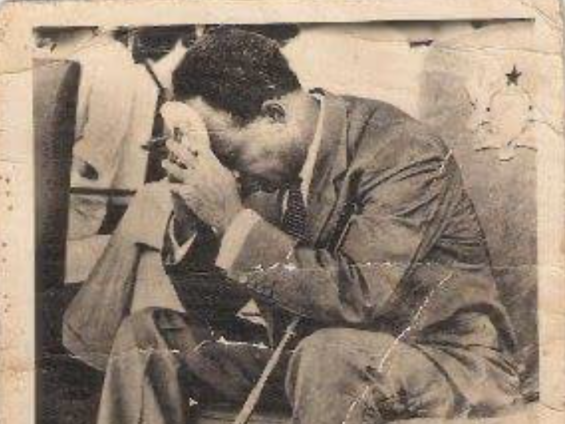
On February 24, 1966, Ghana's first Prime Minister Osagyefo Kwame Nkrumah was unconstitutionally ousted from office through a military coup d'état while he was on a peace mission in Hanoi.
The Coup was launched by the National Liberation council with the code name “Operation Cold Chop”.
Nkrumah was holding out the possibility of offensive operations in Rhodesia, he was forcing into retirement the army's most senior officers.
It was this action more than any other, according to then Major A. A. Afrifa, that led to the military-police coup that overthrew Nkrumah on February 24, 1966.
Nkrumah had welcomed the military coup that took place in Nigeria a few weeks before and had tried to strengthen the position of the more radical members of the military government that took power.
Little did he realize how soon his own demise was to come at the hands of his own military. When this happened, Nkrumah was out of the country in China, where he had gone on a mission initiated by Ghana's fellow Commonwealth nations to end the war in Vietnam.
As was the case for so many of Nkrumah's projects, it was totally unrealistic mission, since neither the Americans nor the North Vietnamese were interested in following the lead of a bankrupt African nation.
The Americans were convinced that Nkrumah's collapse was imminent. They had refused to supply badly needed food aid. The North Vietnamese felt the tide of war was going their way and there was no need to negotiate.
Nkrumah's own staff was dead set against the mission, but his determination to go ahead with it was an indication of how desperate the Osagyefo had become for a diplomatic triumph. The coup itself was welcomed in Ghana with far more enthusiasm than had been the case for independence.
Only the Presidential Guard put up a brief resistance, and within 24 hours the coup was over. Nkrumah's statue outside Parliament House, which proclaimed him the founder of the nation, was battered to the ground and smashed into pieces.
The bars were jammed with celebrants the night after the coup. There were demonstrations of support for the new rulers, who styled themselves the National Liberation Council (NLC).
Even members of the 74-man delegation that had accompanied Nkrumah to China deserted their former leader.
Foreign Minister Quaison-Sackey, who Nkrumah had sent to protest the seating of the new Ghanaian government's mission at the OAU meeting in Addis Ababa, flew instead to Accra, where he pledged his loyalty to the new government.
The prisons emptied of Nkrumah's detainees and began to fill with new political prisoners.
*From "The history of Ghana” – Roger S. Gocking
Latest Stories
-
Baffour Awuah granted GH¢50m bail after EOCO detention
9 minutes -
“Every genre we create doesn’t have to be ‘Afro’ something” – M.anifest
21 minutes -
GMTF marks first anniversary with lifesaving equipment for 9 more hospitals
39 minutes -
NAIMOS seizes 10 excavators in raid on illegal mining sites blocking River Pra’s flow
40 minutes -
Pump prices may stay unchanged as government holds TOR, Sentuo prices
55 minutes -
Akra Reads! 2026: Ladé Wosornu poetry contest expands to JHS
59 minutes -
K9 dog sniffs out 72lbs of prohibited Ghanaian food items at JFK
1 hour -
If family planning is our choice, why isn’t it in our budget?
1 hour -
Mahama, Lordina to attend World Assemblies of God Congress opening in Accra
1 hour -
‘The power play is disgusting’ – Atta Akyea questions Baffour Awuah’s detention by EOCO
1 hour -
Ghana to review all public-sector AI acquisitions under new directive
2 hours -
NPP ready for national elections; 7,121 delegates to vote
2 hours -
‘I didn’t expect this under Mahama’ – Annoh-Dompreh on Baffour Awuah’s detention at EOCO
2 hours -
GRA welcomes Tribunal decision upholding US$393 million tax assessment
2 hours -
COMAC says Uniform Fuel Pricing Fund should not be confused with fuel subsidy
2 hours