


Audio By Carbonatix
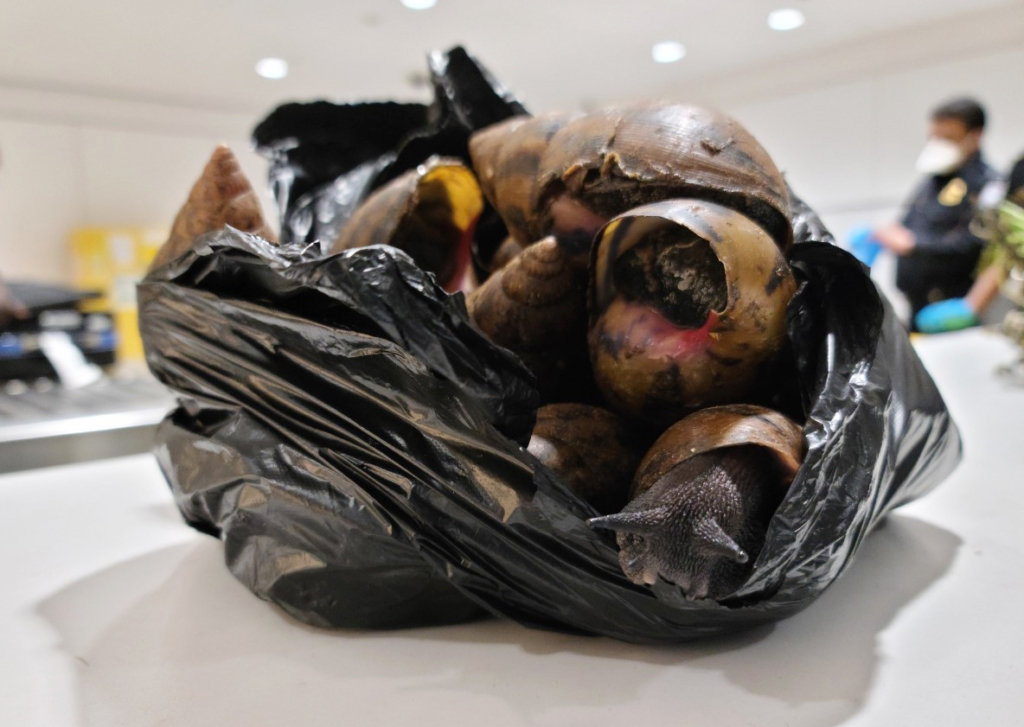
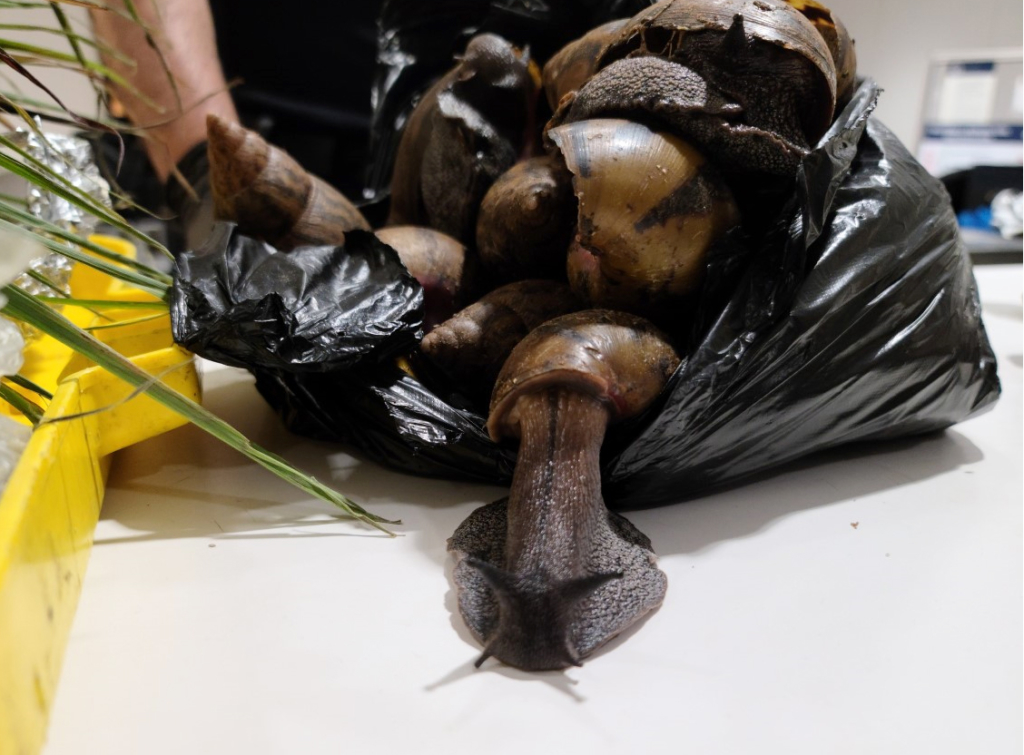
The US Customs and Border Protection (CBP) Saturday seized snails from the baggage of an American who arrived from Ghana at the John F. Kennedy International Airport.
Apart from the 22 highly invasive Giant Ghana African Snails, CBP agriculture specialists also found about 24 pounds collectively of prohibited oxtail, dried beef, turkey berry and carrot.
There was also medicinal leaves and prekese aka soup perfume, a traditional spice and medicinal product.
In a statement, Marty C. Raybon, Acting Director of Field Operations for CBP’s New York Field Office said the giant African land snail is one of the most damaging snails in the world because it consumes at least 500 types of plants.
The U.S. Department of Agriculture (USDA) said the snails are also a menace to their agric resources.
It noted that the Giant Ghana African Snails further causes extensive damage to tropical and sub-tropical environments.
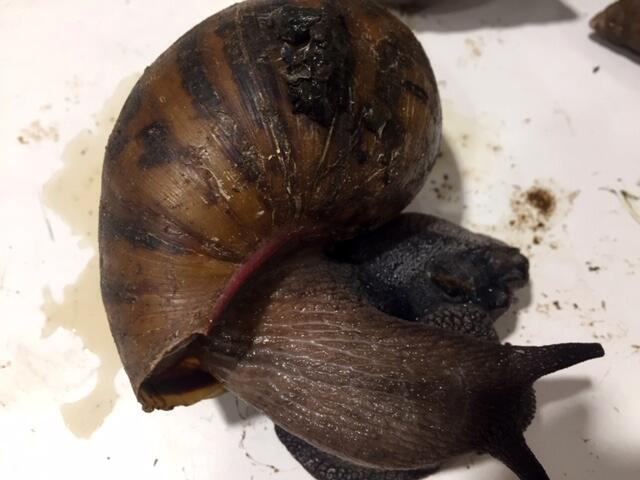
This snail species has been considered a significant cause of pest issues around the world. Internationally, it is the most frequently occurring invasive species of snail.
Outside of its native range, this snail thrives in many types of habitat in areas with mild climates. It feeds voraciously and is a vector for plant pathogens, causing severe damage to agricultural crops and native plants.
It competes with native snail taxa, is a nuisance pest of urban areas, and spreads human disease. This snail is listed as one of the top 100 invasive species in the world. The snails reproduce quickly, producing about 1,200 eggs in a single year.
The statement added, "highly invasive Giant Ghana African Snails also poses a serious health risk to humans because it carries a parasitic nematode that can lead to meningitis".
“Customs and Border Protection agriculture specialists are our nation’s frontline defenders against invasive plant and animal pests that threaten our agricultural resources, and they face this complex and challenging mission with extraordinary commitment and vigilance,” said Marty C. Raybon.
The Giant Ghana African Snails was first found in southern Florida in the 1960s and it took 10 years and $1 million to eradicate it. It was reintroduced in Miami in September 2011.
The USDA Animal and Plant Health Inspection Service, in partnership with the Florida Department of Agriculture and Consumer Services, is conducting a regulatory program to eradicate this invasive species.
Latest Stories
-
GAEC must retain nuclear scientists for Ghana’s nuclear ambitions – Minister
20 minutes -
Man reportedly mistaken for game and shot by hunter dead in forest
22 minutes -
19-year-old mason jailed 15 years for defiling seven-year-old pupil
26 minutes -
Ghana’s banking sector assets rise 20.47% to GH¢500.2bn – BoG Governor
31 minutes -
22 injured as Sprinter bus overturns at Sege after tyre burst
32 minutes -
UN housing expert urges Ghana to strengthen Rent Control Department amid housing affordability concerns
40 minutes -
Delta-BCI partnership reaches 166,000 people with breast cancer education
50 minutes -
Power restoration fault suspected in Kumasi Central Market fire
6 hours -
The 7-foot giant of Ngleshie Amanfro: Seven-foot Ghanaian Ephraim Saawa dreams of joining the national basketball team
7 hours -
Government promises support for Kumasi Central Market fire victims
7 hours -
Vibes The Movie: Big Ghun’s Ghanaian film earns five nominations at 2026 REFFA
7 hours -
‘I’m a fulfilled man’—Justice Korbieh on missing out on Supreme Court despite two nominations
7 hours -
MamaCare CEO warns unresolved conflicts among health workers could undermine maternal and neonatal care
8 hours -
Health professionals urged to translate medical knowledge into practice to save mothers
8 hours -
Retired judge Justice Francis Korbieh charges 1,568 new lawyers to uphold integrity
9 hours