


Audio By Carbonatix
A young South African barista thought he had found the job of a lifetime in Oman, but ended up being held captive and made to work without pay - forcing family and friends to raise money to free him.
The offer came via Facebook when 30-year-old Athenkosi Dyonta was working at a café in the city of George, a popular holiday resort in South Africa's Western Cape province.
"There was nothing wrong about my work but I was just looking for better opportunities and a better salary," he says.
Athenkosi used to share his latte art - the patterns and designs that are made with milky coffee - with other passionate baristas from all over the world in an online group.
That's where a woman approached him with an offer of a job in Oman.
It was tempting: as well as a decent salary, he was offered free accommodation, food and transport.
She said his visa would be taken care of - all he would have to do was pay for a plane ticket, a medical check-up and a Covid test.

"I thought when he comes back after a year or so, we'll buy ourselves a house," recalls his girlfriend Pheliswa Feni, 28, with whom he has two children.
"We were living in shacks, so I thought maybe a house... then maybe a car, maybe take our kids to better schools."
So the couple borrowed money for Athenkosi's airfare, and he left for Oman in February.
His first impressions of the country were positive. "It was so beautiful," he told The Comb podcast.
He was driven from the capital, Muscat, to a town called Ibra where he was quarantined in a hotel for seven days.
"I thought: 'All my dreams are coming true.'"
On arrival, he had been fitted with a tracking bracelet for the quarantine period.
Once that was over a doctor removed the tracker and he was moved to his new home - an alarming sight.
"It was just a dirty place - a small room, with a mattress and boxes," said Athenkosi, who had to share the space with a man from Nepal.
Threats and no salary
It marked the beginning of an extremely distressing period as Athenkosi quickly learned that the café he thought he would be working in didn't exist.
Instead of serving coffee, he spent 12 to 14 hours a days working as a café cleaner.
When he wasn't working he was locked in his shared room - the food was dire and he wasn't being paid.
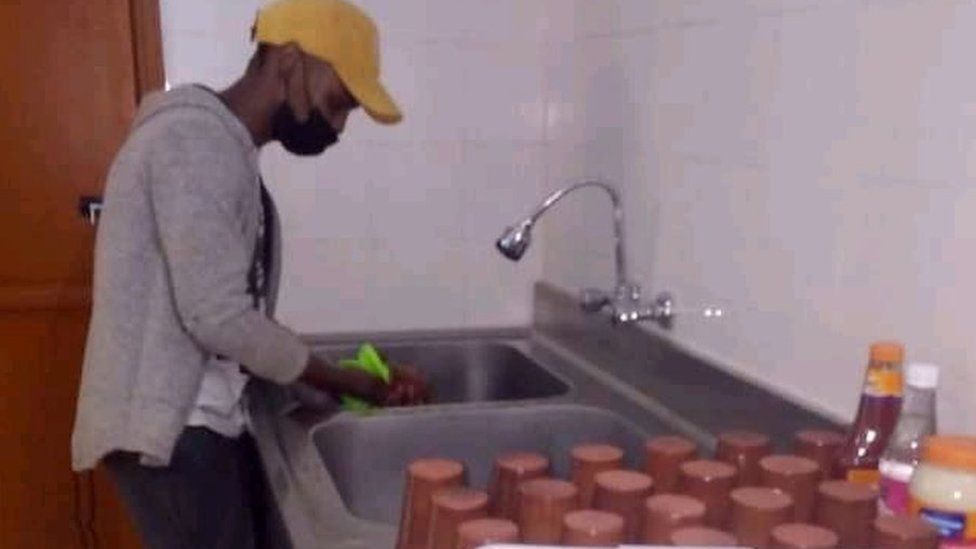
"I got skinny there. I was getting bread and milk - sometimes a roll with an egg - maybe once or twice a day.
"I was getting no salary, I was just working."
When Athenkosi asked his employer about pay he would be threatened - on one occasion he was taken to a forest where a group of men shouted at him to stop causing trouble.
Pheliswa stayed in touch with her boyfriend over the phone: "I was very scared because I thought maybe they would kill him."
Athenkosi also says his employer threatened to take him to the police.
They said "the police would arrest me because I signed a contract", he says.
What he hadn't realised was that he had entered a sponsorship agreement used in parts of the Middle East called "kafala" - which gives private citizens and companies almost total control over a migrant worker's employment and immigration status.
Rights groups say the system leaves workers highly vulnerable to abuse and exploitation as they are unable to change jobs or leave the country without their employer's consent.
One day about a month in, Athenkosi saw the door of his room had been left open and so tried to escape, heading to the car park where he asked a stranger to take him to a police station.
But once he was there none of the officers spoke English - and he was told he'd need to wait three hours for a translator to arrive.
Instead he rushed back to his room, fearing he'd get in trouble for leaving.
Back at work, with long hours and a single day off on Fridays, Athenkosi began to despair: "I was feeling so bad I decided to die rather than living like that."
He attempted to take his own life and ended up recovering in hospital where he confided in a doctor, who explained that the only way to escape would be to pay off his employer.
'Bring back Athenkosi'
So he approached his employer about this - they agreed to let him leave if he paid what was termed a "breach of contract" fee.
Pheliswa, who was already in debt for the airfare, set to work to raise the money: "I told everyone I could tell, I sent it to every WhatsApp number that I have."
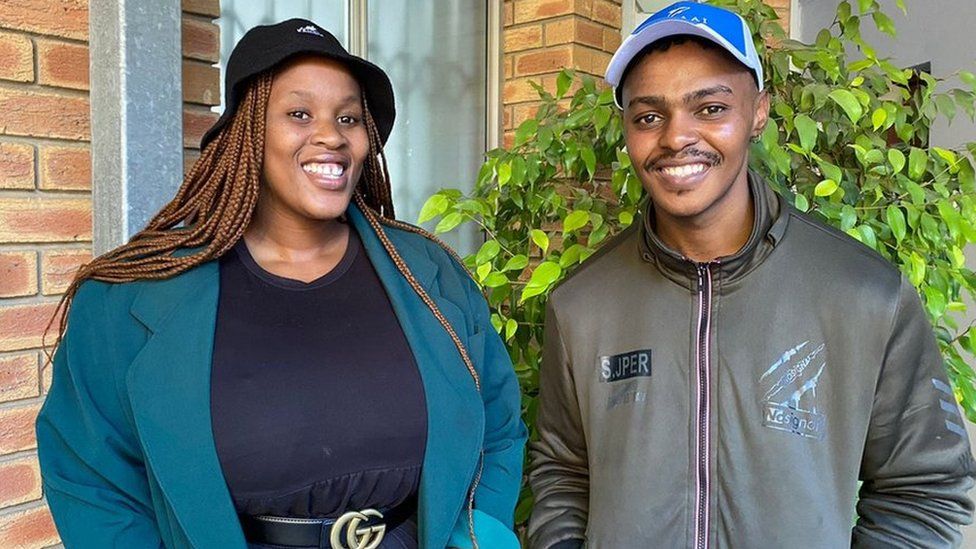
As word spread within the George community about Athenkosi's situation, a "Bring Back Athenkosi" Facebook page was created and T-shirts were printed.
A local group called The George Community Forum stepped in to help with fundraising. Donations poured in, and Athenkosi's family also sold one of their 10 cows for about $800 (£600).
The Omani employer then upped the figure, saying it wasn't enough to cover the food and lodging.
In total more than 23,000 rand ($1,500; £1,200) was paid for Athenkosi's release.
When he stepped out of the arrivals door in George in April, he was greeted by dozens of people who had helped secure his release.
"I was so excited… to see family, friends," he says.
It is almost four months since Athenkosi came home and he is now back at his old barista job.
But he is also struggling to come to terms with his experience.
"I am traumatised emotionally. I can't forget about it."
Latest Stories
-
From despair to dance: Family of nurse Salomey Baffoe rejoices after GH¢100k bail granted
57 minutes -
Kejetia Phase III pricing talks loom as government moves to restart stalled works
2 hours -
Nchiraa Yam festival: Two killed, 14 injured as police restore calm
2 hours -
I draw inspiration for my songs from Reggae music – Lyrical Joe
2 hours -
AI must not replace human judgment in public spending – BoG Governor
2 hours -
Ghana should withdraw from 2027 AFCON – Kojo Addae Mensah
2 hours -
Team Ghana departs Accra for Angola ahead of Karting Africa Trophy
2 hours -
AIT President Prof Clement Dzidonu urges lifelong learning as AI reshapes work and education
2 hours -
FWSC to meet striking teacher unions on Tuesday
2 hours -
NPP won’t force candidates to step down – Miracles Aboagye
2 hours -
Black Stars: Building in the sinking sands
2 hours -
Low inflation on paper, high cost of living: How Presidents Mahama and Trump are facing stark economic reality
2 hours -
NPP will negotiate with popular non-politicians to secure winnable candidates – Miracles Aboagye
3 hours -
Only 5% of Ghanaians can afford housing without support – Gov’t
3 hours -
Nigeria launches rescue after military plane crashes with 32 aboard
3 hours